

Sixteen. I went home from a concert drunk on alcohol, but mostly on pain. During the concert, N looked at a woman in the audience and said, “I love you!”
I reached for a blade on my bedside table. The thin, sharp metal stung my forearm, giving way to an N. There. Now the pain’s symmetrical.
Self-inflicting wounds was a disease I carried with me for six years. Sometimes it was a ruler; sometimes glass. I wore a razor blade as a necklace – which my relatives thought was just a stupid fad – so that I had easy access to relief when the need required it.
My reasons varied from trivial to heartbreaking: unrequited love, flunked subjects, and daily battles with depression. I drank to drown the pain, but the damn pain knew how to swim (Kahlo). So, when it surfaced, I let the lifeblood that sustained it drip to dry.
I hid the wounds and fresh scars with bandages disguised as allergy patches and jackets, even on the most humid of days. People, including my parents, thought I was simply cold intolerant, as usual, or trying to be ridiculously fashionable.
The scars stayed under the rug for nearly two decades until now, because hurt, I thought during my younger years, was something that should be ashamed of itself. Most of them are no longer visible, but N’s name, above all, still glistens bold and proud against the sunlight.
******
May 17, 2016
3:40 am
Hello, Lia.
I am somewhere in Solano, between the deep, dark navel of the mountains and the bright, enticing lights of McDonald’s. We’re taking a break because the driver has been steering and turning the wheel for eight hours now.
I am eating a cheeseburger, my last taste of modern commodity for the next two days. Where I sit, there’s a painting on the wall that says, “I want to be light. I want to be beautiful and afraid of nothing.” I guess that’s why I am here right now in this odd place among strangers.
I am going to see this beautiful lady in Kalinga named Whang Od Oggay to get a tattoo – a new wound over an old one – because we must not dwell on old wounds. Because we must live lightly and be unafraid of hurt. Even scars need to breathe anew, in redemption, away from the dark. Maybe when you’re a bit older, you will understand what this all means.
But for now, I hope you are well on your side of things; that light always shines down on you – as it did on me when you came into my life.
Thinking of you wherever I am,
Mama
*****
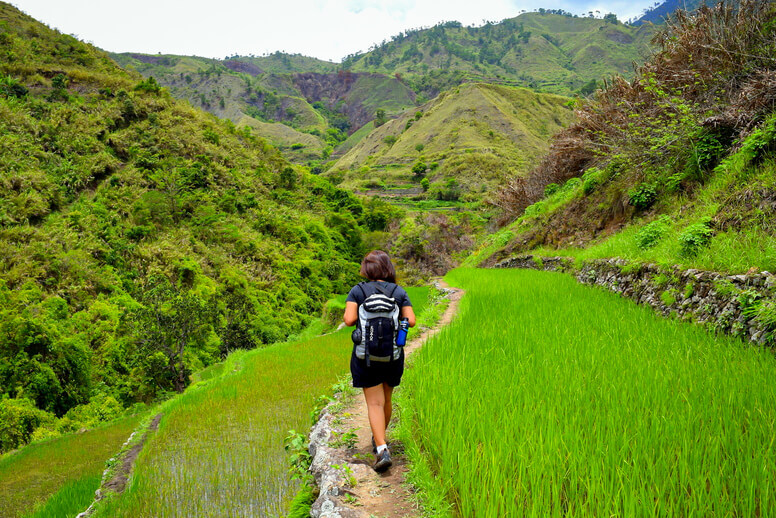
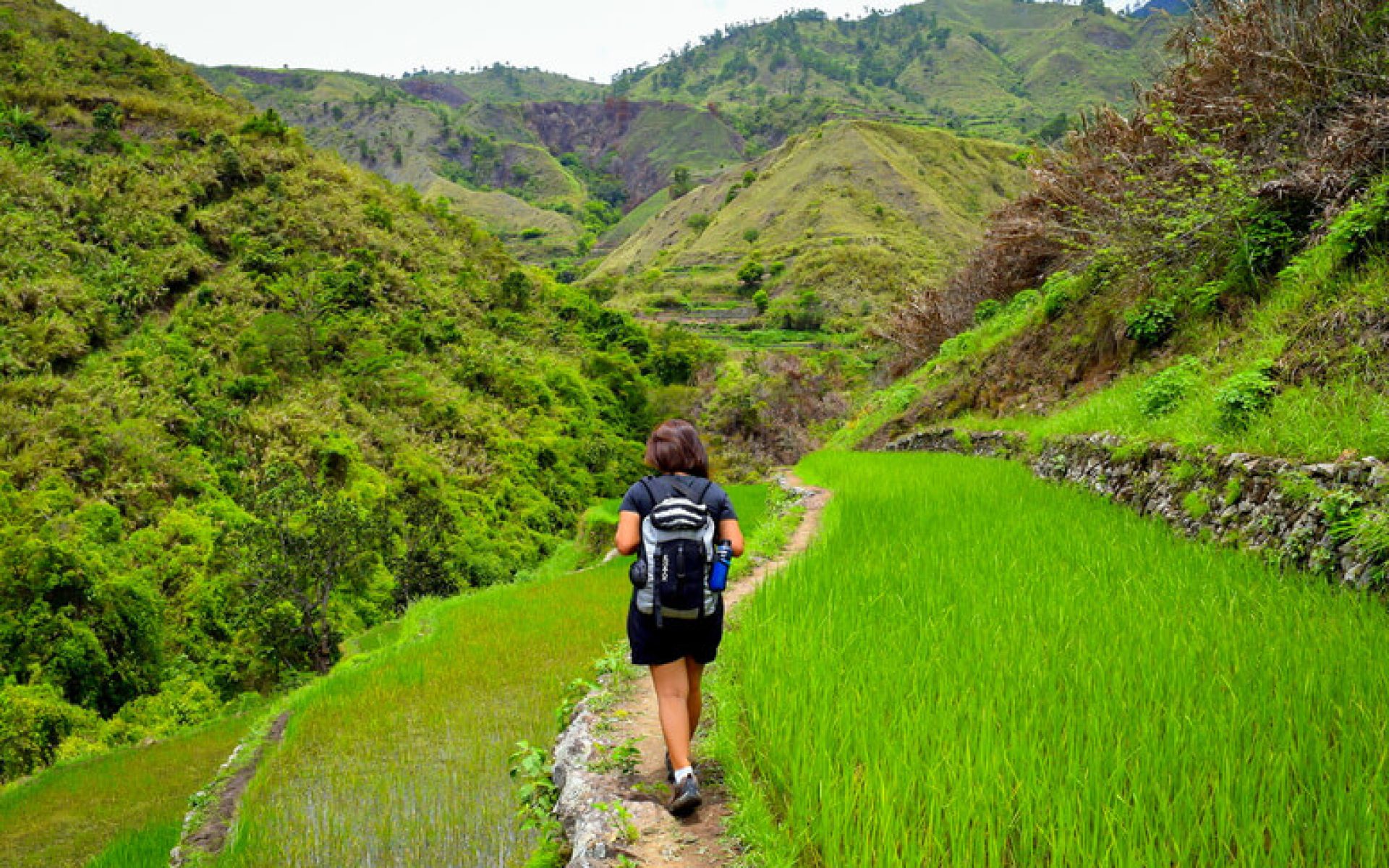
In the village of Buscalan in Kalinga, the wounded are most welcome. Here, people embrace scars, and those who wear them are strong, noble men and women: warriors, princesses, happy teens, survivors of broken hearts, and lifelong tribulations. The batok – a traditional tattoo crafted by tapping a citrus thorn dipped in liquefied soot on the skin – is celebrated and deemed sacred by all ages.
Traveling to Buscalan is a journey back to primordial life, where battle scars are not disguised as allergies or fake smiles. Here, they are worn with pride and experienced for what they truly are: histories that connect us to the world and symbols of courageous pursuits in life.
Along with strangers, I trekked the steep and winding roads to the highlands to offer my skin to Whang Od, the oldest surviving mambabatok of Kalinga’s Butbut tribe. Take it, tap soot on where N’s name rested, and give new life to it, because its old scarred self deserves a new life.
After the hour-long, skin-braising noon trek from Tinglayan, we finally arrived at the village where Apo Whang Od sat outside her home, combing her freshly bathed hair. I heaved a sigh of disbelief, memorizing the ornate ink that adorned her skin from shoulder to foot. Even at 98 – some say a hundred or more – her glassy eyes possessed youth, her demeanor quiet but tough, like the other women in her tribe.
We paid our respects and hoped we paid enough for her to consider blessing us with a batok. The day before, her neighbors told us she refused to tattoo anyone. Sessions were conducted by her granddaughter, Grace, and grandniece, Elyang, because that’s what Apo decided. This is a woman who cannot be commanded to do against her desires, even with a six-pack offering of her favorite Milk Magic. Her words wield absolute power. Villagers listen when she speaks, including men and other elders.
We came to the hut where batok sessions are done, and all were quite anxious. My heart pounded when I saw her tapping on a tourist’s forearm – a moon, resembling a spiderweb in a hole. “She will be doing the batok because today, her mood dictated she will,” said Kuya Benjie, our guide from Benguet. Antsy and ecstatic, we watched her in deep reverie, in her best element. Tap, tap, wipe. Tap, tap, wipe.
The village used to have three books depicting indigenous batok designs by Kalinga ancestors. All of them are gone now – some hiding in secret places in the village for protection against those who wish to tear pages for posterity, as others did in the past. Design choices are now limited to a few tourist-popular elements, all drawn on an old strip of plywood. Many asked for the moon and the crab: the first, a symbol of strength; the latter, of incurable wanderlust.
Nine people took turns before mine.
“This,” I said to Kuya Benjie, pointing to two parallel zigzag lines. Apart from guiding tourists, he assisted in translating to Apo.
He showed her the drawing. Apo nodded. “Ah…bundok. Dagat (Ah…mountain. Sea.)”
Because we must be fluid as water and unshakable as a mountain.
I extended my left forearm and pointed at the scar. One last hard look—this former life of turbulence, ready to be discarded.
Apo soaked a twig soaked in liquefied soot and glided it onto my skin to create five pairs of Vs on top of her three-dot signature. I requested only three pairs, but that’s what her artistic mood dictated, and I make no complaints.
She traced the drawing with deep and crude taps, making noises that reverberate from the skin to the head. Bright red blood seeps with each tap. Goosebumps rose from arm to neck, mostly from the sharp pain, but also from being a breath away from a dream; this dream marking me with her tradition, in her home.
I closed my eyes for a while, the taps and the raw, pricking pain in rhythmic sync. I witnessed her giving birth to new wounds. New wounds over the old, like riding a train anew after saying goodbye to another.
Thirty minutes fleeted. Apo wiped wet tissue over my skin one last time, and the batok revealed itself – patchy and imperfectly beautiful like life. Wounded, my heart swelled with love.
*****
The next morning, I woke up to small footsteps running beneath Kuya Charlie’s house, where we stayed for the night. Everyone else was still sound asleep from last night’s rum. Cattle and monkey bones, hung on the ceiling for protection and luck, chimed softly against the cold air.
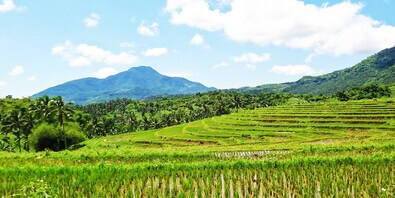
I poured a cup of freshly brewed Robusta coffee, its sweetness resembling the foggy morning. Children no bigger than mine ran toward a ledge, where I watched the sunrise unfold. Sunlight moved briskly to warm rice terraces below as the wind whisked clouds to the mountains of Mating-oy, Patukan, and Dinayao.
The world seemed so big from here. Here, where rice and coffee are consumed fresh from terraces, and life is stripped of technology and schedules. I lifted my arms, examining the red, swollen skin around them. This, along with the long, dented incision trailing down my navel from where my daughter came, is not ashamed of itself.
In his book, Diary, Chuck Palahniuk says that we have no scars to show for happiness. For an unripe time in my life, I believed that. But the truth is, there are. And I have my arm and my once-opened belly to prove it.