
By island-born hands, for the world.
The Archipelago Press
  • Home
  • About Us
  • Stories
    • Mountains
    • Islands & Beaches
    • Lakes & Rivers
    • Flora and Fauna
    • Outdoor Adventures
    • Cityscapes
    • Architecture
    • In-betweens
  • Guides
  • Food
  • People, Art & Culture
  • News
  • Partners
  • Home
  • About Us
  • Stories
    • Mountains
    • Islands & Beaches
    • Lakes & Rivers
    • Flora and Fauna
    • Outdoor Adventures
    • Cityscapes
    • Architecture
    • In-betweens
  • Guides
  • Food
  • People, Art & Culture
  • News
  • Partners
The Archipelago PressThe Archipelago Press
Font ResizerAa
  • Home
  • About Us
  • Stories
  • Guides
  • Food
  • People, Art & Culture
  • News
  • Partners
Search
  • Home
  • About Us
  • Stories
    • Mountains
    • Islands & Beaches
    • Lakes & Rivers
    • Flora and Fauna
    • Outdoor Adventures
    • Cityscapes
    • Architecture
    • In-betweens
  • Guides
  • Food
  • People, Art & Culture
  • News
  • Partners
Follow US
© 2025 The Archipelago Press. All Rights Reserved.
Home » Blog » Coffee and Crafts: The Atis’ Artistry in Barotac Viejo, Iloilo
DestinationsNarrativesVisayas

Coffee and Crafts: The Atis’ Artistry in Barotac Viejo, Iloilo

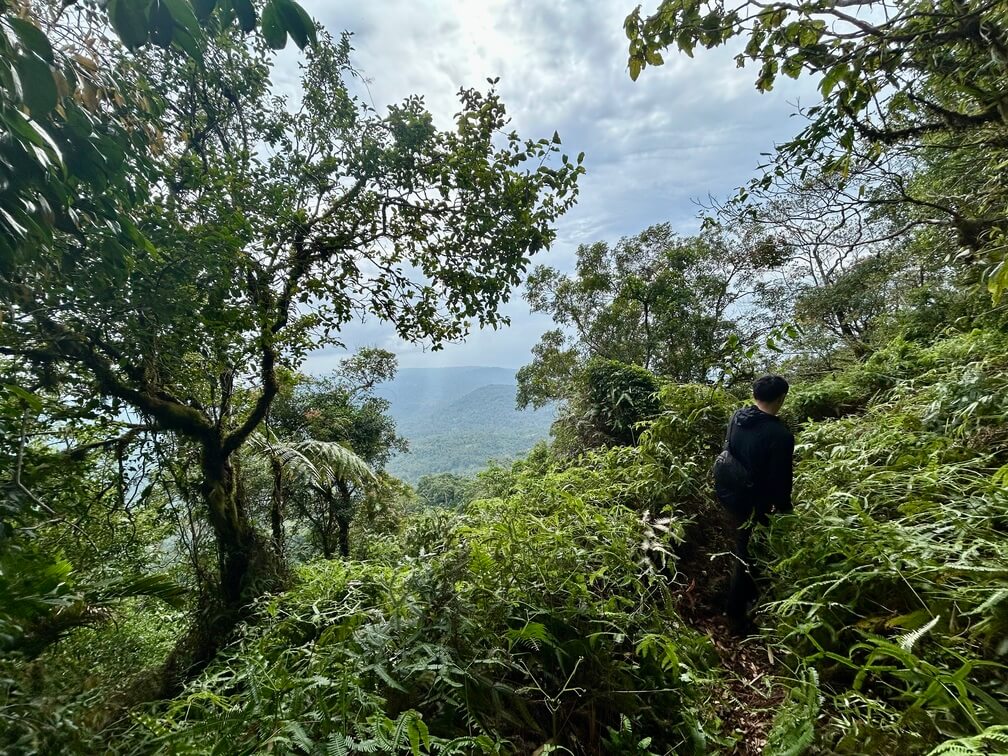
Surrounded by mountain forests, Sitio Nagpana, around one and a half hours away by car from Iloilo City, is where the indigenous Atis live. Here, they make delicious coffee from plants they themselves grow and weave baskets and accessories from nito, a wild vine.

Rhea Claire Madarang
Last updated: November 21, 2025 2:48 am
Rhea Claire Madarang
Share
SHARE

I have always associated Iloilo with good food like biscocho, fresh seafood (their delicious and affordable oysters are especially the best), beautiful pilgrimage churches like Miag-ao Church, and lately, the beaches of Gigantes Islands. I did not expect to encounter anything new after that, but with my visit to the municipality of Barotac Viejo, particularly in Sitio Nagpana in Barangay Lipata, I was happy to add another item on my list of things I like about the province.

Sitio Nagpana, around one and a half hoursaway by car from the province’s capital city, is an area surrounded by mountain forests. It’s where the indigenous Atis live and make delicious coffee from plants they themselves grow. Here, they also weave baskets and accessories from nito, a wild vine.

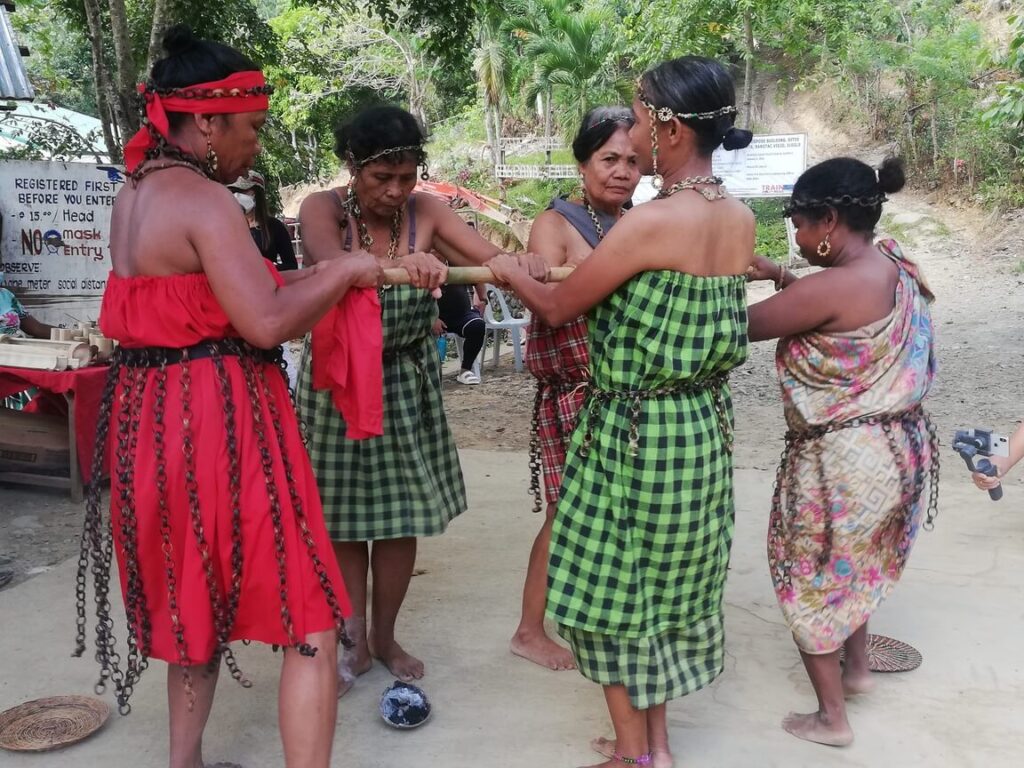
When our group of travelers came to visit, the Ati community welcomed us with a solemn gesture. Wearing nito adornments, one of the elder women set down a coconut husk of smoking coal on the ground, as if in offering. The gesture was followed by what looked like a traditional dance. One of the women explained to me later that the moves were nature-inspired.

After the Atis’ welcome, I found myself drawn to tables filled with their handmade crafts. There were bamboo cups and ladles made from bamboo and coconut. There were baskets, bags, plates, and accessories made from nito. There was actual dried nito, too – nature’s raw material yet to be woven into something creative.

One of the Ati women, Nanay Alicia Ganancial, offered to make me a ring from nito. I watched as she wove one in minutes and slipped it on my finger. It looked pretty and felt comfortable around my finger. She told me such nito accessories are meant to protect the wearer. I wore it for the rest of the trip and even weeks after.

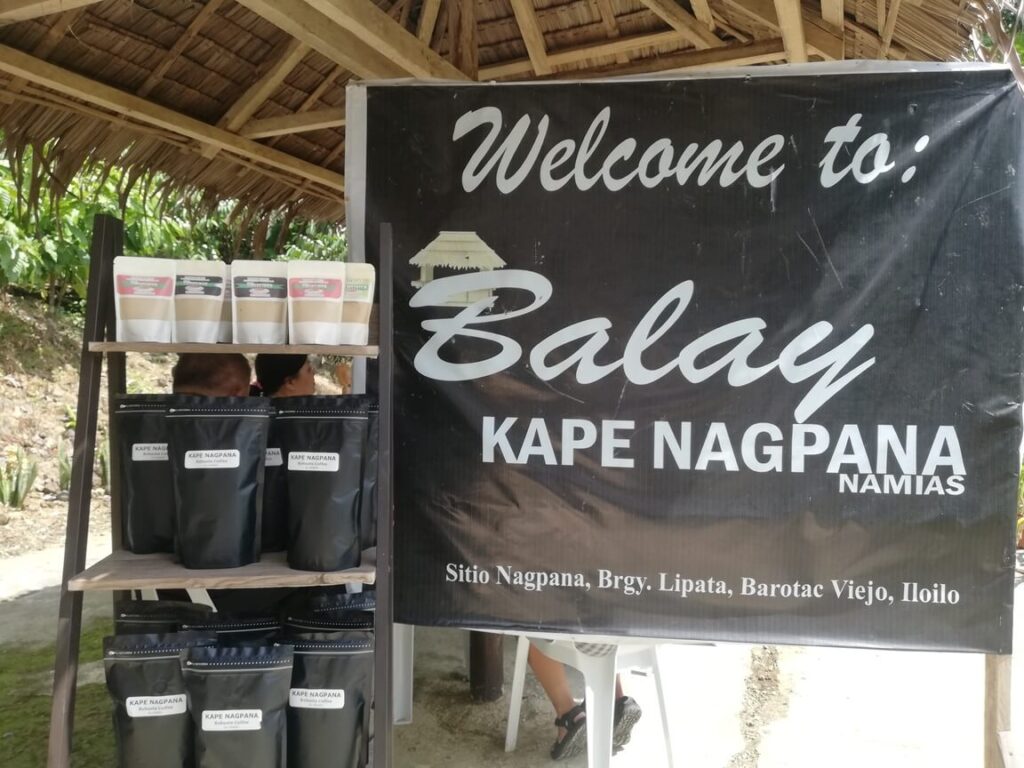
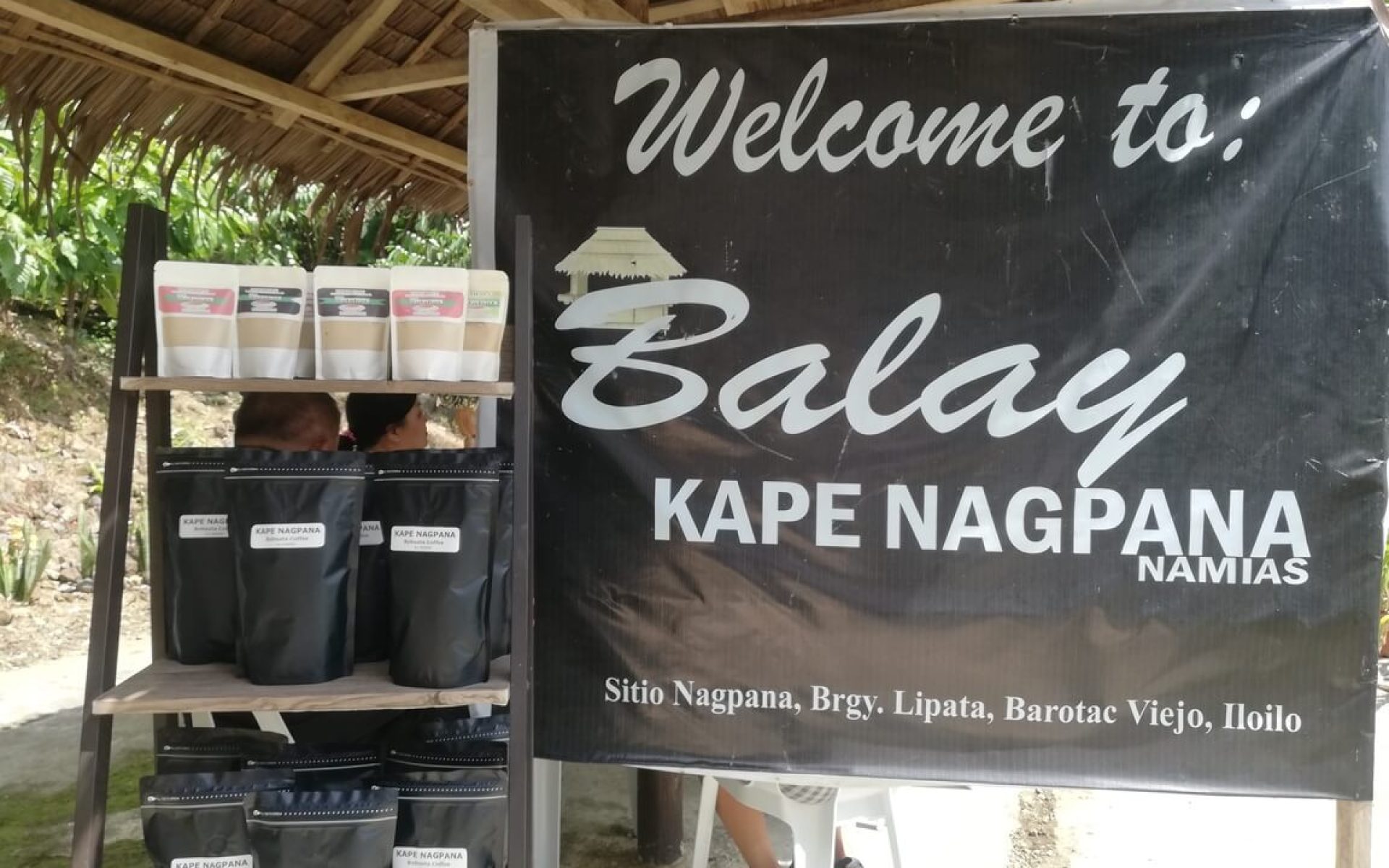
Up ahead, beyond the tables of crafts, was a small hill with a concrete stairway. On top of the hill was Balay Kape Nagpana, the Atis’ coffee shop and coffee processing area.

Going up, I could not help noticing shrubs with vivid white flowers, which I later found out were coffee plants. While I have already seen coffee berries a few times, it was my first time to see the plant’s flowers. They reminded me of sampaguita, but with pointed tips like stars.

At the coffee processing facility, we saw beans being dried in several bilao. The Atis toured us through their equipment and the various stages of processing like roasting, grinding, and packaging. They said they were fortunate to get the necessary equipment as donations from the Department of Science and Technology and the Department of Agriculture. The Nagpana Minorities Association and the NGO group Taytay sa Kauswagan also help ensure that the coffee shop and processing facilities have enough resources.

Sustainability is all the more important, as the coffee the Atis make is not just for them, but for the rest of Iloilo, too. In fact, they supply coffee to some cafes in the city.

As we walked around, the scent of coffee lingered in the air like a pleasant perfume. I took it as an invitation to buy some freshly roasted and ground coffee to take home.

I watched the coffee I ordered packed and sealed in black pouch bags, which looked simple yet nice to give as gifts. Later, I gave some to coffee-lover friends.

I was happy to see – and buy – drip coffee, too, which I usually just see in Vietnam. It’s great to see it made fresh in our country, especially in a community-based enterprise.

We also had the opportunity to taste ready-to-drink coffee at their cafe. I had their iced coffee, which reminded me of the frappés I sometimes order in Manila as a treat.

I was told Nagpana Waterfalls was just nearby, and we would have gone if our time was not limited. Some tourists drink Nagpana’s coffee while enjoying the view of the falls. Locals also guide travelers on tours around the forest. There, coffee grew in the wild before the Atis cultivated them. Knowing the area was a natural home to coffee plants also helped ensure the success of their enterprise.

With many indigenous peoples living in poverty—some even driven away from their land—it is heartening to see the Atis in Sitio Nagpana living in land that is rightfully theirs,  thriving from their handiwork and nature’s gifts.
Subscribe to Our Newsletter
Subscribe to our newsletter to get our newest articles instantly!

Share This Article
Email Copy Link Print
Rhea Claire Madarang
ByRhea Claire Madarang
Before Claire started doing travel guides and narratives like this, she wrote news articles, research reports, and occasionally, poetry. Being out on fieldwork, and later, meeting travelers, inspired her to go on her own solo adventure and write about it. She posted her first entry on her blog iamtravelinglight.com while backpacking around Visayas for seven weeks. That trip, and others that followed, allowed her to engage with different communities and deepened her appreciation for the Philippines’ rich biodiversity and culture. Now, environmental conservation is a common topic in her work as research and communications consultant. She also facilitates play-based nature appreciation activities, as well as storytelling and creative documentation in communities on the state of their biodiversity and climate.
Previous Article Lake Sebu Lotus Garden: Paddling Through the T’boli Culture
Next Article Why Boracay, Palawan, and Siargao Continue to Rank Among the World’s Best Islands
Leave a Comment

Leave a Reply Cancel reply

Your email address will not be published. Required fields are marked *

Travel

Why Boracay, Palawan, and Siargao Continue to Rank Among the World’s Best Islands

A recent readership poll reveals leisure travelers consider these three…

November 21, 2025

The Philippines Wins as Asia’s Leading Beach, Dive, & Island Destination in World Travel Awards 2025

The annual gala ceremony gathered industry…

November 2, 2025

You Might Also Like

DestinationsMindanaoNarratives

Inaul: Maguindanao’s Vibrant and Enduring Woven Tradition

I have always seen the Bangsamoro Region in Mindanao as a home of rich and colorful traditions, among them indigenous…

6 Min Read
DestinationsMindanaoMountains

Hiking Sulu’s Highest Peak

While on a boat to Tawi-Tawi in 2017, we passed by the province of Sulu. After hours of seeing nothing…

6 Min Read
DestinationsFlora and FaunaLuzonNarratives

Resting in Sasmuan’s Rest Area for Migratory Birds

Stars still shone in the sky when I and other travelers rode an outrigger boat bound for the wetlands of…

6 Min Read
FoodNarratives

A Kalamay Is a Kalamay Is a Kalamay

Sweetness has always been one of our ways of enduring. It arrives in many forms in Filipino kitchens: rice coaxed…

10 Min Read
The Archipelago Press

News

Guides

Destinations

Narratives

Information

  • Home
  • About Us
  • Contact Us

Subscribe

  • Facebook
  • Instagram
  • Tiktok
  • X
  • YouTube
  • Pinterest

Don’t miss a single story.

Subscribe for the best storytelling from the Philippines, as it happens.

Information

  • FAQs
  • Contact us

Partnerships

  • Collaborate
  • Share your story

Legal

  • Privacy policy
  • Cookie Policy
  • Legal disclaimer

Connect with us

© The Archipelago Press. All Rights Reserved.

Welcome Back!

Sign in to your account

Username or Email Address
Password

Lost your password?