
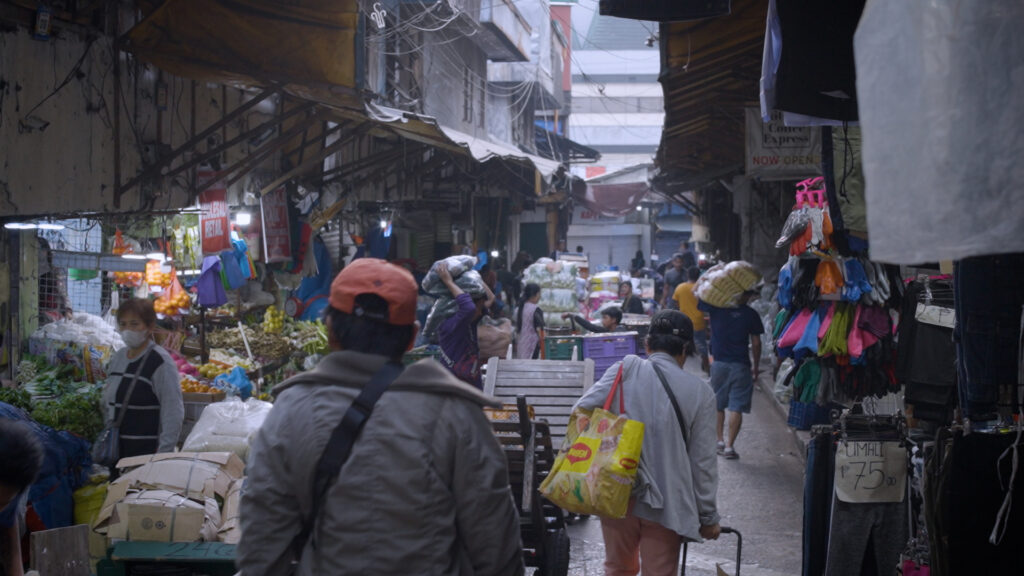
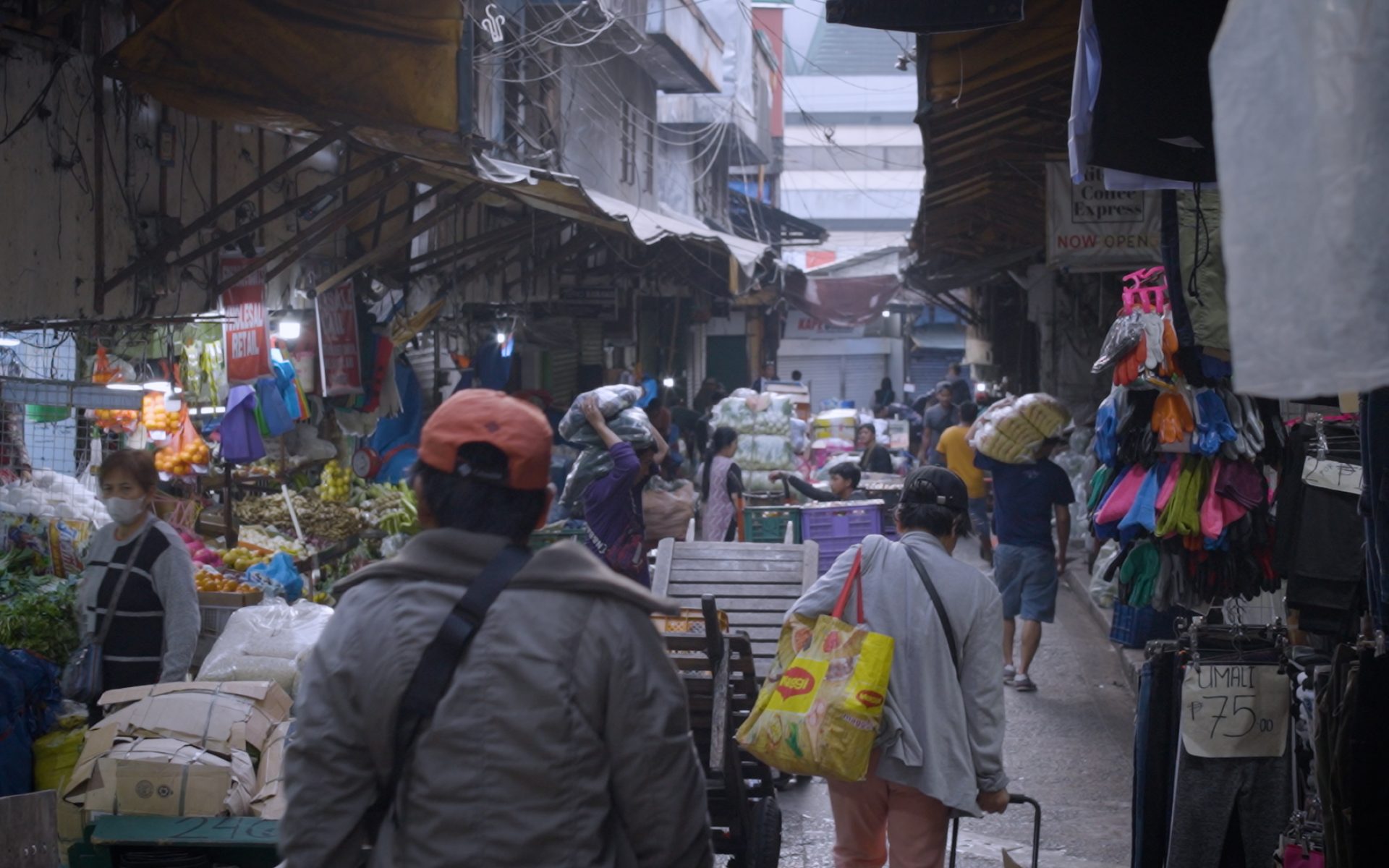

Baguio City Mayor Benjamin Magalong spoke of the proposed 4.5-billion market redevelopment and a popular mall developer’s legacy project. But what makes a legacy? And what is the legacy of the Baguio City Public Market?
In a widely-shared documentary interview, Baguio City Mayor Benjamin Magalong spoke of the proposed 4.5-billion market redevelopment as his and a popular mall developer’s legacy project. Magalong has said that the corporation won’t even profit much from the project. They just want to rebuild the market for the city’s sake.
But what makes a legacy? And what is the legacy of the Baguio City Public Market?
Much has been said about the Baguio market as a century-old heritage site. Experts have discussed its value as a melting pot of cultures that facilitated the exchange of goods and culture between the highlands and lowlands.
I talk about the palengke as a patawid (Ilokano for legacy or heirloom) by telling a story from inside the public market.
Settling In
My palengke story began when, at 12 years old, I had to say goodbye to the life I knew.
My father abandoned us for another woman. My mother and my paternal grandmother, Lola Lupao, were left to take care of me and my two younger brothers. They decided that the best way forward was to split up the kids. My brothers and Lola Lupao went home to our ili (Ilokano for “town”) in Kapangan. My mother and I stayed in Baguio.
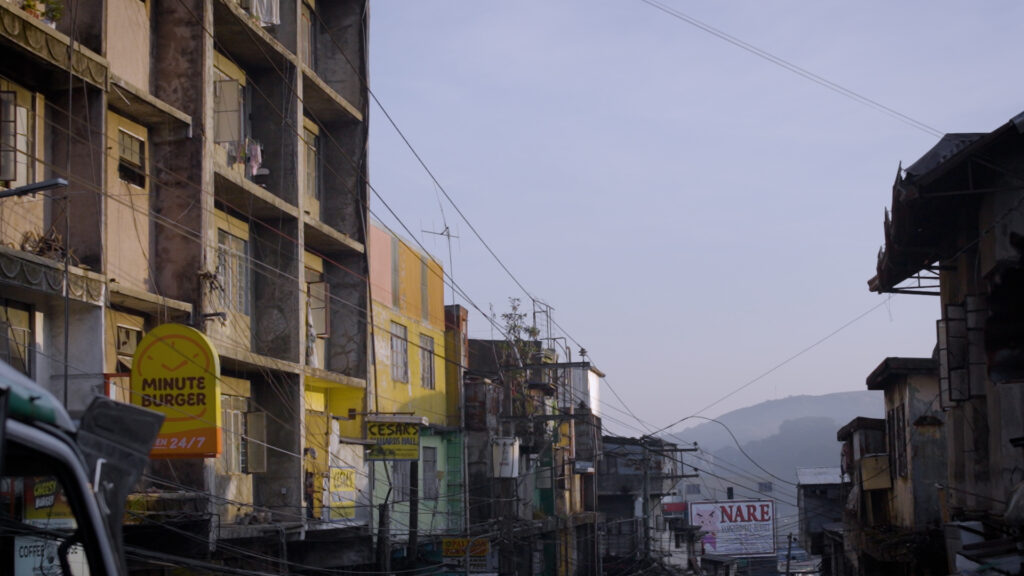
We could no longer afford the rent, so we left our apartment. My mother worked as an all-around assistant/vendor at her friend’s building at Hilltop. In return, my mom and I were given a small room in the back. We moved to the heart of the market in the summer of 2009.
Vendors ordered barako and instant coffee from my mother to fight the cold before dawn and shake off sleep after noon. Peddlers carrying big thermoses in large plastic hampers would get their hot water from our puwesto, too. To keep up with the demand, my mother had to wake up at 3 or 4 a.m. every day to heat water in time for her earliest customers.
I was a shy kid who always had her nose in a book, so I mostly stayed in our room. But every now and then, my mom would ask me to refill thermoses and deliver cups of coffee to her customers. I learned how to speak with different kinds of people. I became especially close to Ate Amy, a college student who managed the sari-sari store out front.
On the sidewalk, I brought coffee to Auntie Lita, a rotund Batangueña selling alamang, and a lovely couple from Buyagan, La Trinidad selling rock salt. Auntie Zeny was taller and fairer than her husband, Uncle Roger, so they were often teased for being an unlikely pair. Across the street was Kuya Michael, a Maranao Muslim who sold ready-to-wear (RTW) clothes and liked his coffee black. I later found out that the quiet old man selling sili by the electric pole was the father of Rey Tam, the famous knockout boxer who was our kailyan (Ilokano for kababayan, or “townmate”) from Kapangan.
Soon, the maze of sidewalk vendors and makeshift stalls along Block 4 looked more like home to me.
Finding Family
It has always amazed me how everyone seems to know everyone in the market.
If a vendor ran out of the exact type of sili you needed, they would point you in the direction of someone who might have it. When one vendor had to run to the bathroom, their neighbor would sell their goods for them. Some marketgoers would leave their bags or even their kids with trusted vendors while they scoured the palengke to complete their shopping list.
I myself had done my fair share of tending to Ate Amy’s store whenever she went to church. Of course, most of the time, it was Ate Amy who took on the task of tending to me while my mother ran errands. When Ate Amy graduated and left Hilltop, an Ifugao family supplying all kinds of saba took her spot. Since then, I never had to buy bananas—and for a long time, I didn’t want to. Seeing mountains of them every day was enough.
Holidays in the market were busier and noisier. Our puwesto never closed, not even for Christmas. Sometimes, my mom and I would join her friend’s family for noche buena. But sometimes, we stayed home. In the morning, our neighbors would give us the best of their noche buena in Tupperwares. We shared all sorts of food and stories while the rest of the city slept in.
Painful Separations
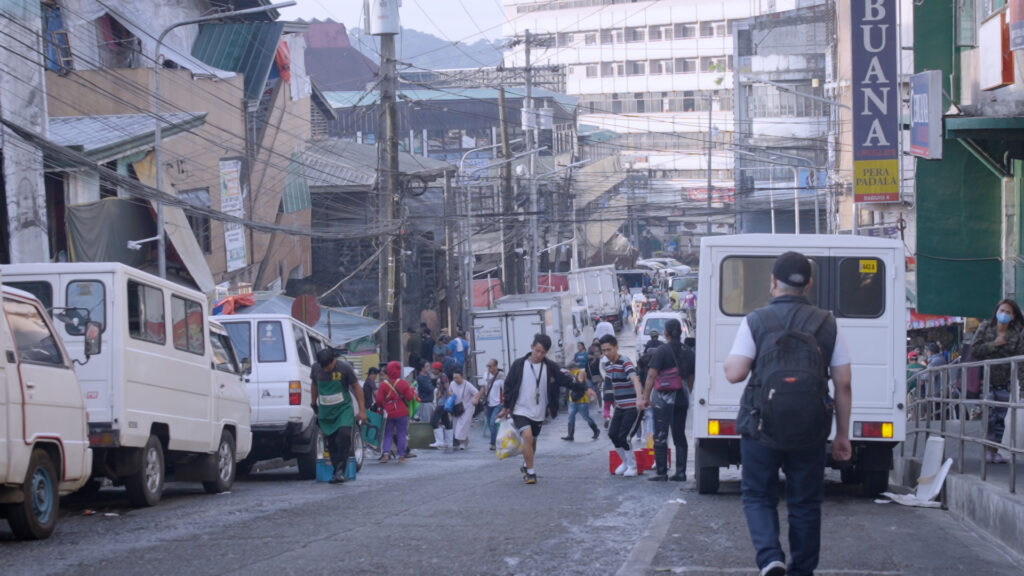
In August 2010, hundreds of stalls in Block 3 and Block 4 were demolished to make way for the Uniwide market rehabilitation. The city government said that most stalls in the area were illegitimate anyway. I will not forget the sight of our neighbors, whose faces were contorted by grief and frustration as they looked at the ruins of their stores. I remember that the stalls at the new Block 3 and 4 were distributed via lottery. Many of our friends did not “win” a spot. Some were lucky enough to find a puwesto in the market. But some, like Kuya Michael, were forced to find business elsewhere.
When Block 4 reopened, the carinderias and dry goods were placed on the upper floor. Since they were right across from us, the carinderia owners became our regular customers. During hard times, my mom and I ate lunch at Florencio’s Eatery on credit. We would also get diket – pancakes with peanut butter and condensed milk – and an assortment of sweets from Block 4 and the aunties who roamed the streets with bilao. My mom would get snacks for two and pay for them the next day.
When Mama died suddenly, the merienda vendors and carinderias forgave our debts. Even the Indian loansharks who used to shout expletives at my mom stopped coming to collect. Our friends from the market went to my mother’s wake and offered condolences. When it was time to count the abuloy, I found worn 20s and 50s wrapped in a long list of familiar names.
Entering a New Decade
When I moved into an apartment in late 2022, I was delighted to finally have privacy. I liked not having to pass a hundred strangers on my way to the toilet. I loved having running water when I turned on the tap. I learned what it was like to open a window to a quiet street. But I’ll admit: my body found it hard to relax. It was as if I needed the constant buzz of vendors and sellers to feel at ease.
So, when Block 4 was engulfed by flames in March 2023, my heart exploded. The carinderias that fed me and my mother were reduced to ashes. Our friends, once displaced by Uniwide, were once again weeping over the loss of stalls they worked so hard to rebuild. I watched this unfold in the news but could not bear to see it up close.
But because my brother was still staying in our old room at Hilltop, I had to go. Weeks after the fire, I steeled myself as I hiked to Hilltop from Magsaysay Avenue. I saw that the vendors from Block 4 were on the sidewalk and in the middle of the road, selling vegetables and wagwag like it was 2009 again. My tears rushed like stormwater cascading down Hilltop Street.
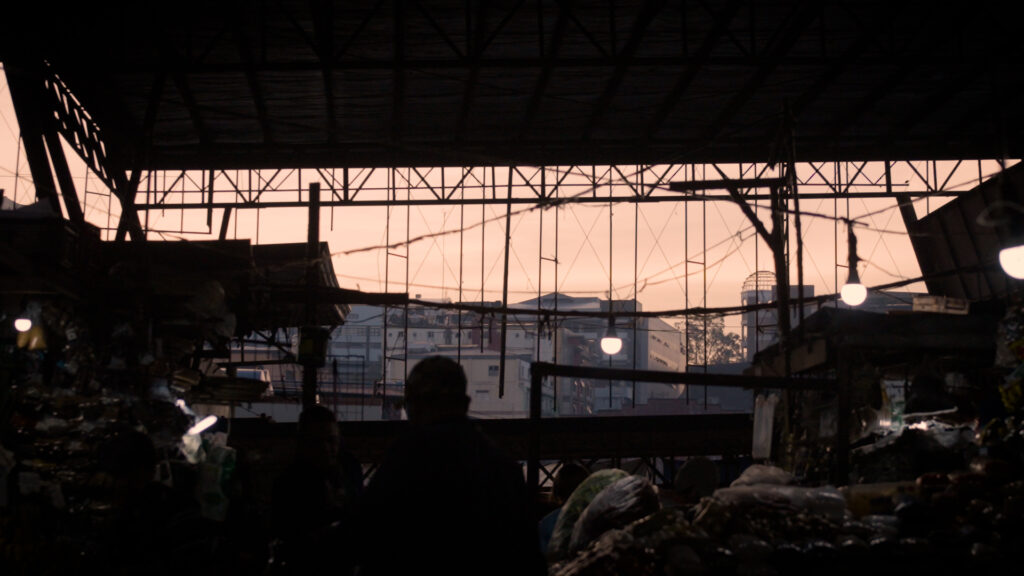
Saying Goodbye?
The palengke has been my home for nearly two decades. It cared for me when I was orphaned. It cares for me today despite my leaving. And just as the palengke has taken care of me, it has looked out for the greater community.
During the pandemic, market vendors gave away unsold produce every Saturday afternoon. Until now, on any given day, you can get affordable gata, lana, moma, kalabasa flowers, and other hard-to-find ingredients in the market. From your suki, you’ll get an extra piece or two, especially towards the end of the day. You could call it a modern-day binnadang, og-ogbo, or bayanihan. I’d say the palengke is like a reliable kailyan. That’s its magic. That’s its patawid.
Still, I know that the average Baguio citizen does not love the market as much as I do.
I understand that. After all, I’ve slipped on the wet market floors more often than others. I’ve gotten less-than-fresh meat and fish from unscrupulous sellers. I’ve complained about the stench of sewer water and trash more than most. Twice, I lost my mobile phone to pickpockets. My legs and lungs always burned on the uphill climb to my house. For years and years, I was ashamed to admit that I lived in the stinky, slippery Baguio market.
Knowing this, I will say there is no one in the world who wants a cleaner and safer market more than the vendors and their suki.
Our City Council has less than a month to accept or reject the big mall developer’s bid to redevelop the market. But if you ask me, it’s the entire city that’s at a crossroads.
If we say goodbye to the public market as we know it and give it to a corporation, what happens? They’ll tear it down. In its place, they will build a shopping center and multi-level parking lot beside the new, four-story “palengke” building.
If replacing people, places, and a way of life with a commercial complex is this government’s patawid, then I want none of it.
I worry that I do not have enough goodbyes left in me. More crucially, I worry about how many goodbyes Baguio has to say before it realizes it no longer recognizes itself.
Editor’s note (January 8, 2026): After much backlash, the mall developer withdrew its PHP 4.6B proposal. Magalong is keen to reopen talks on the market’s modernization.