
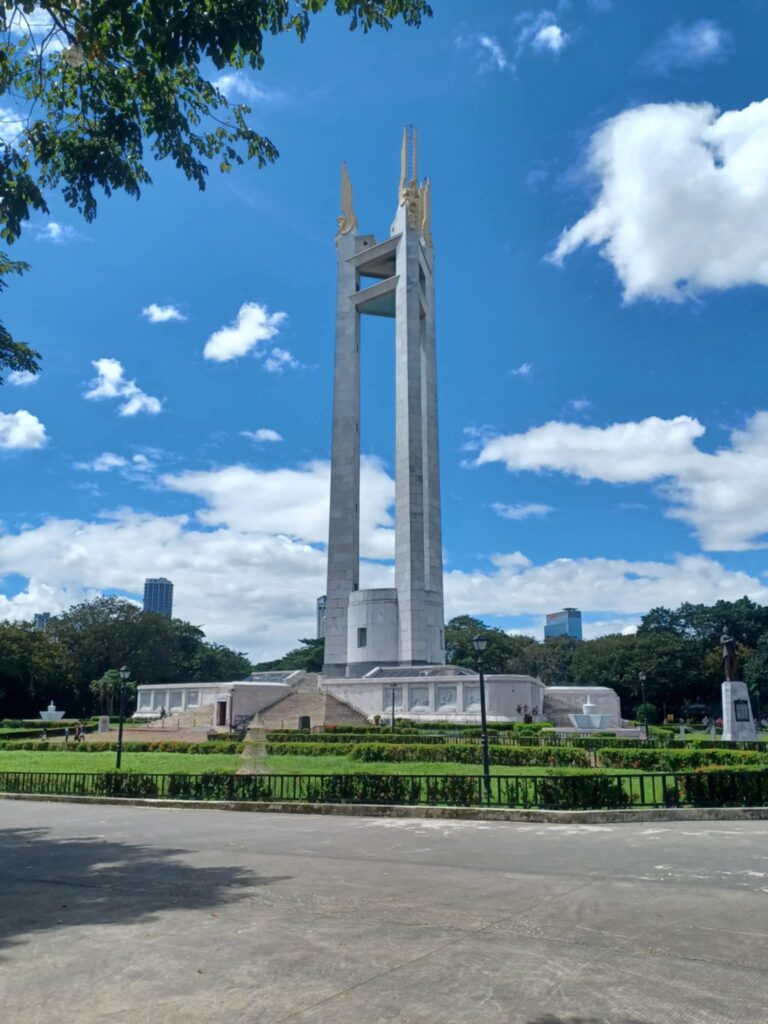
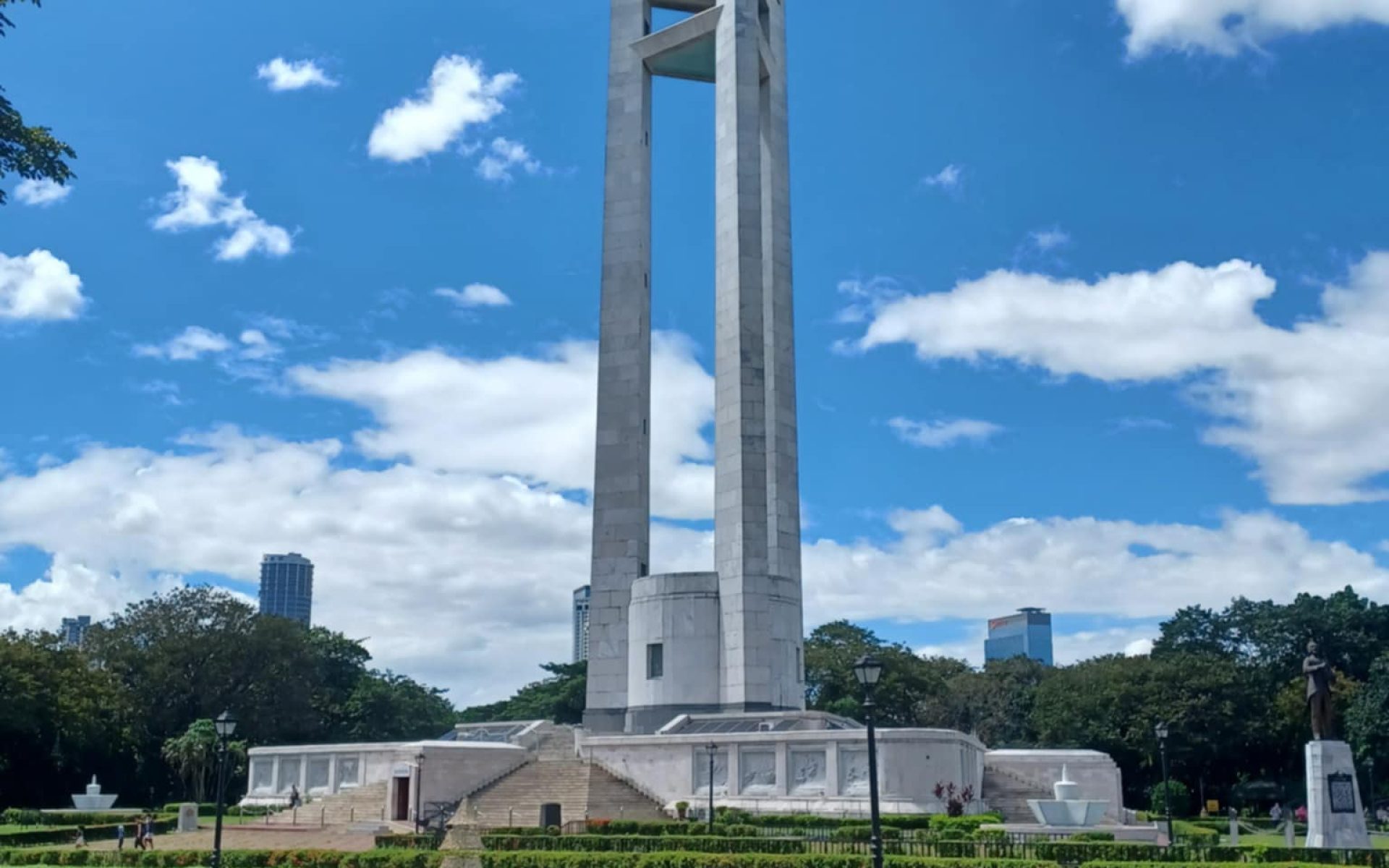

Inside Quezon City Memorial Circle (QCMC) is the most distinguished landmark of the city, the towering white structure that is also the largest (conjugal) memorial shrine in the Philippines: the Quezon Memorial Shrine. At its equilateral triangle base is the Quezon Museum, wherein lie the remains of the former Philippine Commonwealth president Manuel Luis Quezon (August 19, 1878 – August 1, 1944) and his wife, First Lady Doña Aurora Quezon (February 19, 1888 – April 28, 1949).
The Quezon Memorial Shrine, dedicated to the former president who is the subject of a recent controversial eponymous biopic, is a 66-meter-high white tower with three pylons and an observation deck. It is crowned by three mourning angels, each representing the nation’s three main island groups of Luzon, Visayas, and Mindanao. The plan to erect the memorial was launched in 1945, but due to financial constraints, it was completed only in 1978. It was designed by architect Federico Ilustre, while the trio of wreath-bearing angels was designed by Italian sculptor Francesco Riccardo Monti. On August 1, 1979, the remains of Quezon were transferred there as its intended final resting place, while the remains of Doña Aurora followed in 2005. It was declared a National Cultural Treasure in 2021.
The first time I entered the Quezon Museum was in the 1990s. I was then amused by the dioramas depicting various Philippine historical events. Memory being fickle, I don’t remember much else. Only in November last year did I return before noon, initially not allowed entry. (The security guard advised that they were spraying insecticide and they would open again by 2:00 p.m.) To pass the waiting time, I decided to see another popular spot inside QCMC—the Presidential Car Museums—where I laid eyes on the luxurious line of official motorized carriages that ferried our republic’s presidents, past and present.
Along the walk back to the museum, I met two women who asked me what was inside. Assuming the role of a tour guide for a minute, I told them it was the remains of the late president inside.
“He’s dead?” one asked.
“Yes. If he turns out to be alive inside, I’ll run!”
Three decades on, and I was impressed by its vast improvements. The walls are now adorned with a visually arresting timeline of the former president’s biography and the periods in Philippine history that he lived through and impacted. The contents of the timeline are expectedly flattering to the former president, but an attempt at balance was also discernible.
It mentions that he sympathized with the causes of the Sakdalista armed movement, featuring his 1937 statement on the matter. It also cites the failed uprising, along with a photo of the fallen rebels massacred by government troops. There is also a large photo, encased in glass, of Quezon signing the Suffrage Law which finally allowed Filipino women to vote. One wall exhibits photos and texts about the former president’s role in saving Jews from persecution in Europe by opening the country to refugees in 1937. Another features a map of the Philippine archipelago and points out the areas where the scattered guerrilla movements continued to fight even after the surrender of the US forces in 1942, during the Second World War.
Conspicuously absent is any mention of the Quezon administration’s resettlement and development program in Mindanao which sought to address the land problem in Luzon, and the resulting dispossession of land of the Moro people who have been residents of the South for centuries. Today, it is argued that the experience of the Bangsamoro shares historical similarities with what the Palestinians have been suffering under Israel.
Visitors can also take a more intimate look at Quezon’s personal and political lifestyle. Exhibited are his belongings like clothes, bed, books, diplomas, photographs, and portraits, along with personal items of Doña Aurora’s. One will also find a replica of his presidential office, the humongous original dry seal of the Commonwealth government, the gold-inlaid chest that was the repository of the original copy of the 1935 Philippine Constitution, the Gallery of Doña Aurora Quezon, as well as articles and documents pertinent to his political career. There are also paraphernalia that offer a glimpse of World War II, like the soldiers’ uniforms and the fashion of the common Filipino during the Commonwealth era and prior.
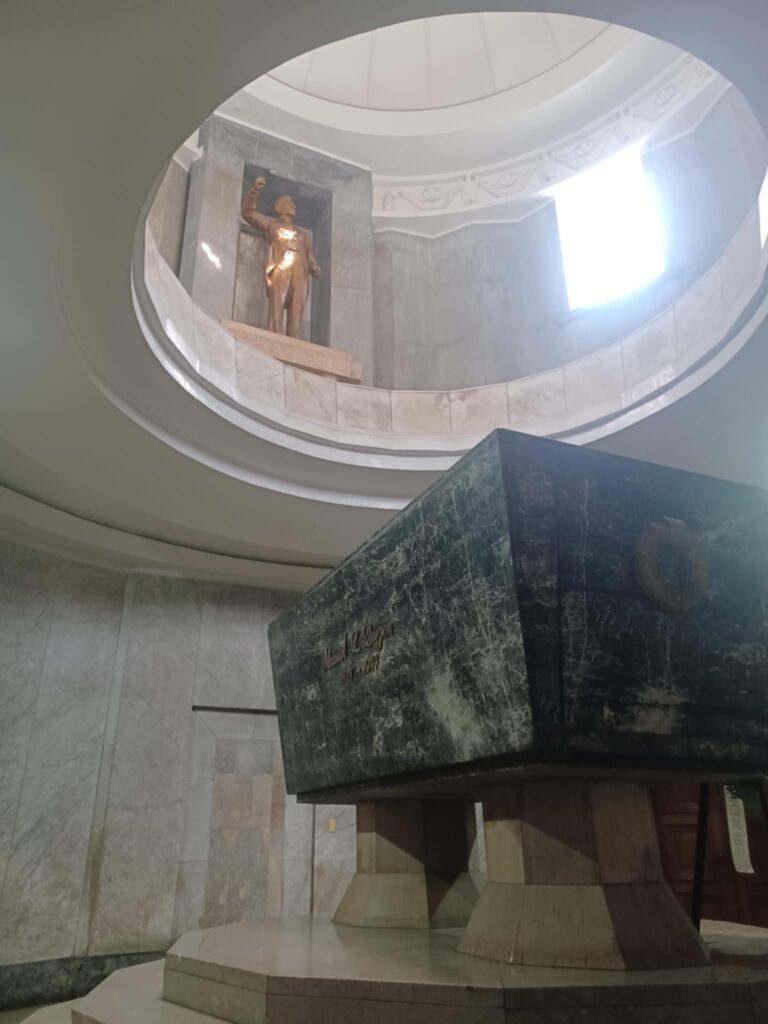
The last station inside the museum is the Quezon Mausoleum. At the center of the circular crypt is the elevated marble sarcophagus that is the final resting place of the former president. A few feet across is the altar niche that contains the remains of Doña Aurora.
On a second level stands a statue of a proud Quezon delivering a speech, sculpted by National Artist Guillermo Tolentino. Finally, the dome ceiling—the center of which is a circular aperture surrounded by three identical sculptures of carabao heads through which sunlight radiates down to fill the solemn hall. Here, you can pay respect to the Filipino president and statesman who lived, survived, and maneuvered through his legal and political career with the full might of the US Empire breathing down his neck until his very end.