

I decided to leave the anticorruption protest rally on that early Bonifacio Day afternoon to have a better chance of arriving at San Pedro Bautista Church Complex in Quezon City while the underground Cueva Del Santo (“Cave of the Saint”) was still open.
Located in San Francisco del Monte, the San Pedro Bautista Church Complex was originally a convent and a chapel that was constructed with nipa and bamboo under the initiative of San Pedro Bautista as the elected superior of the Franciscan missionaries to the Philippines. Dedicated to Our Lady of Montecelli, it was located on land granted by order of Governor Santiago de Vera in 1590. The chapel was soon replaced by a wooden structure in 1593, then by stone six years later. After suffering damage during the 1639 Sangley Uprising, it was reconstructed in 1699—a remodeling dedicated to the newly beatified Pedro Bautista who was martyred in Japan in 1597. The church was elevated into a Minor Basilica on September 14, 2020.
I rode an L300 passenger van from Manila and disembarked at Quezon Avenue, just across Fisher Mall, where I rode a jeepney that plied Fernando Poe Jr. Avenue. It already started to drizzle when I alighted at the corner of Del Monte Street and walked toward the church.
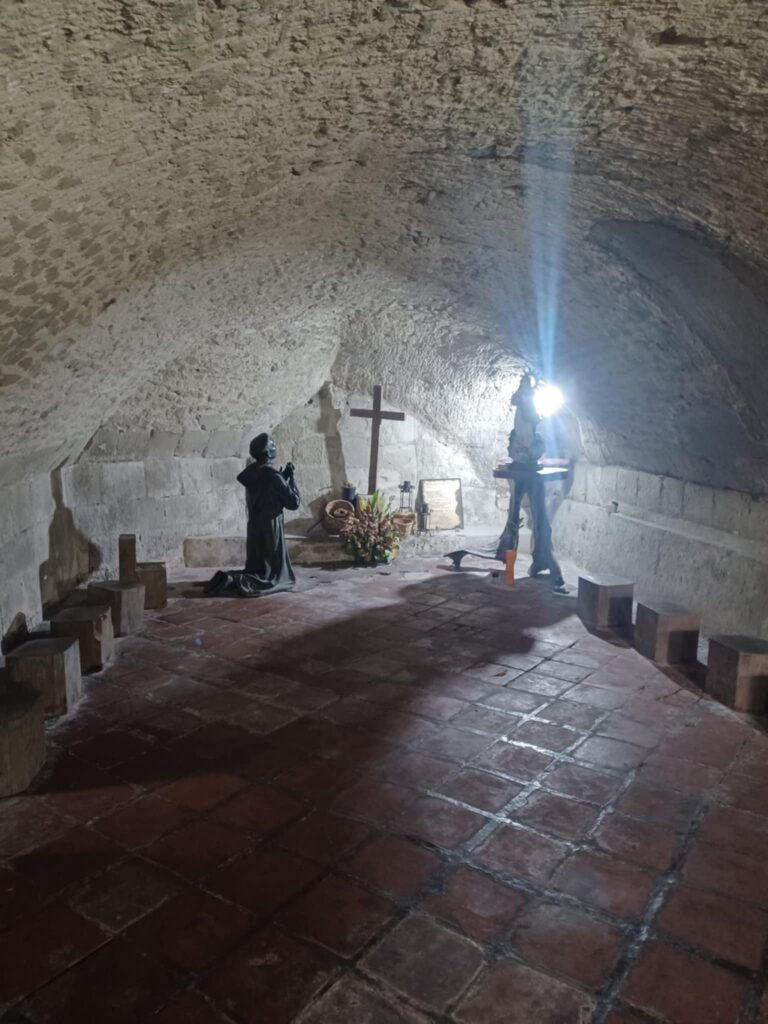
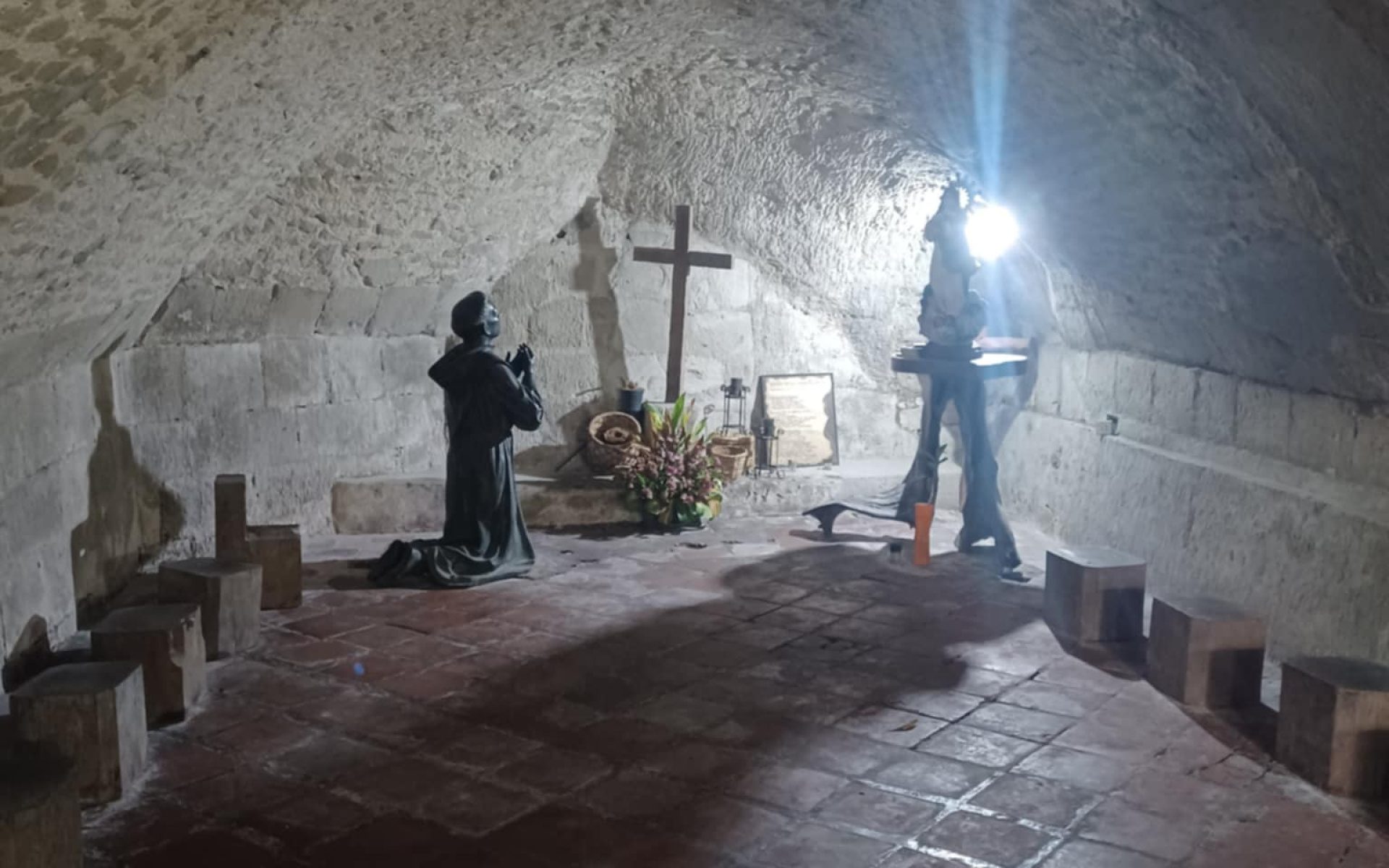
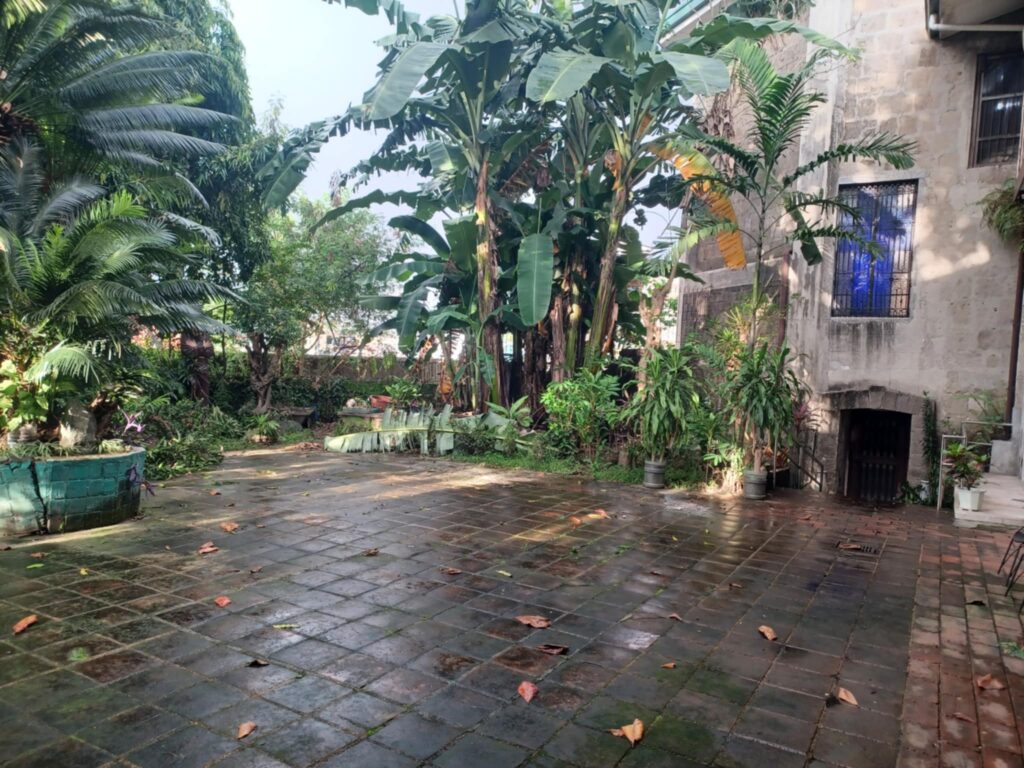
A Sunday Mass was being celebrated when I arrived a little past 4:00 PM. Farther into the church grounds lies a garden on the other side. To its right is a short stone stairway leading down to the cave. Stepping inside its dimly lit chamber, I found a middle-aged woman and a teenage boy sitting on the concrete stumps. They were praying before a statue of San Pedro Bautista, which kneels before a crucifix. Nearby was yet another crucifix embedded in a depression on the wall, and to its right was an elevated image of Mother Mary.
As they were leaving, the boy touched the statue of the martyred saint and made the sign of the cross. As they were about to pass me near the entrance, the woman asked me to turn off the lights and leave the door just a bit ajar before I departed. The centuries-old cave, where I took solace for a fleeting moment that Sunday afternoon, was designated by San Pedro Bautista himself as a place of prayer and contemplation. I sat down opposite to where the mother and child sat, indulging in the calm and quiet scenery of the religious artifacts of my faith. With the cave all to myself, it offered me the revival of spiritual vigor, once intended for the Franciscan missionaries.