

A sojourn into the underrated and overlooked soul of the Philippine capital through one of its most colorful, culturally diverse areas
Nothing captures the chaos and color of Manila quite like Quiapo.
Combining Catholic tradition and Muslim faith, this cultural melting pot offers bargain hunts, traditional healing, and unique street food you won’t find in fast-food joints or typical Filipino restaurants.
Come January, millions of barefoot devotees transform the narrow streets into a sea of Traslacion pilgrims making their way to the main landmark: Quiapo Church, home to the miraculous Black Nazarene. Curiously, religious artifacts and medicinal herbs used by faith folk healers are hawked next to cheap gadgets and adult sex toys outside this “church of the masses.”
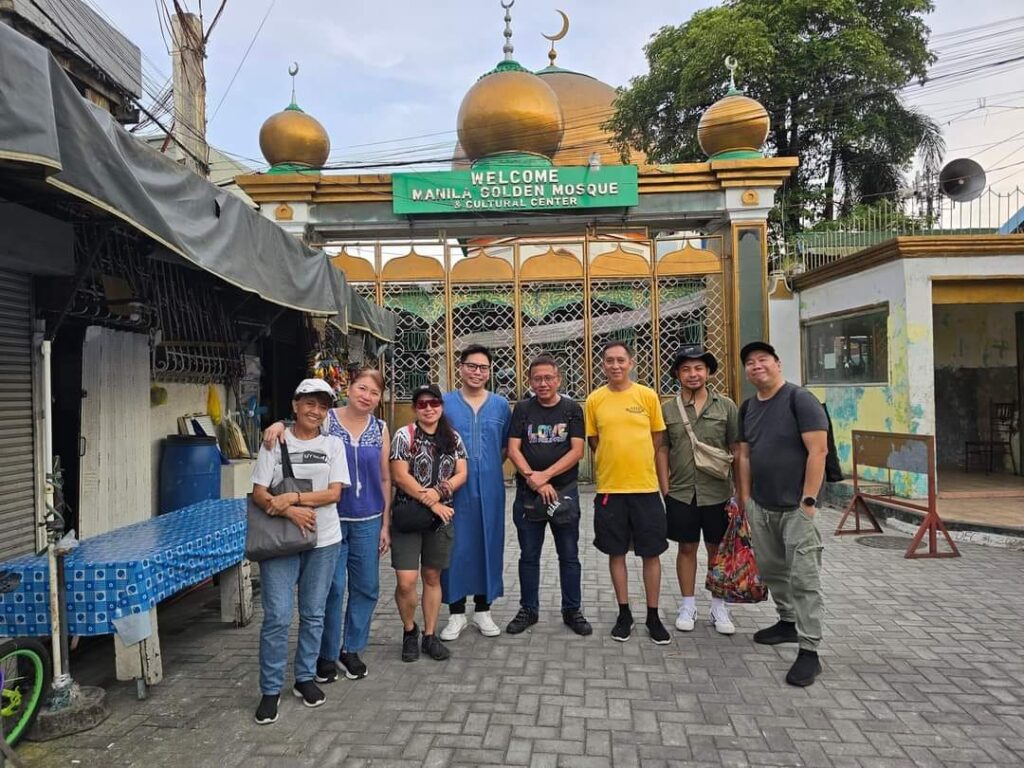
Nearby, tapered alleys hide repair shops for typewriters and film cameras—relics of a bygone era. Stalls near Quiapo Church offer nostalgic treats like lumpia and hopia, along with trending “viral” street eats. Outside the Golden Mosque, a central place of worship for the Filipino Muslim community, one can relish authentic Maranao food and get a full meal for under 100 PHP.
A Creative Way to Explore Quiapo
One weekend, I found myself exploring Quiapo on a food crawl and heritage tour led by George “JP” Ordoña. The intrepid traveler and tour guide behind Manilakad offers creative tours that reveal lesser-known aspects of Manila’s history, architecture, and local life.
Our group met at San Sebastian Church, a National Cultural Treasure and the country’s only steel church. Its Gothic style, constructed with German stained glass and Belgian steel, reflects European influences.
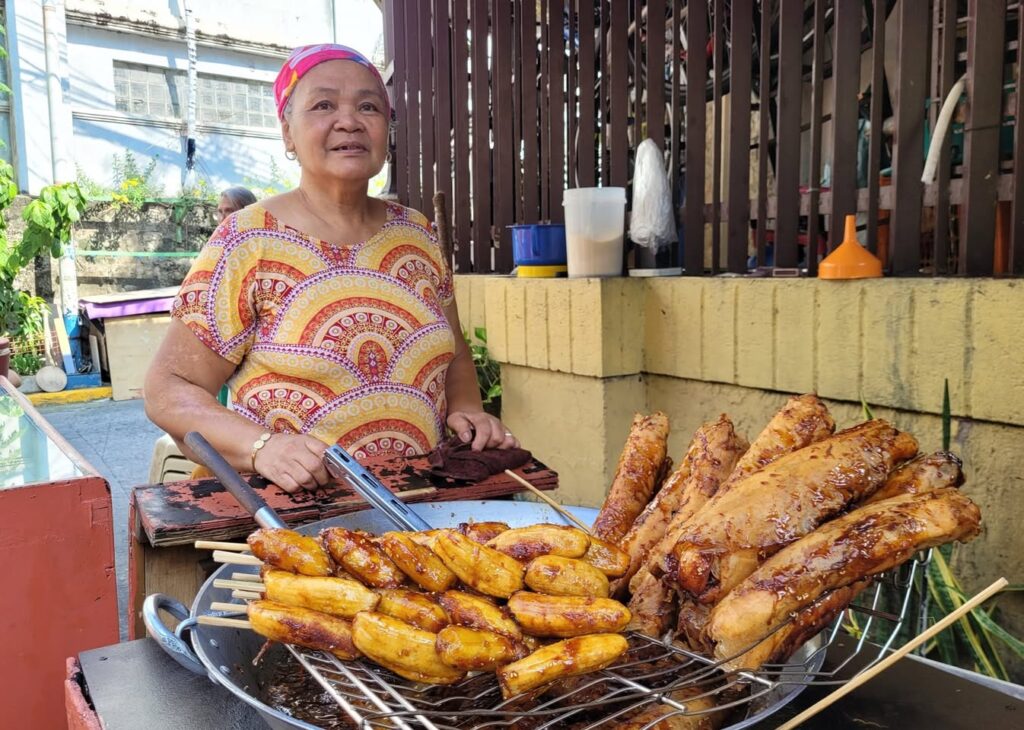
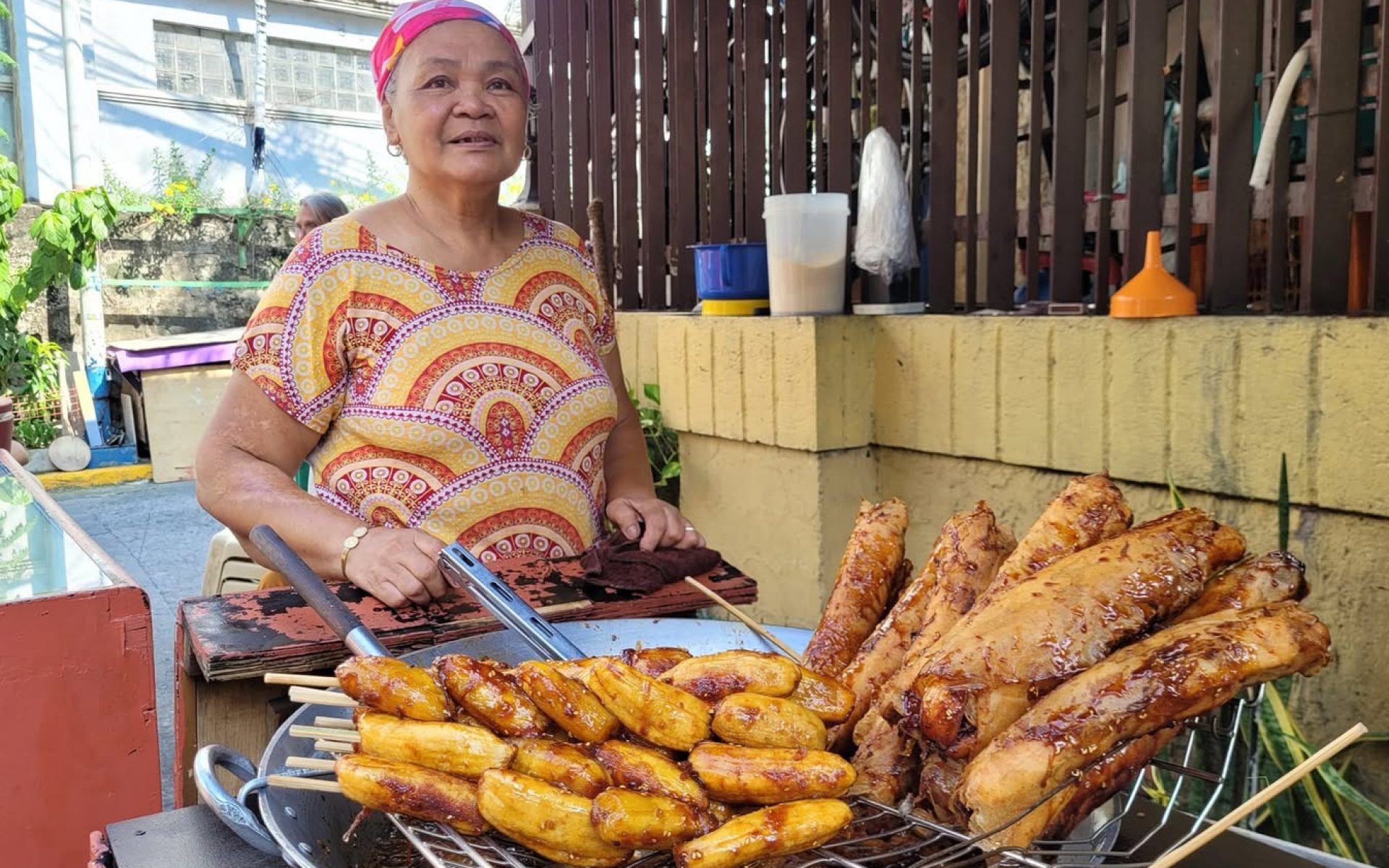
Our first food stop behind the church was Aling Mely’s stall. Over a sizzling pot, she shared how she has been selling turon (deep-fried banana rolls) and banana cue since 1981 and has managed to send six of her kids to school on turon. Each gigantic piece, filled with 4 bananas and drizzled with sweet sesame sauce, costs just 25 PHP.
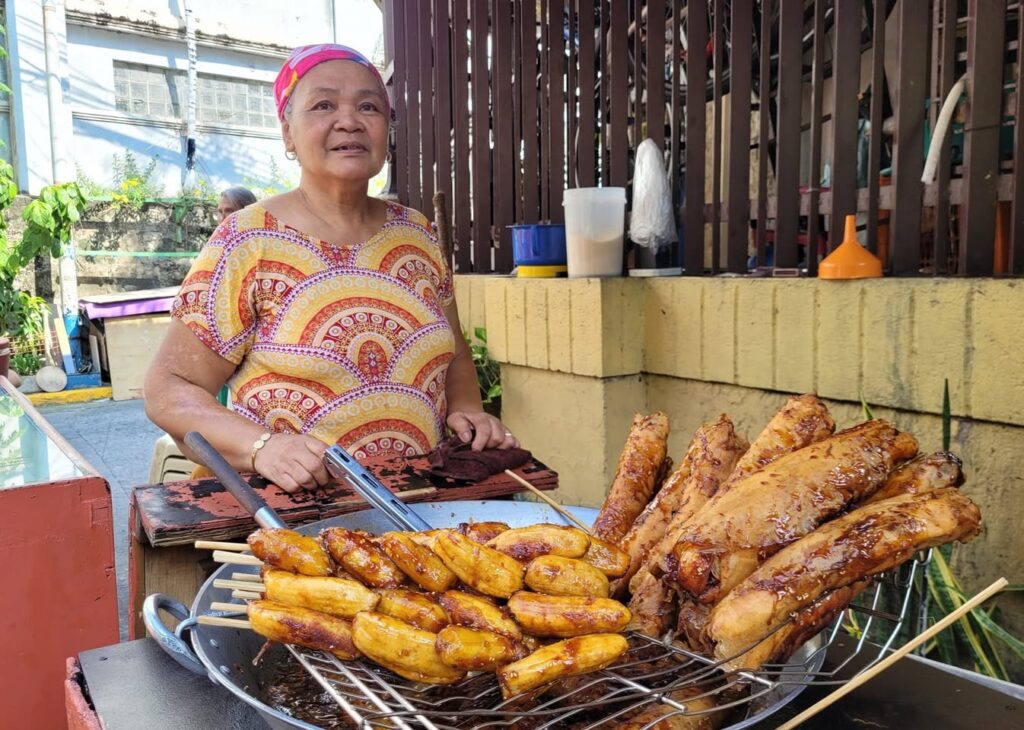
The humble stall along Calle San Sebastian sits next to Casa Consulado (Iturralde House), an abandoned heritage house originally built in 1926 that once hosted the Consulate of Monaco.
Continuing our stroll, we admired other remaining century-old structures. Some heritage houses were in various states of urban decay and occupied by informal settlers. Most have been demolished in favor of high-rise buildings, condominiums, and parking lots.
Our next food stop was Bakerite, a historic bakery established in 1946. Founded after World War II, the homegrown brand popularized “Tasty” bread and sells pastries like pan de sal and pianono.
In between bites, JP pointed out notable examples of adaptive reuse. A house originally built in 1904 now operates as the Tanduay Fire Station. The Art Deco Lateral Apartments in Recto were retrofitted into Youniversity Suites—a modern food hub, hotel, and dorm for students.
The highlight was the Muslim Quarter, an area reminiscent of busy Mindanao markets, with authentic Muslim and halal cuisine. After traveling all over Mindanao, I was excited to reconnect with familiar favorites. The bustle of urban activity reminded me of the vibrance of Sulu, Tawi-Tawi, and Marawi.
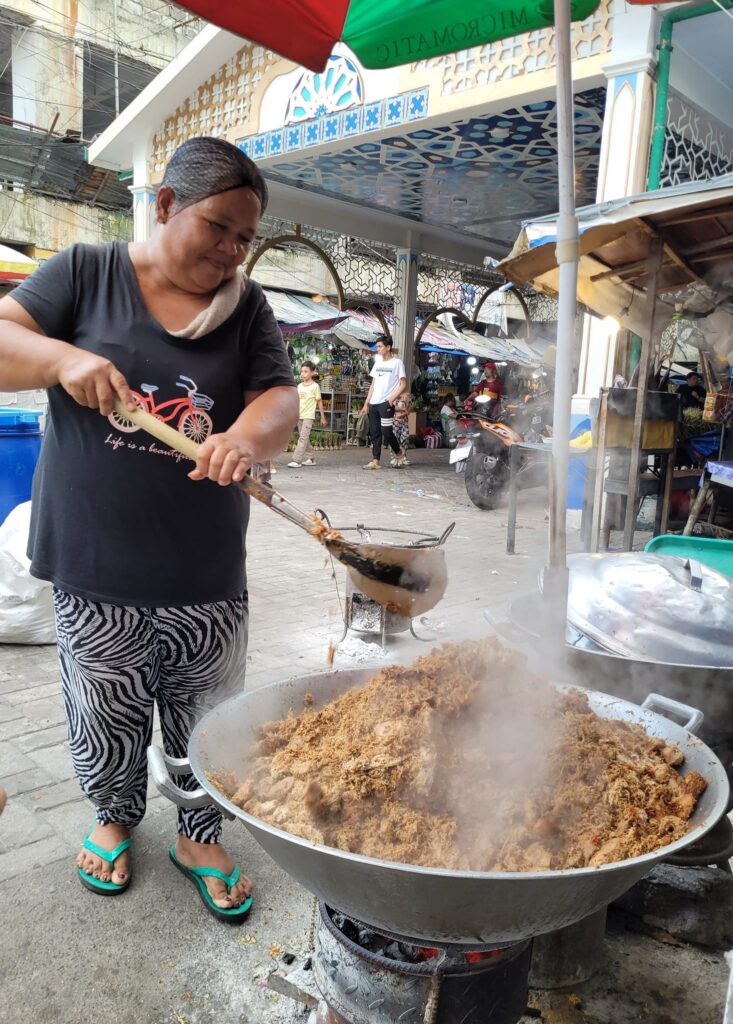
After buying pastil (15 PHP) to take home, we settled at Pater ni Intan’s stall for a fiery meal of Chicken Piaparan with turmeric rice (30 PHP). Nearby, vendors were selling Muslim garb, bakas (smoked yellowfin tuna) on skewers, and sakurab (native scallion), an essential ingredient for palapa—a spicy Maranao condiment that can liven up the simplest meals.
For dessert, we visited Landap Cafe outside the Manila Golden Mosque. Adorned with miniature houses, this quirky cafe is a great place to cool down over Teh tarik, Lassi and Roti Canai.
After browsing native handicrafts under the bridge toward Quinta Market, we followed the blaring horns of city traffic to a row of panciterias. Still too full to eat, we made shopping detours instead at Kape Kabuhayan for coffee beans and Excelente for ham, and various bakeries for hopia tasting.
The tour ended at Quiapo Church, where a maze of stalls offered everything from dragonfruit juice to chocolate muron (rice cakes from Eastern Visayas), to bargain biryani. By the time we got there, the classic shop Globe Lumpia was closed, but we had more than our fill—belly, sights, and all.
Gritty and imperfect, Quiapo is a mess. But it’s the mess of the real Manila. The streets may not be as pretty as Intramuros or as trendy as Binondo. But there’s a sense of life and community that reflects Manila’s soul—underrated, overlooked, flawed, yet somehow authentically alive.
If you’re craving a unique culinary adventure, consider savoring the flavors of Quiapo.
For guided walking tours, contact George Ordoña of Manilakad at 09606975930 or email gpo.islander@gmail.com.