

On the ongoing struggles of the Baguio artist community in the UNESCO Creative City for Crafts and Folk Art, from the lens of the Luisa’s Cafe exhibit that opened in late 2025
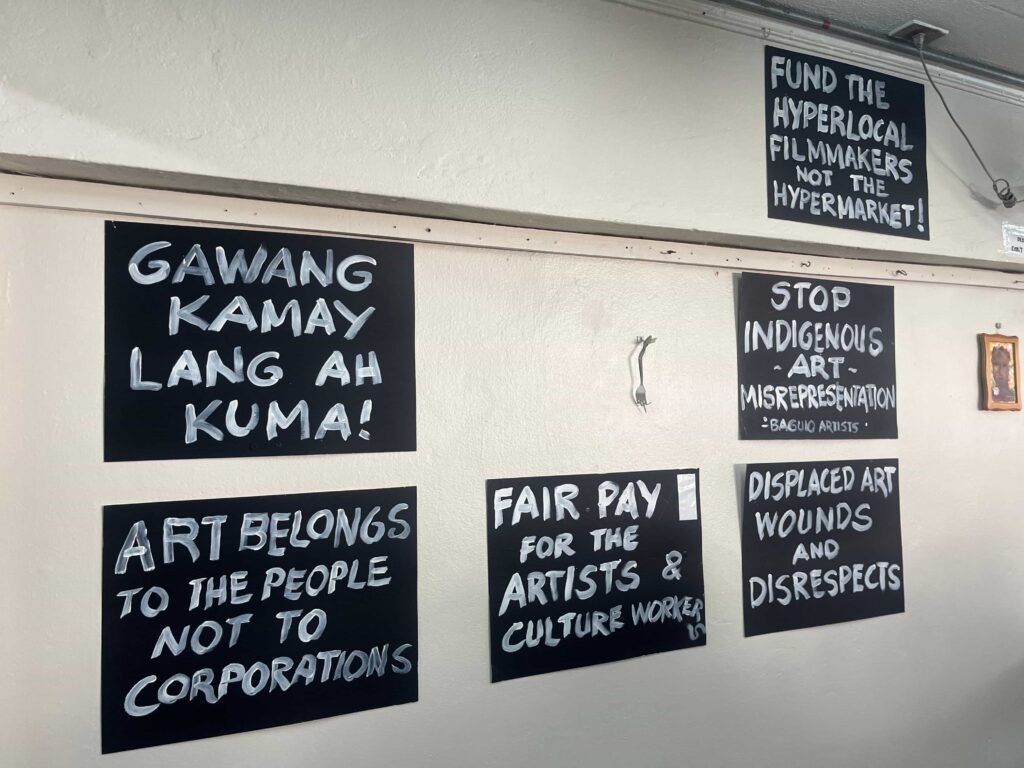
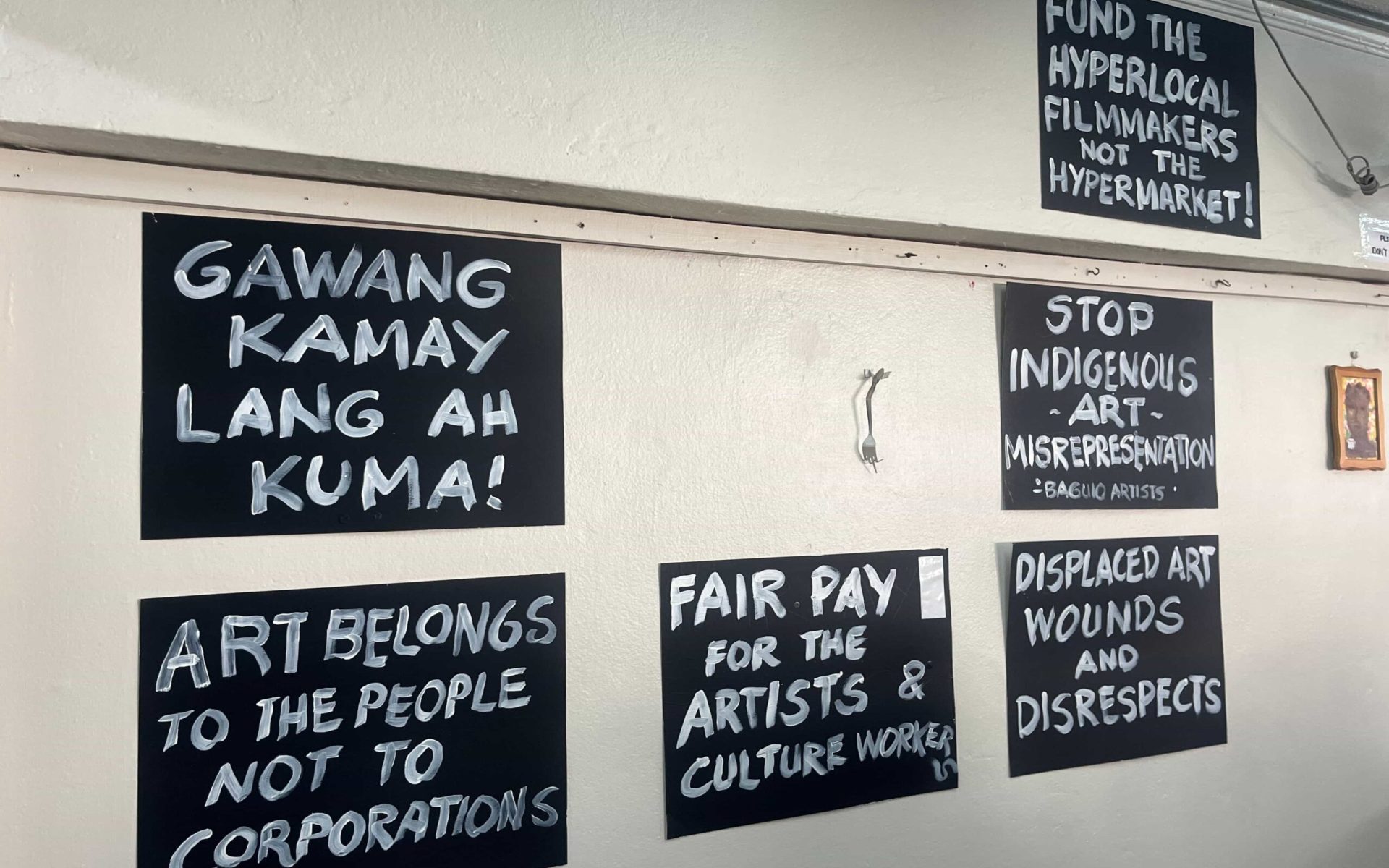
In the last month of 2025, the walls of Luisa’s Cafe swapped their photographs and paintings for placards and other protest art.
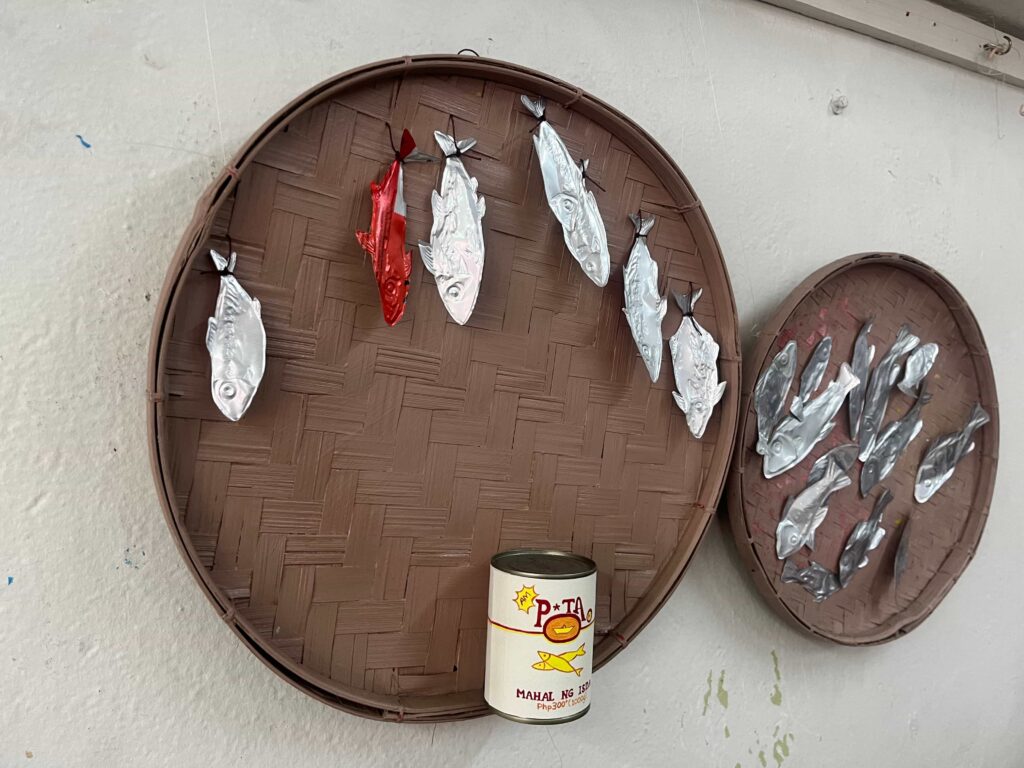
Popular for its special mami and siopao, the cafe is also known locally as a hangout for journalists, writers, and artists. The second floor usually showcases artworks for sale. But this time, the featured art holds a mirror to social conditions in Baguio City, especially for artists.
The ongoing exhibit is nicknamed “ Ibagtit ” — a portmanteau of Ilokano words Ibagiw, or “person from Baguio” and the government- hosted creative festival; and bagtit, meaning “crazy”. The paintings, black and white placards, and mixed media installations tell a story of artists’ hopes fractured by a tourism- driven “Creative City.”
Discarded Dreams
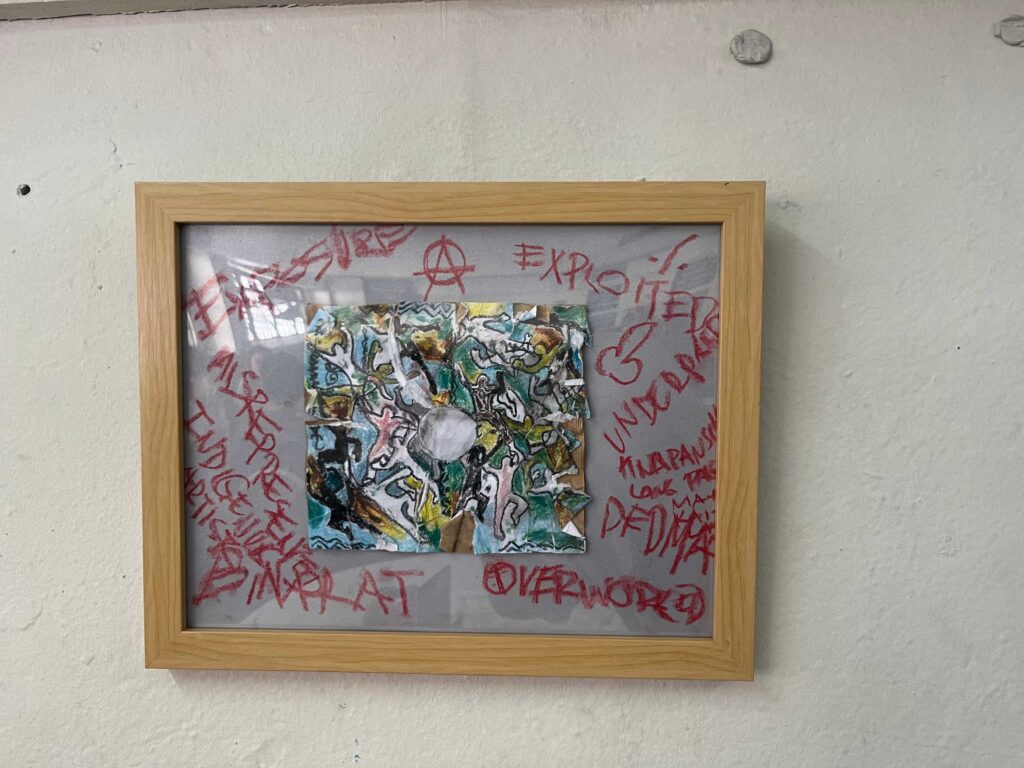
Before the Ibagtit exhibit opened, unrest in the creative sector had been brewing for several weeks. In mid-November, multidisciplinary artist Angelo Aurelio posted a video of him examining his mural, “Pandemic Mural,” unceremoniously removed from the Baguio Cultural and Convention Center frontage and discarded like trash. A miniature version of this mural, surrounded by sentiments written like graffiti, is now on display at Luisa’s.
Aurelio explained in an interview with veteran Baguio writer Babeth Lolarga that the dismantled mural was commissioned by the local government in 2020 as a tribute to visionary Baguio artists, as well as individuals who passed away in the pandemic.
On November 23, while the Ibagiw Festival was drawing to a close, Aurelio led a tight circle of artists in a silent protest outside the BCC where he danced in the midst of lit candles.
Shortly after his video gained traction on social media, other Baguio artists and performers expressed sympathies and shared their own horror stories, mostly of delays or nonpayment of honoraria. Local news outfit North Luzon Monitor collected artists’ statements and amplified them through a dedicated campaign with hashtags like #ArtIndustryReform and #ArtistSupport.
One striking story was shared by singer-songwriter Ivee Bongosia: “I remember singing on a 12 noon slot for ‘Creative Sundays’ then, under the heat of the sun. Ni bottled water walang binigay (They didn’t even hand out bottled water.) Then you could hear ads of sponsors being played while prepping your set.”
Another widely shared post came from musical director Jessica Ladines-Mirandilla. She spoke of an incident where her music team was not given meals, fees, or even a simple thank you after their performance.
Mirandilla and Aurelio are two of the loudest voices in the newly formed Baguio Artist Welfare Community (BAWC).
Founded in the aftermath of the Ibagiw Festival protests, BAWC aims to carry the grievances and aspirations of the art community forward. They started strong by submitting an open letter to Mayor Benjamin Magalong, Chairman of the Baguio Creative City Council, urging him to investigate irregularities and unfair practices in the government’s dealings with the art community. Their online petition for the resignation of City Tourism supervising officer Alo ysius “ A l e c ” Mapalo has garnered 775 signatures as of this writing. Mapalo’s office oversees city-wide activities related to its designation as a UNESCO Creative City for Crafts and Folk Art.
Creative City Crossroads
Artists feeling undervalued and exploited is old news in Baguio City. But Baguio’s induction into the UNESCO Creative Cities Network in 2017 marked a sharp turn. The institutionalization of the Ibagiw Creative Festival meant that the city government had control over how the local arts and art community would be perceived, especially by visitors.
The decision to place the Creative City Council under the Tourism Office already tells half the story.In recent years, Ibagiw events have also become increasingly exclusive and detached not only from the creative sector but also the larger Baguio community.
In a Facebook post, former Ibagiw Festival director and director Karlo Altomonte clarified the rationale for Ibagiw. “We didn’t stage the festival for any one particular sector: not for tourists alone, nor for the social elites, nor for the culturati, nor for influencers… the understanding was the festival is being staged for the artists and artisans, and the whole community was invited to celebrate with us.
The exhibits were open to everyone. The performances were open to everyone. The workshops and other activities were open to everyone. Watching the process of the artisans as they imagined, wove, created was open to everyone.The artist talks were open to everyone. And whenever food was served, it was for everyone.”
Beyond Ibagiw
It’s not the first time Aurelio and his work are capturing nationwide attention.
Along with local artists like Tatay Kidlat Tahimik and the progressive artist group Sulong Likha, Aurelio has consistently expressed solidarity with the vendors and supporters of the Baguio City Public Market. He was one of the performers in the October 26 solidarity event held in front of the Fish and Meat Section of the palengke. The event was the first major post-pandemic protest against market mallification. It was co-organized by multimedia firm Fridge TV and the local literary group spearheaded by yours truly: ili press.
Back at Luisa’s Cafe, there are artworks that touch on issues of the market redevelopment and rising food prices. To me, this serves as a necessary reminder that Baguio artists are regular citizens after all. We love our public market. We need affordable food. We deserve to be respected, appreciated, and duly compensated for our labor.