

By island-born hands, for the world.
The Archipelago Press
  • Home
  • About Us
  • Stories
    • Mountains
    • Islands & Beaches
    • Lakes & Rivers
    • Flora and Fauna
    • Outdoor Adventures
    • Cityscapes
    • Architecture
    • In-betweens
  • Guides
  • Food
  • People, Art & Culture
  • News
  • Partners
  • Home
  • About Us
  • Stories
    • Mountains
    • Islands & Beaches
    • Lakes & Rivers
    • Flora and Fauna
    • Outdoor Adventures
    • Cityscapes
    • Architecture
    • In-betweens
  • Guides
  • Food
  • People, Art & Culture
  • News
  • Partners
The Archipelago PressThe Archipelago Press
Font ResizerAa
  • Home
  • About Us
  • Stories
  • Guides
  • Food
  • People, Art & Culture
  • News
  • Partners
Search
  • Home
  • About Us
  • Stories
    • Mountains
    • Islands & Beaches
    • Lakes & Rivers
    • Flora and Fauna
    • Outdoor Adventures
    • Cityscapes
    • Architecture
    • In-betweens
  • Guides
  • Food
  • People, Art & Culture
  • News
  • Partners
Follow US
© 2025 The Archipelago Press. All Rights Reserved.
Home » Blog » Inaul: Maguindanao’s Vibrant and Enduring Woven Tradition
DestinationsMindanaoNarratives

Inaul: Maguindanao’s Vibrant and Enduring Woven Tradition

Maguindanao’s local textile historically was a status symbol for royal and noble families, and weavers pass it on from generation to generation. Today this tradition remains not just for cultural preservation but also innovation and the economic empowerment of weavers.

Rhea Claire Madarang
Last updated: November 20, 2025 9:28 pm
Rhea Claire Madarang
Share
SHARE

I have always seen the Bangsamoro Region in Mindanao as a home of rich and colorful traditions, among them indigenous woven textiles.

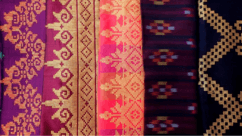
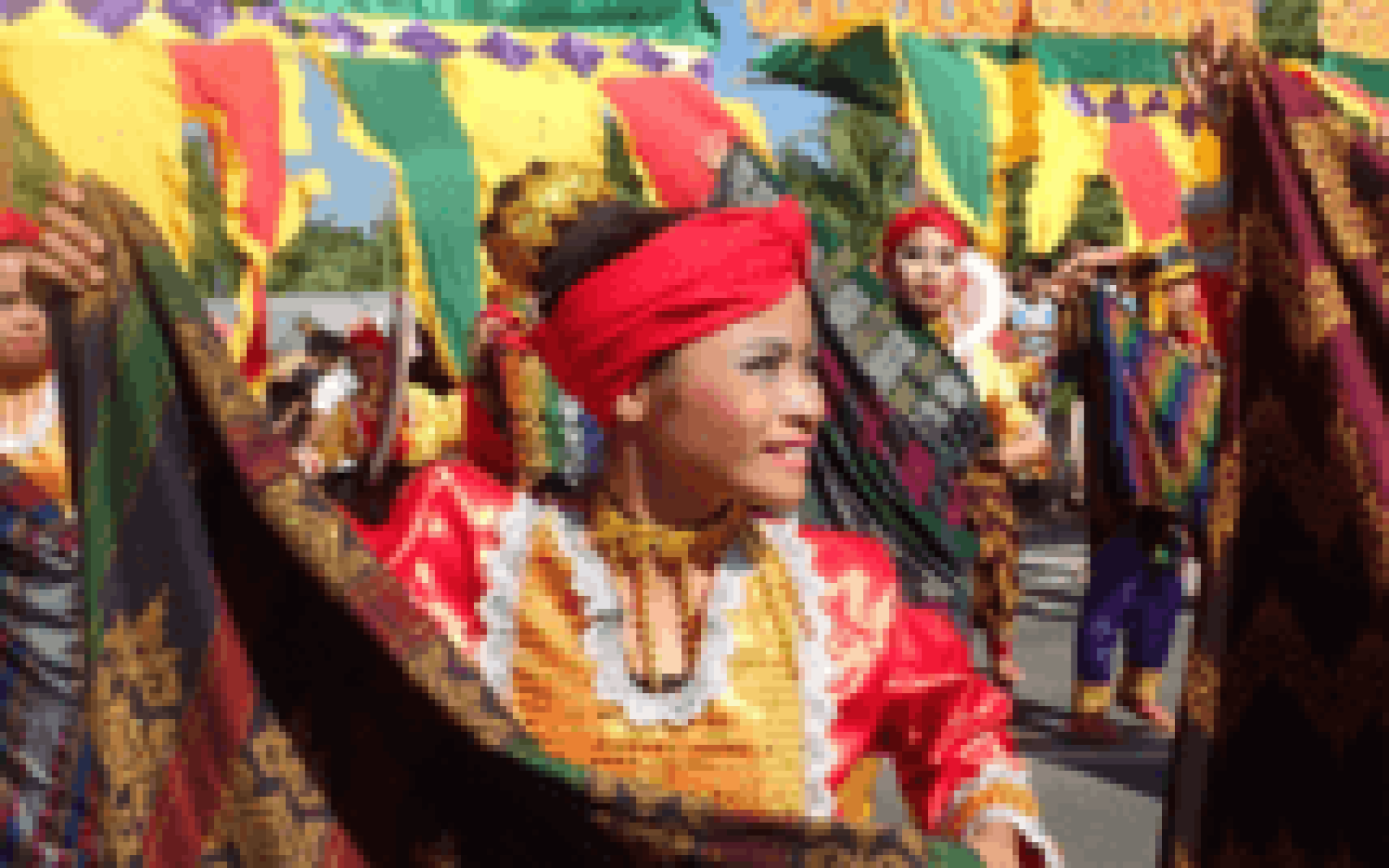
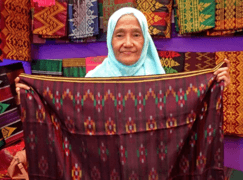
That impression was reinforced when I visited Maguindanao and saw their local textile, inaul. It featured vibrant colors interwoven with intricate patterns of gold and other glistening threads—creations befitting of Muslim princes and princesses.

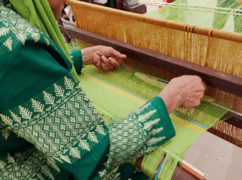
Inaul, which means “woven” in the Maguindanaoan language, historically was a status symbol for royal and noble families. Master weaver Noraina “Jho” Abbas Ansing – more fondly known as “Nanay Jho” –  shared more about inaul with me and said that there are patterns only royals are allowed to wear. Today, the fabric is also woven with cotton and rayon, and can be worn by many others, including everyday folk.

The earliest inaul weavers are believed to have arrived in Maguindanao alongside Shariff Mohammed Kabungsuwan, who introduced Islam to the region, in what is now modern-day municipality of Sultan Kudarat. Nanay Jho said that these first inaul weavers used sutra thread from spiderwebs, with thread so thin that a malong can fit inside a closed fist.

Weaving an inaul into a malong – a tubular cloth that both males and females wear – usually takes at least two days. More difficult patterns take five to six days.

Among the patterns I saw during my visit was the wavelike binaludan or biyaludan. It’s one of the most difficult and expensive to weave. The traditional way of weaving this is that the weaver first dyes the threads, wraps them up in banana leaves, and then dries them under the sun. This practice is similar to the ikat weaving of the T’boli, Blaan, and some other indigenous groups in Mindanao.

Nanay Jho said that some patterns are inspired by stories and objects, like the karanda, a metal case worn by a legendary datu to keep his precious belongings. Meanwhile, some patterns are inspired by emotions, such as lombayan, which means sadness.

Traditional inaul patterns are passed on from generation to generation. Nanay Jho studied the patterns under her mother, who also learned from her own mother. At 15, she started learning the craft and has been weaving for the past 40 years. For her, weaving was primarily a source of income. It was how she raised her six children when her husband died from a heart attack over 15 years ago.

Now, she also teaches women as young as 17 in her hometown, the municipality believed to be the birthplace of inaul in the country. Among the women she taught were her daughters, who used the income for their school allowance.

Together with other women, she formed a weavers’ association and sought financial support from the local government. The latter had envisioned inaul to continue well into the next generations, and had organized training programs for women in the province. While there are still challenges, and resources are not always enough for their needs, she is proud that more and more people are becoming aware of and buying the fabric, including customers from overseas.

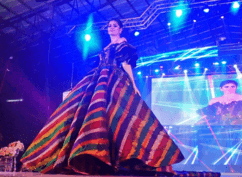
I met Nanay Jho during the Inaul Festival before the COVID-19 pandemic. As part of their campaign to keep the inaul tradition alive, Maguindanao’s local government had been holding the festival annually for two consecutive years prior to my trip. I watched inaul-clad locals in street dances and beauty pageants and was floored to see even fashion models and Miss Universe winner Catriona Gray in a fashion show. During the entire festival, there was also a colorful bazaar with booths from Maguindanao’s different municipalities, where inaul was sold not just as malong but as items for daily use, such as mobile cases and laptop bags.

Probably because of COVID, I did not hear of succeeding festivals afterward, only fashion shows and exhibits some time after the pandemic. I also saw people proudly wearing inaul in different events in Manila. 

Meanwhile, Nanay Jho continues to sell inaul face to face and online. I know she is not the only one. I saw inaul in online shops like Shopee, too.Today, more women are studying the art of weaving inaul. Just months ago, the Philippine Textile Research Institute organized an inaul training for Maguindanaoan weavers, including youth. Maguindanao’s  Ministry of Trade, Investment, and Tourism is planning to establish a weaving center in the Bangsamoro Region, which is envisioned to be not just for cultural preservation but also innovation and economic empowerment of inaul weavers. With this latest news, the practice of inaul weaving will hopefully flourish for generations more to come.
Subscribe to Our Newsletter
Subscribe to our newsletter to get our newest articles instantly!

Share This Article
Email Copy Link Print
Rhea Claire Madarang
ByRhea Claire Madarang
Before Claire started doing travel guides and narratives like this, she wrote news articles, research reports, and occasionally, poetry. Being out on fieldwork, and later, meeting travelers, inspired her to go on her own solo adventure and write about it. She posted her first entry on her blog iamtravelinglight.com while backpacking around Visayas for seven weeks. That trip, and others that followed, allowed her to engage with different communities and deepened her appreciation for the Philippines’ rich biodiversity and culture. Now, environmental conservation is a common topic in her work as research and communications consultant. She also facilitates play-based nature appreciation activities, as well as storytelling and creative documentation in communities on the state of their biodiversity and climate.
Previous Article The Demon of Malabon Cemetery
Next Article Lake Sebu Lotus Garden: Paddling Through the T’boli Culture
Leave a Comment

Leave a Reply Cancel reply

Your email address will not be published. Required fields are marked *

Travel

Why Boracay, Palawan, and Siargao Continue to Rank Among the World’s Best Islands

A recent readership poll reveals leisure travelers consider these three…

November 21, 2025

The Philippines Wins as Asia’s Leading Beach, Dive, & Island Destination in World Travel Awards 2025

The annual gala ceremony gathered industry…

November 2, 2025

You Might Also Like

DestinationsLuzonMountainsNarratives

A Memorable Day at Quitinday Green Hills Eco-Park

There’s always a certain kind of magic when you visit a place for the first time. Maybe it’s the inner…

5 Min Read
DestinationsMindanaoNarratives

South Cotabato’s Lake Sebu: Home of the Dreamweavers and the Land of Living Treasures

Located in the highlands of South Cotabato, about a thousand feet above sea level, Lake Sebu offers more than beautiful…

6 Min Read
DestinationsLuzonNarratives

Getting Fishy at the Navotas Fish Port

The weather was like the first time I visited Navotas City’s fish port some years back: the sky overcast, the…

5 Min Read
DestinationsIslands & BeachesNarrativesVisayas

Anda: A Hidden Paradise in Bohol

It was seven in the evening. While some kids were having dinner at home, our son Akira was busy swimming…

8 Min Read
The Archipelago Press

News

Guides

Destinations

Narratives

Information

  • Home
  • About Us
  • Contact Us

Subscribe

  • Facebook
  • Instagram
  • Tiktok
  • X
  • YouTube
  • Pinterest

Don’t miss a single story.

Subscribe for the best storytelling from the Philippines, as it happens.

Information

  • FAQs
  • Contact us

Partnerships

  • Collaborate
  • Share your story

Legal

  • Privacy policy
  • Cookie Policy
  • Legal disclaimer

Connect with us

© The Archipelago Press. All Rights Reserved.

Welcome Back!

Sign in to your account

Username or Email Address
Password

Lost your password?