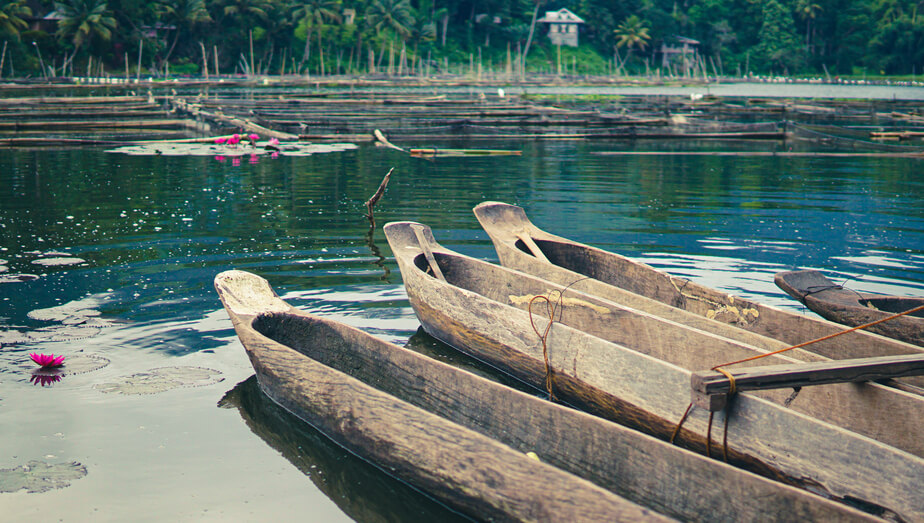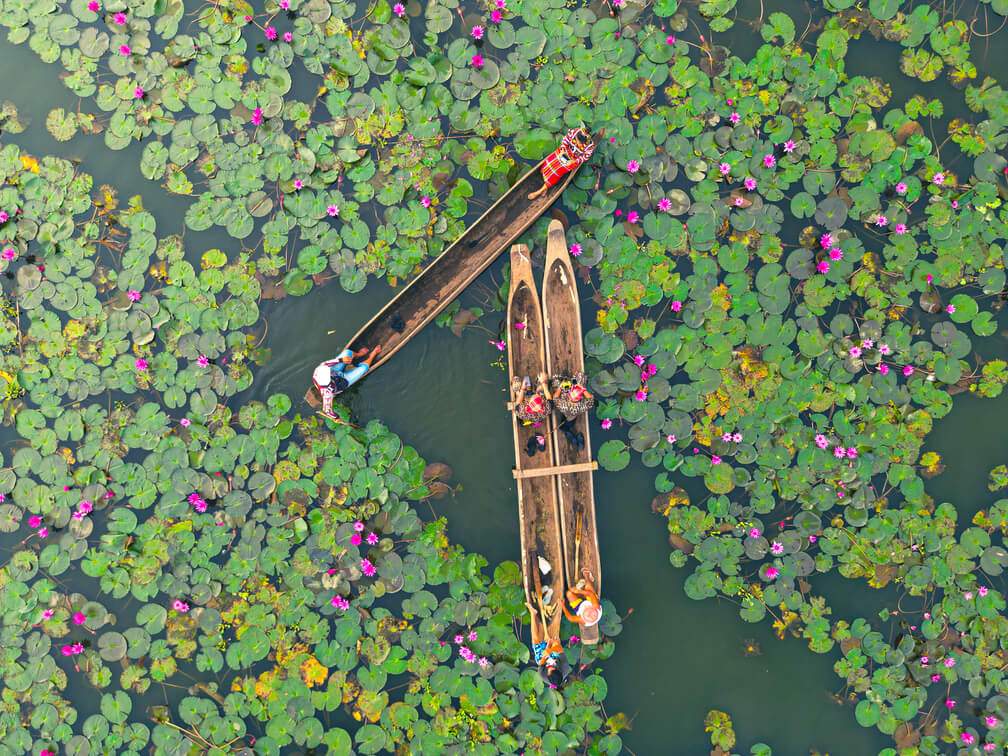

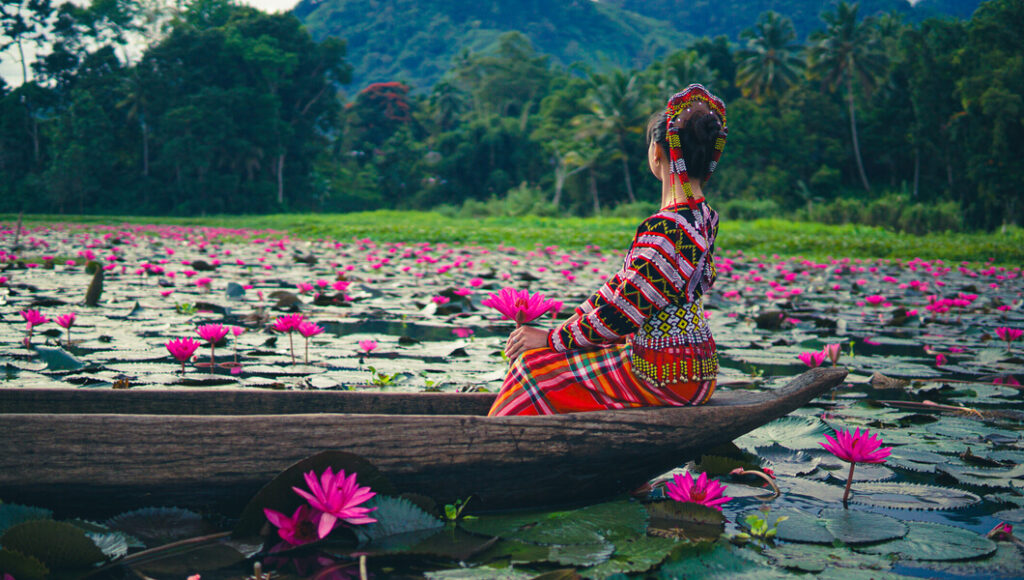
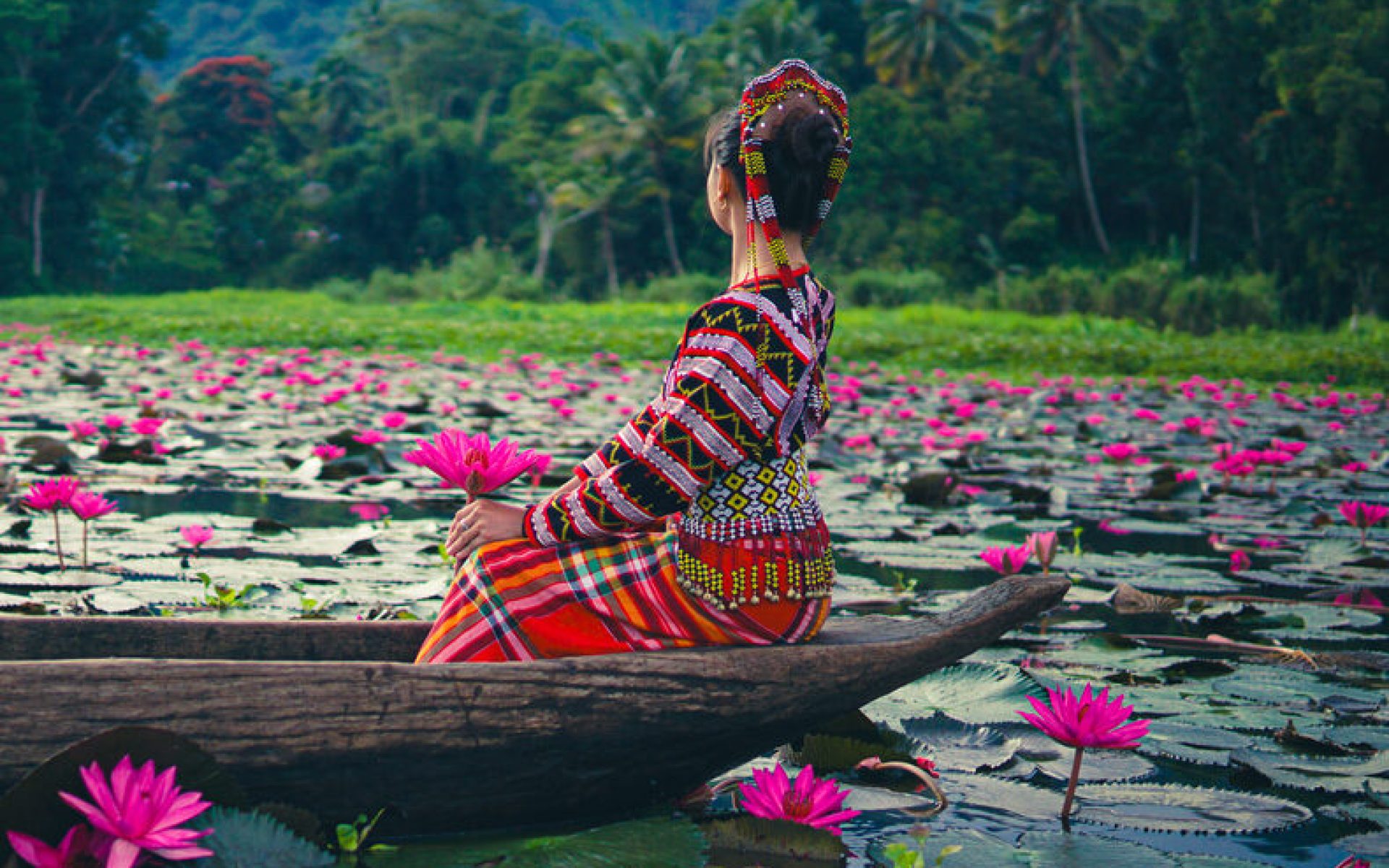

As our owong glided over the calm lake, I felt like I was slowly drifting off to a deep slumber, to a beautiful dream—except for the fact that my eyes were open and I was wide awake. Everything around us was peaceful and in perfect harmony: the misty mountains from afar, the cool morning breeze brushing against my cheeks, the distant cock-a-doodle-doo of the roosters, the gentle splash when the paddle touched the water. Everything. As we quietly approached the area where the lotuses grew, time stood still while I soaked up reality. The dream of finally experiencing Lake Sebu’s lotus garden is no longer a mere dream.
About Lake Sebu
Lake Sebu is a municipality in South Cotabato, one of the provinces in the SOCCSKSARGEN (South Cotabato, Cotabato, Sultan Kudarat, Sarangani, including cities like General Santos, Kidapawan, Tacurong, and Koronadal) Region located in South-Central Mindanao. It rests about 1,000 meters above sea level, resulting in its cool climate. Though a melting pot of various cultures, Lake Sebu is largely inhabited by the T’boli people.
Lake Sebu is named after its biggest lake, a 380-hectare body of water that was locally known as “El” and “S’bu” (Eventually, it was called Lake Sebu). It is the largest of three lakes in the municipality, with its deepest part at 60 meters. The other is known as Lake S’loton (Seloton), which, at 80 meters deep, is the deepest of the three; and Lake Lahit, the smallest, at approximately 48 hectares. Unlike the typical falls whose waters are fed by mountains, these lakes serve as the water source for the town’s famous falls.
Apart from this, these lakes also provide the residents with livelihood. Aside from Lake Sebu being utilized for tilapia farming, it also features Lotus Garden, which provides livelihood through tourism.
The Lake Sebu Lotus Garden Experience
We woke up to a chilly November morning and prepped ourselves and our rented T’boli costume from the School of Living Traditions (SLT). It was still dark and the rest of the town was still asleep. Our tour guide, Sir Jorie, picked us up at 5:30 AM from SLT. We then took a habal-habal ride to the poblacion, where sir Jorie gave a short briefing about the activity.
The T’Boli Costume
After the briefing, Sir Jorie assisted us in wearing the T’boli costume. My companions, Franco and Radd, wore T’nalak (a sacred cloth that the T’boli weaves from abaca fiber) vest and pants. They also wore the ulew or scarf on their heads – whose manner of wearing symbolizes one’s role in the tribe. Franco wore it the datu way; and Radd, the warrior.
I wore the kegal libun T’boli – a women’s attire consisting of a long-sleeved blouse called kegal kenibang and a malong called lewek. I had the kegal kenibang and lewek secured around my waist with a belt called hilet. This belt’s latch is made of brass with intricate designs; dangling embellishments made of beads in black, red, white, and yellow; and tiny bells on its ends. We also wore accessories including necklaces locally known as lieg for the guys; and a sewat for me — a headdress for ladies made of a wooden comb with dangling beads.
Renting the T’boli costumes helps fund the education of T’boli kids, who are actually the ones making and renting the costumes out (if not their parents). Their earnings from costume rentals help support their studies.
Owong (Canoe)
After wearing the costumes, we hopped onto our canoes. Locally, these canoes are called owong and made from the bark of the lawaan tree. They use both the red and white lawaan species. Canoes made from white lawaan last two to three years. The ones made from red lawaan, on the other hand, can last five to seven years.
Because we’re all used to riding an outrigger for boating activities, we were a bit worried that the canoe might tip over with one slight movement. Sir Jorie, however, assured us that there’s a 99% chance that it won’t. Calmly, the boatmen paddle to where the other owongs are docked, past the tilapia pens. Before we knew it, the lotus garden was right in front of us.
Sawa (Lotus)
We reached Lotus Garden after a few minutes of paddling. It was among the most peaceful scenes I’ve ever witnessed. Lake Sebu was so calm and so was that morning. Faint sunlight peeked through the canopy of clouds. The lotuses, locally known as “sawa”, were in full bloom. It sure felt like a dream.
We thought that the lotuses were floating. Sir Jorie told us that their roots are actually anchored in the mud. Thus the depth of the lake is equivalent to the length of the lotus flowers’ stalk.
These flowers are in full bloom every morning, all year round, from 5:30 AM until 9:00 AM. The petals begin to close at 9:00 AM and are totally closed by 11:00 PM. It takes three to four months for them to turn into a vibrant magenta color. Cut from its stalk, the petals last for only two hours.
Though plenty of tourists have already been captivated by the beauty of Lake Sebu and the Lotus Garden way back, the latter rose to even greater fame when Miss Universe 2016, Catriona Gray, visited the place and promoted canoeing, too.
As our owong slowly made its way back, I looked once more at the sea of pink petals under the faint morning light. It was a moment that spoke of peace, culture, and resilience. The stillness of the lake mirrors the quiet pride of the T’boli people — deeply rooted, just like the lotus that rises beautifully from the mud.
Lake Sebu reminded me that travel is not only about seeing places but about feeling the stories they tell. Here, amid the mist and the blooms, I found not only beauty but also balance between nature and culture, between silence and song, between dreams and waking life.