

How food can be a story of becomings, endings, and returns
The last meal my Papa and I shared was a bowl of Pancit Batil Patung.
Whenever I eat it now, the steam rising from the bowl lifts more than the scent of soy and garlic. It lifts the geography of home, the heat of Tuguegarao afternoons, and the quiet patience of my father’s hands stirring sawsawan on a chipped saucer. Pancit has become a geography I must enter slowly as I attempt to “go home” and unfurl the map of memories that this food lays on the table.
Growing up, summer vacations meant going home to Cagayan. The long ride from Ifugao bent through mountain roads and softened into the flat heat of the Cagayan Valley. Tuguegarao was never just a stopover. It was a ritual that we understood; we could not pass the city without eating Pancit Batil Patung. Hunger and habit braided together, even when money was tight. Even when fatigue settled into our bones, Papa would say, “Agpansittayo” (Let us eat pancit.)
We always shared a plate. Practicality was a quiet rule in our household. Papa ordered the special pancit, then priced at a hundred or so pesos. A plate of luxury— at least for us—because during those times, my parents could only stretch our budget so much, given that my other two siblings were already in their college in the city.
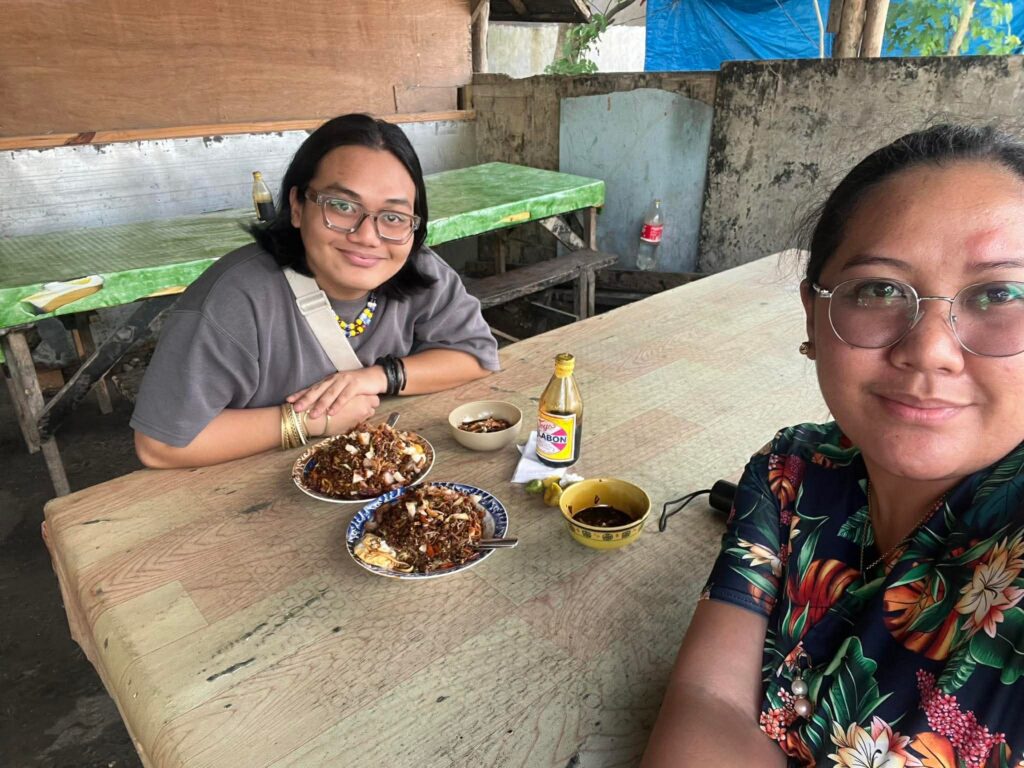
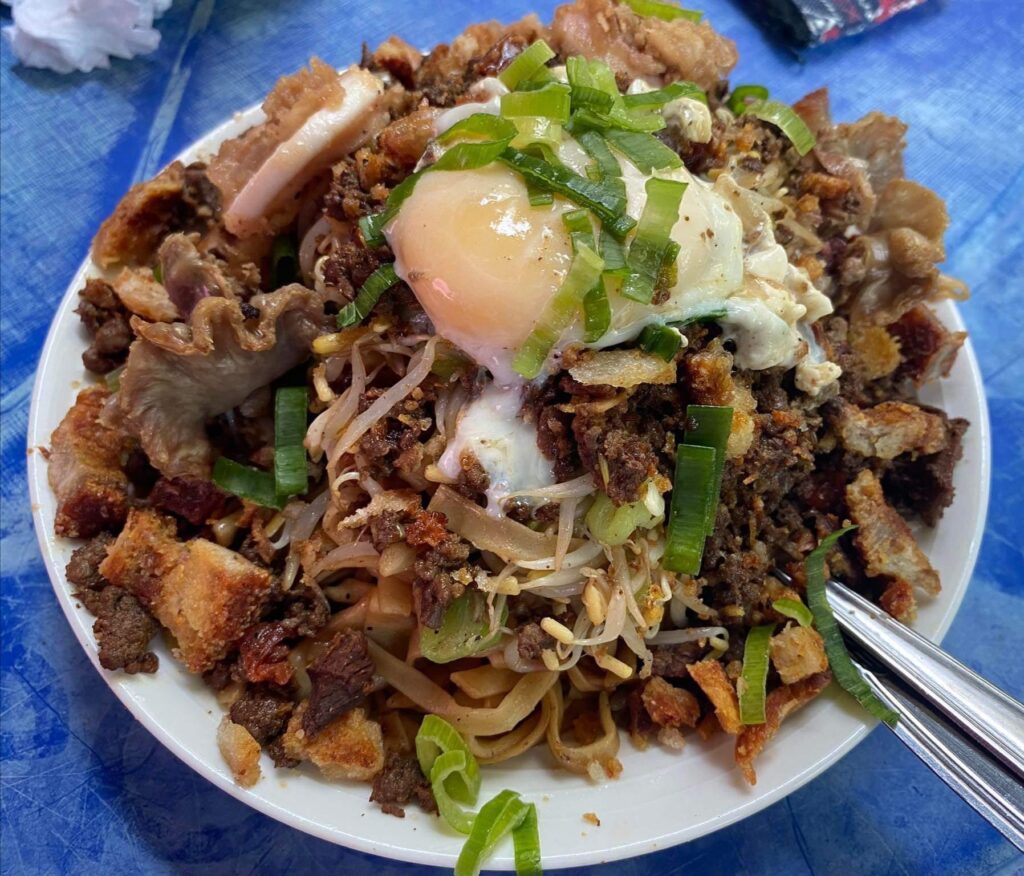
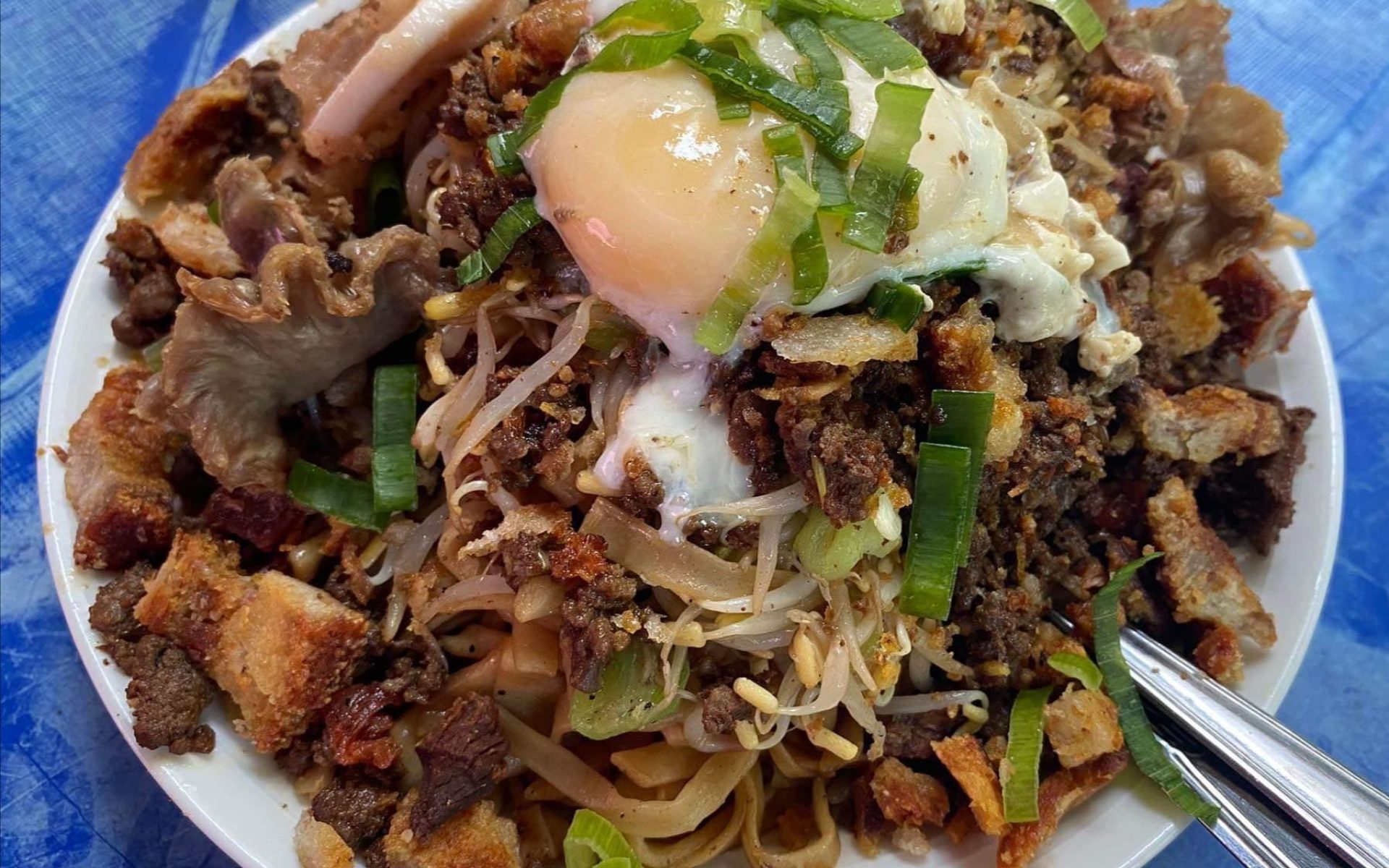
The pancit arrived layered:laddit noodles slicked with broth and topped with sautéed carabao meat, crisp pork, slivers of liver browned in soy sauce and red onion, the sheen of oil catching the light.
Around it were the small routines that made the meal ours. Papa sliced red onions generously and squeezed kalamansi into soy sauce, his hands deliberate and unhurried as he made sure that he squeezed every last drop of the kalamansi before throwing the skin off and fishing the kalamansi seeds on the bowl using a fork. The sawsawan had to bite and had to wake the tongue. Even though the pancit looks so overwhelmingly flavored, Cagayanos know that it is how you mix and prepare your sawsawan that completes the Batil Patung experience.
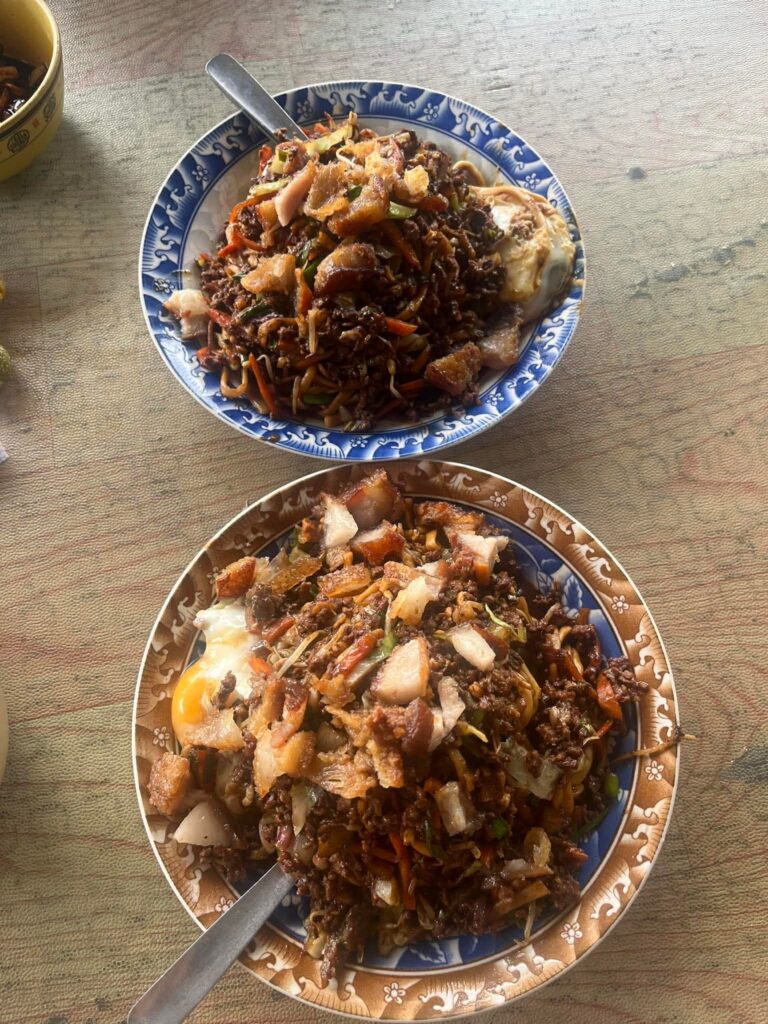
Pancit Batil Patung is a dish of accumulation. Homemade noodles softened in broth. Monggo sprouts and kabatiti lend sweetness and snap. The soft custard of a raw egg stirred at the last minute—batil, to mix; patung, to layer. Each panciteria in Tuguegarao claims a signature: some add kalamares, lumpiang shanghai, crisp pork belly, even pig’s brain. Yet the old-school version keeps to essentials, honoring the labor of carabao meat minced finely, coaxed into aroma by garlic and soy.
Acclaimed Filipina food writer Doreen Fernandez once wrote that Filipino food carries history in its hands. Here, history arrives in layers, asking the eater to pause, to notice, before diving in.
Before I entered high school, Papa accompanied me from Ifugao to Cagayan, where I would begin a different life. At the diversion road, we stopped at Jren’s Panciteria, old-school, fluorescent-lit, the kind of place where plastic stools remember the weight of regular customers. The panciteria was simple, made of bamboo walls and galvanized roof and long tables covered with colorful linoleum mats. Papa ordered two plates this time. Perhaps he sensed that childhood was ending, that sharing would soon become solitary. Or perhaps he just realized that as I grew older and probably bigger, it is time that I learn to eat on my own plate. While waiting, he prepared the sawsawan as he always did, careful with the onions, and patient with the squeeze of kalamansi. Then he taught me how to eat.
“Madim nga ilaoklaok,” he said. Don’t mix everything. He emphasized that eating the pancit should be by layer and per bite in order to finish it, or in any case I can’t, the untouched part can be brought home.
The trick, he explained, was to keep from being overwhelmed by umami. Eat from the edges. Respect the architecture of the bowl. Pancit Batil Patung, after all, is stirred yet layered, a lesson in restraint. So I followed him: tasting the noodles first, then the vegetables, then the meat. Finally, the egg, folded in slowly, binding everything into warmth. That day, I finished my first solo plate. Papa watched, smiling, like I just learned to ride my bicycle without the training wheels. The last time we ate it together, the routine repeated itself. The same stop in Tuguegarao. The same ordering. The same sawsawan. At the time, it felt ordinary—another punctuation mark in a long drive home. I did not know I was memorizing him. I did not know I would soon be eating for one.
Now, every bowl returns me. The clatter of spoons against porcelain. The sharp sweetness of onion. The zesty bloom of kalamansi. The heat that beads on the forehead. Pancit is no longer just sustenance but an invocation of these small encounters that I can still remember since a decade after my Papa died. In Quezon City, in cafeterias that imitate the dish, I search for the laddit’s chew, for the carabeef’s deep savor. The taste is never exact. Perhaps grief alters seasoning. Perhaps memory insists on fidelity the present cannot provide.
In Filipino households, pancit marks beginnings—birthdays, graduations, and long life. We serve it to wish for continuity. Yet the Pancit Batil Patung I carry is a meal of endings and returns. It teaches me how to eat the past: slowly, by layer, resisting the urge to stir everything at once. When I mix the egg into the broth, I recall the minced memories of childhood and moments with Papa. When I lift the noodles, I lift a road from Ifugao to Cagayan, the summer dust, the promise of arrival and summer vacations. When I taste the onion’s sting, I remember his thrift and tenderness, how love often arrived in shared plates and plastic take-outs.
Doreen Fernandez believed that food tells us who we are and where we have been.
For me, Pancit Batil Patung tells me who I am becoming: a child who learned to eat on my own, a son who keeps returning to his hometown and memories as I navigate my becoming in an unfamiliar city. Home, I have learned, is not only a house in Cagayan or a city called Tuguegarao. Home is a bowl set down gently, steam rising, waiting to be stirred. And every time I eat pancit now, I sit across from him again, our spoons moving in gentle symmetry, the layers loosening, the past held warm in my hands.