

One morning in the early ‘80s, while aboard my school trike from my house in Quezon City, Kuya July, the owner-driver of the vehicle, entered the dirt road that ran alongside the expansive rice field. I noticed a senior couple, both around 90 years old, engaged in a muted lovers’ quarrel near the paddy on the right. Walking in slow motion, lolo (grandpa) followed lola (grandma). But when the old man got near enough to reach out for his wife’s arm, she made a U-turn and kept walking away at snail’s pace. Lolo persistently followed suit at the same excruciatingly sluggish pace. “Ano kaya ang tampo ni lola?” (What could be grandma’s grievance against grandpa?) Kuya July asked teasingly.
But the story here isn’t about the couple, but the rice paddies.
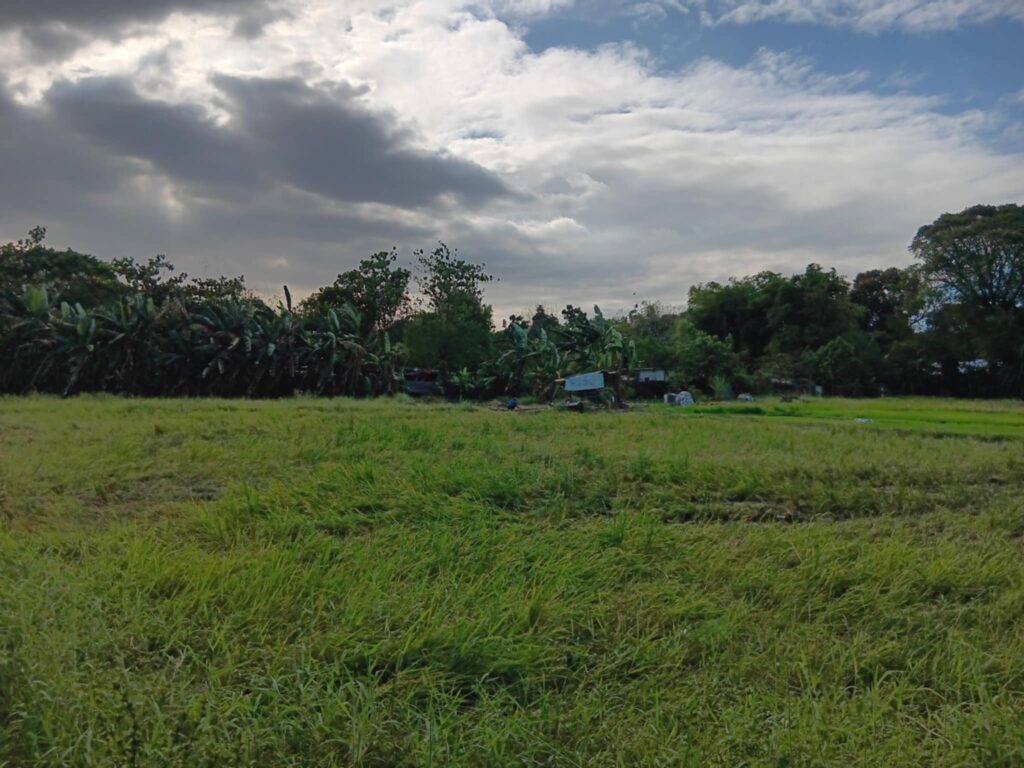
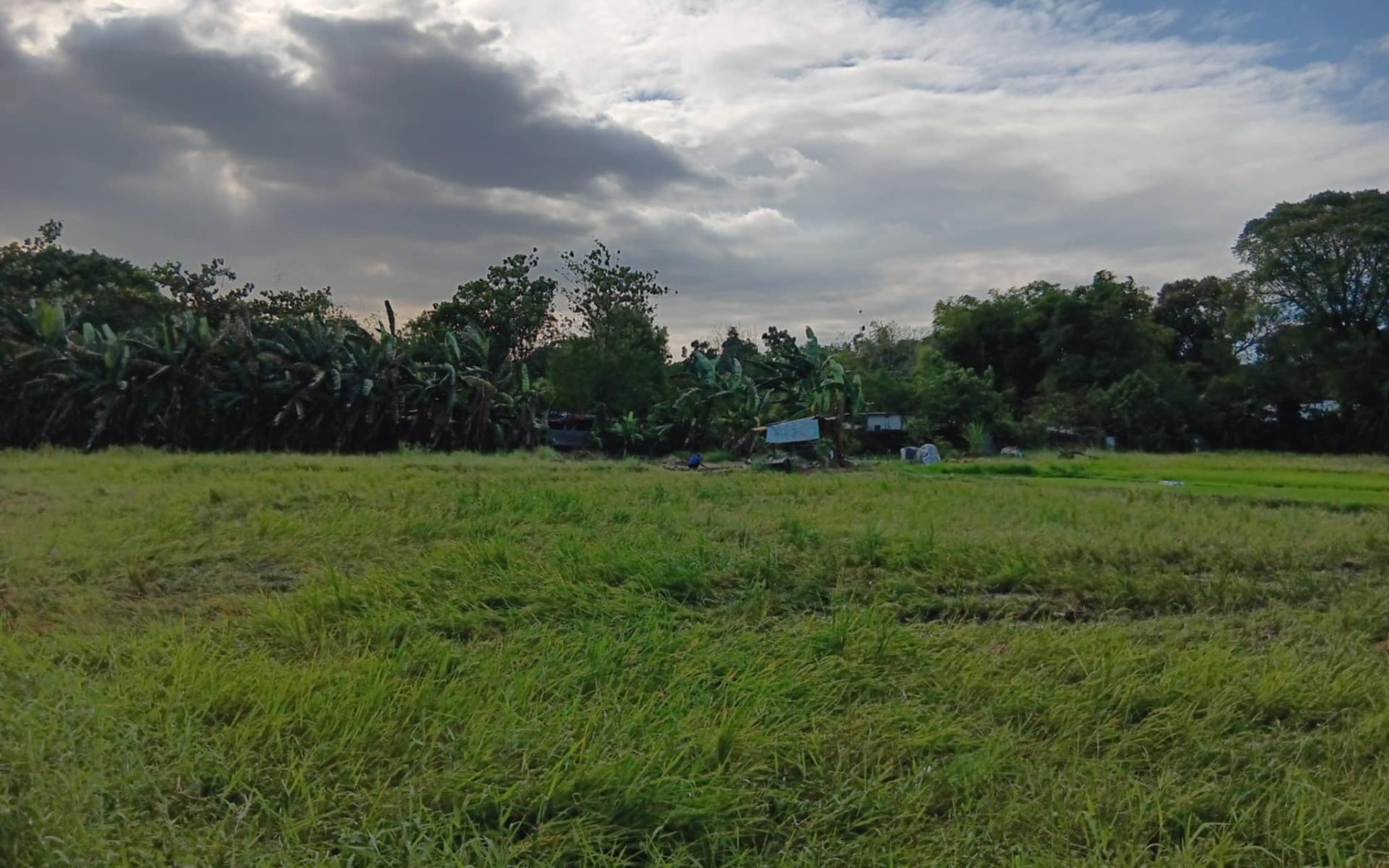
Today, the existence of a rice field within the largest, most populated, and wealthiest city inside Metro Manila in the late 20th century may sound far-fetched, but there are actually two—and both are in my hometown, Quezon City. One is in Barangay Bagong Silangan, and the other one is located right inside UP Diliman. The latter is right beside where I lived for a decade, from 1983 to 1993, or from third grade to third year in college.
One windy afternoon when we were new residents and making friends with the neighbors, one father told my old man, “We’re lucky to be here, as it’s just like the countryside.” Back then, carabaos grazed the field, and farmers wore straw hats, with bolos in their hands or sheathed in their holster belts. It is believed that this had been the rustic scene since the 1700s, when settlers from Marikina arrived and tilled the land in Krus na Ligas.
While my friends and I grew up just next to the rice field, we were content playing only in the sandlot-cum-plaza, or among the six residential buildings that surrounded it in the compound of Sikatuna Bliss Phase 2. We knew that to enter the rice field was trespassing, and we feared the farmers as much as we deferred to the land they tilled for subsistence.
We heard that Manong Farmer chased away trespassers with his raised bolo. Another deterrent was witnessing a carabao lunge at my female friend with its pointed horns one afternoon when our crew was walking along the dirt road. Fortunately, the incident left her startled but unscathed.
Still, as the popular saying goes, “Masarap ang bawal.” (Pleasure lies in the forbidden.) So, on another afternoon, my best friend Tristan and I dared to make a playground of the rice field. To quote a published poem of mine, we made “balance beams of the mounded boundaries”—not unlike aspiring gymnasts. Soon, we found out that the story about Manong Farmer was true all along: “a dog barked and gave chase” and “we saw Manong Farmer running from his nipa hut, toward us with knife in hand.”
The last time I caught a glimpse of the rice field was in the middle of 2006 when my firstborn child was a few months old, having returned to Sikatuna Bliss a newly married man the previous year. That time, I stayed with my young family in a unit on the fourth floor where one could indulge in the panorama of the rice field. One end bordered our compound and sprawled southward for a kilometer up to the boundary of another residential area, Hardin ng Rosas (Garden of Roses).
Recently, the vast rice field has been drastically constricted and fragmented as more residential areas have sprung up. Before, it was unfenced; its breadth and beauty easily visible from the roads surrounding it. Now there are only three separate patches of rice paddies, about a hectare each, and only accessible via mazes of narrow roads and even narrower paths that cut through residences. A pair lies near the Hardin ng Rosas, while another lies alone close to Sikatuna Bliss and Pook Libis. Whereas before it was mainly one whole swath dedicated to growing rice, now there is a significantly smaller trio of plots scattered and separated by an expanse of wild grass and vegetable farms.
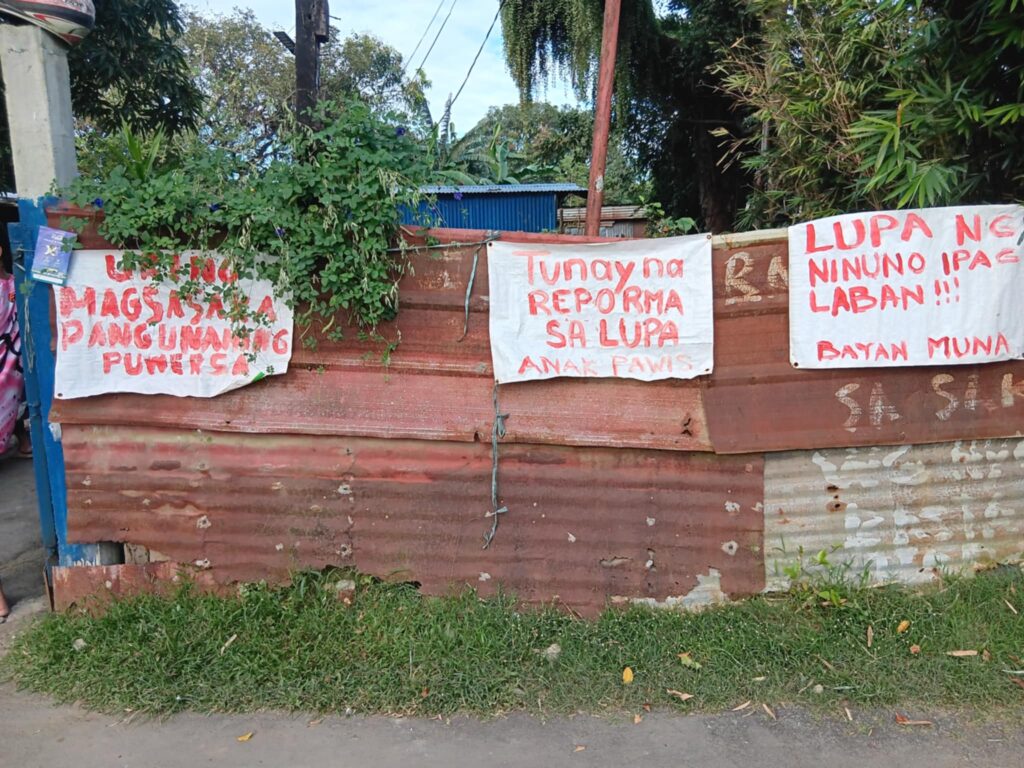
There appears to be a standing property conflict between the UP administration and the tillers of the formerly sweeping field, along with the other residents. When I visited the rice plot near Pook Libis on an afternoon two Sundays ago, I could hear the words of a speaker behind an old corrugated metal fence plastered with protest signs. I was an accidental witness to militant community organizers meeting with the locals, offering updates on the struggle to keep whatever is left of the land. Like the old lovers quarreling decades ago, they won’t stop raising their collective voice amid the tension of a growing metropolis and the countryside charm of the past.