

An in-depth reflection on the complexities of growing up queer within religious institutions and the discovery of wholeness and divinity within a queer identity
Every queer child carries a moment, sometimes a series of moments, when they are made to account for themselves. It may not always be a formal coming-out story, but rather a question delivered with suspicion and fear: “Lalaki ka ba?”
It is a question posed to every young boy who exhibits traces of femininity. This demands not just an answer, but a performance, one that affirms the stability of gender and reassures those who ask that nothing has gone wrong. To answer “Oo, lalaki ako” is to participate in a script that forecloses complexity. For queer children growing up within religious institutions, these moments become formative. They shape how we learn to inhabit our bodies, how we negotiate visibility, and how we understand belonging.
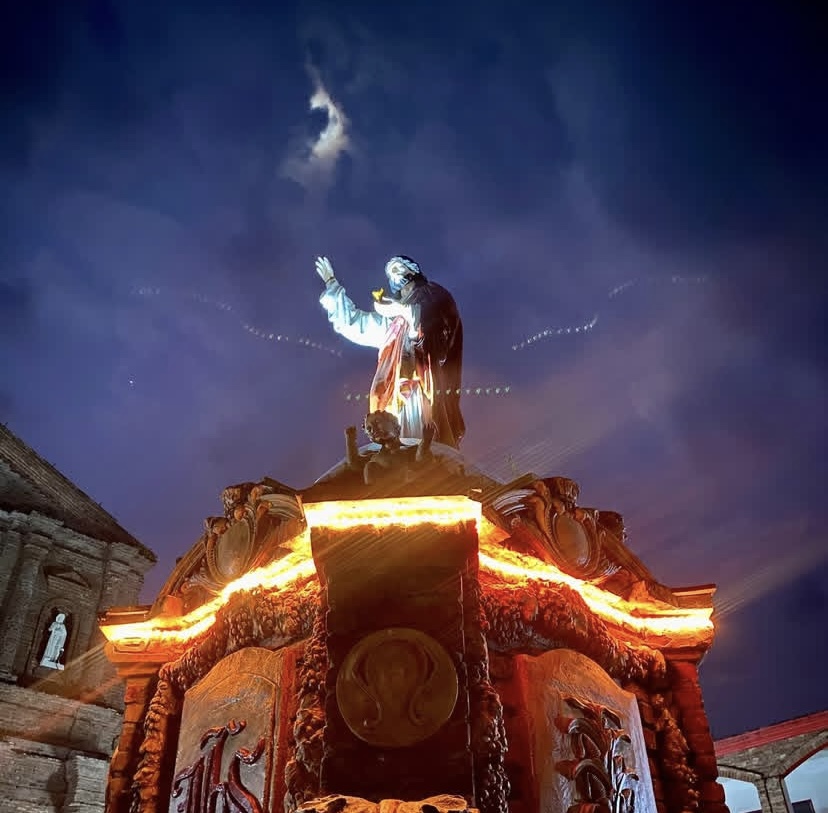
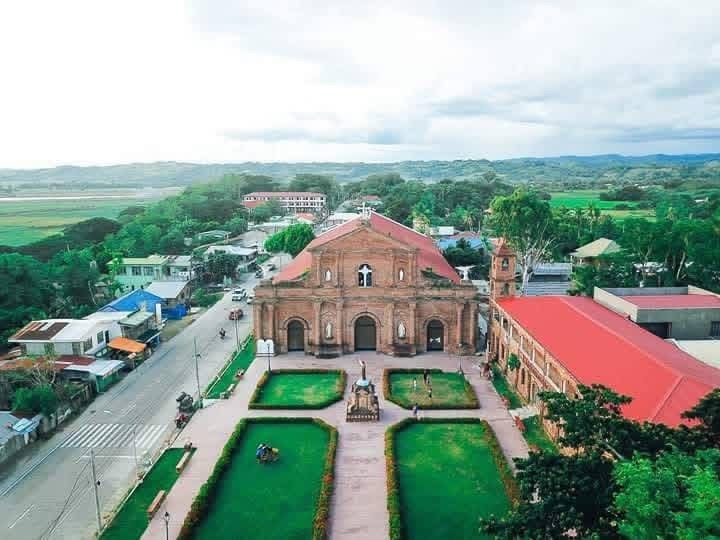
In the small municipality of Alcala, Cagayan, Saint Philomena Parish Church stands as a relic of authority and devotion. Built in 1845 by Dominican missionaries, it remains one of the widest red-brick churches in Northern Luzon, named after Saint Philomena, the virgin and martyr. The church is a pilgrimage site in every Visita Iglesia, and a symbol of Catholic endurance in the region.
Within its compound also stands the high school where I spent my junior years: the Lyceum of Alcala Inc., a school founded and managed by the Tuguegarao Archdiocesan School System (TASS). The church and school were not separate institutions in my adolescence; they were overlapping structures that governed time, movement, discipline, and morality.
Growing up queer within this space meant learning how to survive inside systems that demanded reverence while implicitly refusing recognition.
COMING FROM A SARADO KATOLIKO (STRICTLY TRADITIONAL ROMAN CATHOLIC) FAMILY, QUEERNESS WAS TREATED AS SOMETHING UNSPEAKABLE—A POTENTIAL SHAME THAT HAD TO BE MANAGED RATHER THAN UNDERSTOOD.
To be a queer femme boy in a conservative environment was to exist under constant scrutiny, as if my presence alone threatened the moral coherence of family and faith, and community.
During my four years within the church compound, I learned quickly that survival required compensation. I became the “smart kid,” the reliable student, the one who always said yes to school and church obligations—a youth minister, choir member, student leader, even played Jesus Christ in a Christmas play on the last day of Misa de Gallo.
This overachievement was not simply teenage ambition but a defense mechanism. As Judith Butler argues, gender is not an inner truth but a repeated performance shaped by norms and sanctions. In my case, intellect and obedience became acceptable performances that masked the queerness I was told to tone down.
I stayed late after school, often lingering past the 6:00 PM Angelus bell. In the evenings, the church transformed. The compound became a park: children ran across the carabao grass, families gathered on brick benches, and the church façade glowed under white lights.
I would sit there quietly, staring at the saints—at their embroidered garments, carefully placed crowns, flowers arranged with devotion. I was drawn to their theatricality, their excess, their unapologetic ornamentation. There was something queer, I realize now, in my fascination.
The church’s marble floors and vast interiors gave me a feeling I could not name then—a sense of awe mixed with longing. The sacred space that disciplined me was also the space that stirred desire, imagination, and identification. At night, the church became a kind of drag without the linear separation and impositions, it was both the sacred and the profane.
Queer theologian Marcella Althaus-Reid insists that theology is never neutral; it is shaped by bodies, desires, and power relations. Catholic spaces like Saint Philomena Parish Church are often imagined as morally pure, yet they are saturated with sensuality—incense, candlelight, gold, fabric, ritual.
My attraction to these aesthetics complicated the idea that queerness and Catholicism are irreconcilable. Still, my belonging remained conditional. I could admire the saints, but only as long as I did not resemble them too closely in my excess.
By my final years in high school, the cost of “toning down” became unbearable. I began wearing makeup, asserting a visibility I had long postponed. The response was swift and punitive. I was called into offices, reprimanded, and disciplined. The message was clear: the Church could accommodate me only up to a point.
As Martin Manalansan writes, queer subjects in religious and postcolonial contexts often survive through negotiation, constantly adjusting themselves to dominant moral regimes. But negotiation has limits. When I refused further erasure, the Church closed its doors to me.
A teacher once told me, gently, that “the Church should be a refuge for sinners, not a museum for saints.” At the time, the phrase comforted me. Now, I resist its premise. My queerness is neither sin nor failure. Queerness can be understood not as deviation, but as a site of divine creativity and relationality.
I was not seeking refuge because I was broken; I was seeking recognition because I was whole.
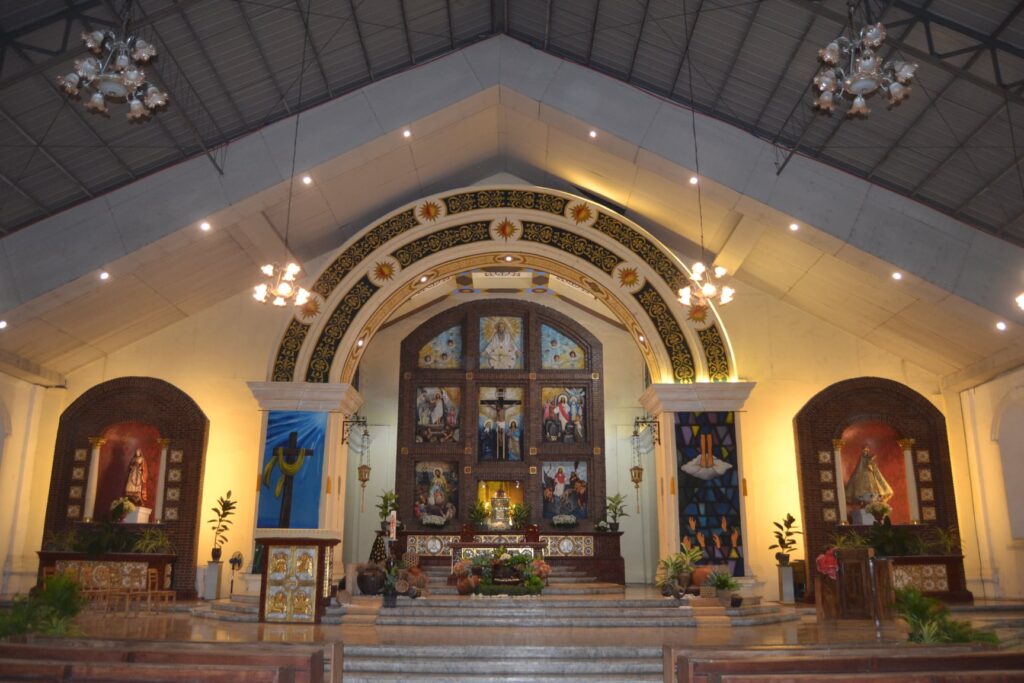
Saint Philomena Church remains. At night, its red bricks absorb the dark, holding the day’s heat the way bodies hold memory. When I come home and pass by the church in the evenings, I see children playing in its shadow—feet skimming the steps, laughter cutting through the hush after prayer.
Some of them are queer kids too, playing with the santan flowers or ceremoniously laughing with their girlfriends. They sit where I once sat, lean against the same walls, trying out the shape of their bodies in a place that has always watched closely.
What I understand now is not only how exclusion happens, but how it forms us. This place taught me how institutions press themselves into flesh, how faith can bruise and bless in the same gesture, how survival often begins as careful performance—lowered eyes, measured gestures, and calculated responses.
This did not require leaving religion behind, but staying long enough to reckon with it: to learn, in the dark, among hymns and children’s voices, that reverence does not demand silence. That truth, whether whispered, laughed into being, or carried quietly home at night, remains truth all the same.