

“The fear of the Lord is the beginning of wisdom,” the proverb goes, and when I was a kid I took this quite literally. Images of Jesus Christ, or any religious figure for that matter, genuinely terrified me. I’d scramble to switch off the TV whenever ABS-CBN aired the three o’clock prayer. The sight of Christ in white, beams of light radiating from His heart, accompanied by that deep voice solemnly announcing, “Pumanaw ka, Hesus,” was simply too much for my young nerves to handle. Sleeping alone in our room was its own nightly ordeal because a portrait of the Virgin Mary hung on the wall, her eyes seemingly following my every move. One of my earliest memories—which I’m still not entirely sure was real or just a fever dream—is waking up to see our Santo Niño glowing and floating. Make of that what you will.
Luckily, I’ve since outgrown that fear. So when I visited the San Agustin Museum for a field trip, I managed to enter the place, housed within the convent of the San Agustin Church, without trembling or making the sign of the cross every five seconds.
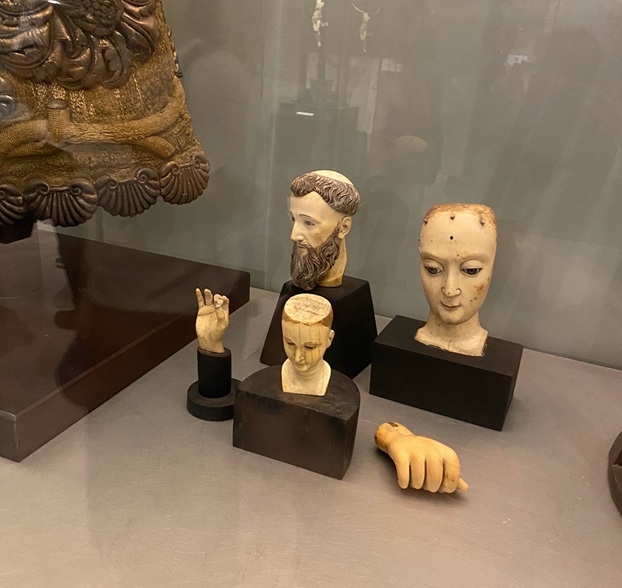
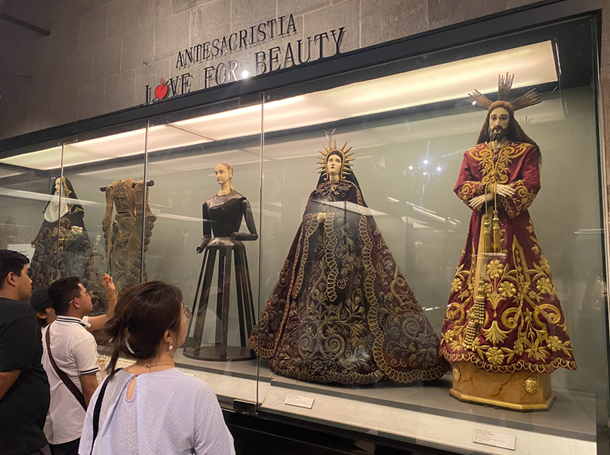
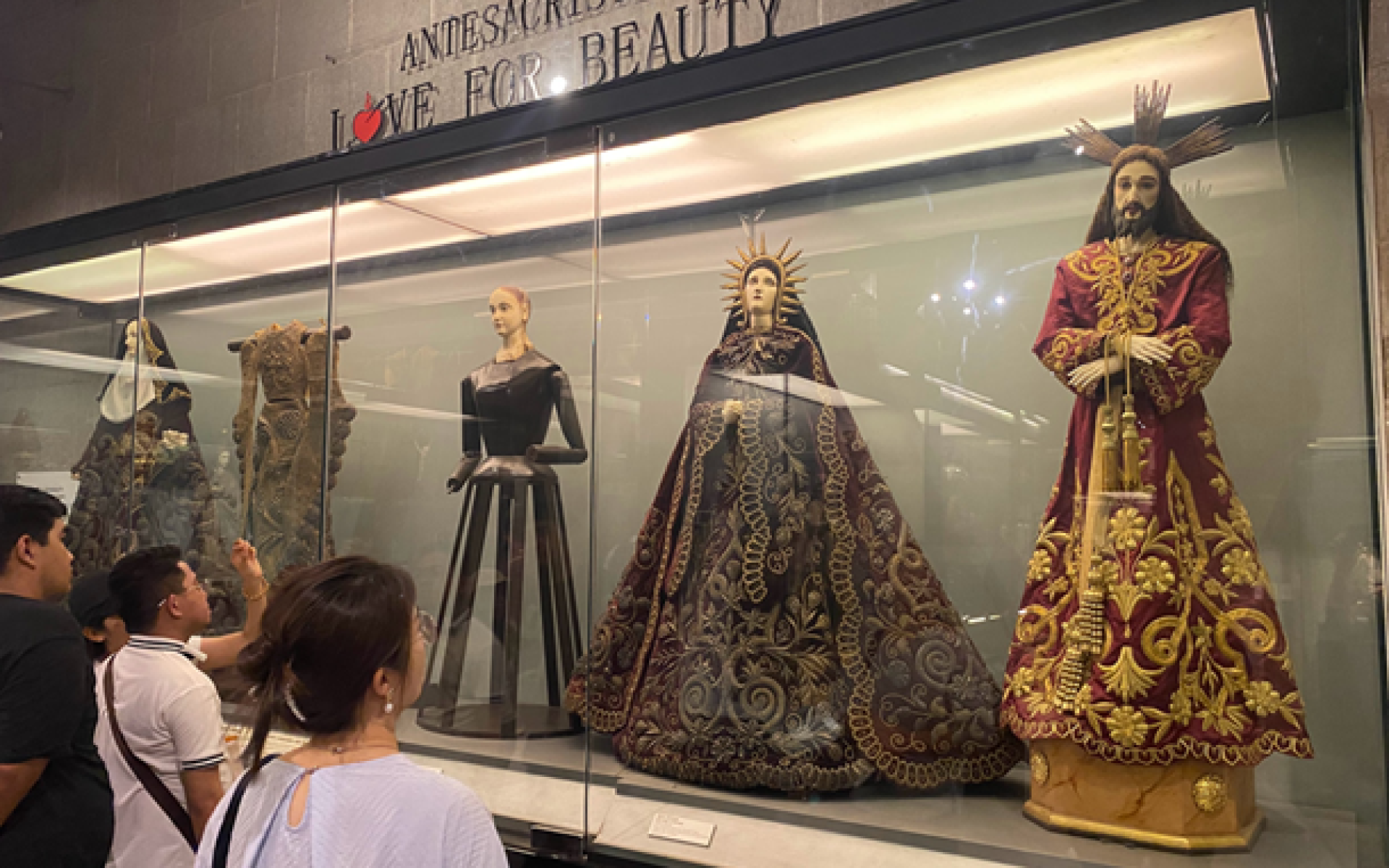
The San Agustin Museum showcases a wide array of religious artifacts: statues of saints, crucifixes, liturgical vessels, and vestments. One thing I immediately noticed, though, was that many of the statues lacked hands. When I asked our professor, who served as our tour guide, about the disfigured statues, he explained that their missing hands had either been damaged or stolen. So much history in what isn’t even there.
How Museums Narrate Story
History is always a bit of a construct. Filipino historian Ambeth Ocampo even writes that “history need not be confined to the written word.” Artifacts—like the items you find in museums—also tell stories, which means they too are selective narrators, choosing what gets remembered and what gets conveniently forgotten.
And museums, for all their hushed voices and climate-controlled galleries, have never been neutral. Before becoming the public spaces we know today, they were private and exclusive—the original VIP lounges, if you will. In Ancient Greece, they were temples dedicated to the Muses, daughters of Zeus and goddesses of the arts, from whom the word “museum” is derived. These places, filled with tomes and other important artifacts, were reserved for the best scholars of the time; they served as sites where knowledge was pursued and accumulated.
During the Renaissance, museums took the form of cabinets of curiosities—rooms brimming with special collections of rare natural and historical relics. Owned and maintained by aristocrats—like the famous ones belonging to François I and Ferdinand II—access was limited to the elite. Early museums, then, were as much status symbols as they were physical spaces. Since they contained the bulk of human knowledge at the time, possession and entry meant displaying, amassing, and maintaining power.
Even though most modern museums are now open to the public, they can still uphold certain values, sometimes troubling ones. Even respected institutions can push specific historical narratives, especially those tied to the Western colonial project. Take London’s British Museum, for instance. Vox, not exactly pulling punches, has a YouTube video titled “The British Museum is full of stolen artifacts,” which explains how the museum acquired relics during Britain’s centuries-long imperial conquests and how it resists claims from countries wanting back their cultural and historical items. One top comment even quips that the only reason the British Museum doesn’t contain the Pyramids of Giza is because they’re “too big to ship.”
What Narrative Does the San Agustin Museum Tell?
Now, can the same thing be said—or at least asked—about the San Agustin Museum? Does it promote a certain view of history?
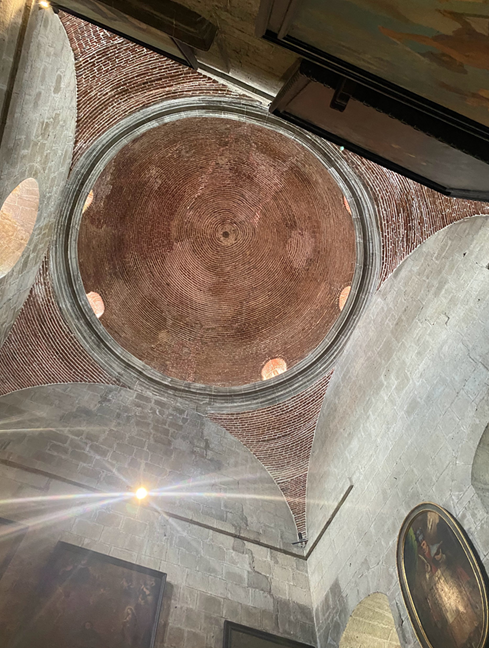
Start with its location. The San Agustin Museum sits inside the convent of the 400-year-old San Agustin Church, the oldest church in the Philippines. The museum and the church are essentially the same structure, sharing walls and hallways.
The church has been a major center of worship for generations, drawing Catholic pilgrims year after year, especially during Holy Week when people do their Visita Iglesia circuit and try not to melt in the Manila heat. The church also sits smack dab within the walls of Intramuros, the beating heart of Spanish colonial Manila. Before the Japanese occupation of the Philippines reduced much of it to ruins, these walls held the offices of the colonial government, the stronghold of the Catholic Church, and the elite who shaped policies that determined how life unfolded for the local population. So the San Agustin Museum, being situated within these two historical structures, is concrete proof of how Philippine history is deeply rooted in the colonial legacy of Catholicism and Spanish rule.
It’s hard not to marvel at the church’s architecture once you’re there, with its imposing stone facade and intricate baroque details. The church, which has survived a pirate attack, a fire, and a war, physically embodies the enduring Spanish influence in the Philippines. Grand interior spaces, ornate decors—the layout of the building itself reinforces how central the Catholic Church has been in shaping Philippine society. Within the museum, the curation of items further supports this narrative. The emphasis on religious artifacts, ecclesiastical art, and historical documents related to the church reflects a perspective that once again foregrounds Catholicism in Filipino identity and culture.
But isn’t it only natural for a museum associated with a church to mainly display religious items and artworks? Sure. The key point here, though, is how these artifacts are presented and interpreted within the museum. It’s worth noting that there’s an entire room dedicated to the arrival of the Spaniards, particularly Augustinian friars, in the country, as if suggesting that Philippine history only began when the country, as Yoyoy Villame memorably sang, “was discovered by Magellan.”
What the San Agustin Museum Doesn’t Want You to Think
If Noli Me Tangere taught Filipino high schoolers one thing—at least in the way it’s traditionally taught—it would be that Spaniards weren’t exactly kind to us indios, to put it mildly. They subjected us to polo y servicio. The friars, who spoke incessantly of God, were hypocrites who would even throw tantrums if you dared serve them chicken neck and wings in their tinola. To this day, this idea persists in media, like in the hit teleserye Maria Clara at Ibarra.
San Agustin Museum doesn’t want you to think that.
Not all areas of the museum focus on religious themes, for example. There’s a library, though it mostly holds theological texts, so religious-adjacent at best. There’s also a gallery dedicated to natural research conducted by Augustinian friars, where one wall showcases original lithographs of Philippine flora. (It was there that I learned that Gregor Mendel was actually an Augustinian abbot.) The exhibit implies that the Catholic Church isn’t entirely allergic to science: through the efforts of the Church, the museum seems to say, human knowledge expanded, and the country progressed. They brought us religion, yes, but hey, they also brought us botany.
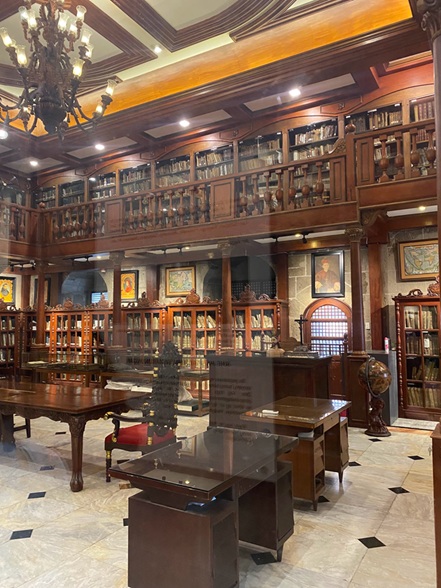
But this framing of Philippine history tends to muffle other perspectives that might complicate this narrative. The only photos of locals I saw were located in that part of the museum. They depict Augustinian missionaries surrounded by young Filipino students—the visual language of benevolent guidance, teacher and grateful pupil.
Similar “lowly” depictions of indios can be found throughout the museum. On a large wooden cabinet, you’ll find carvings depicting our ancestors engaging in everyday activities. The Spaniards, meanwhile, appear in more “civilized” roles such as administering infrastructure projects or composing music. The message: culture and progress are things we owe to the Spaniards—which any self-respecting historian will tell you is hardly the case. The archipelago had thriving trade networks, sophisticated social structures, and rich cultural traditions long before the galleons arrived. But you wouldn’t necessarily know that from walking through these halls.
Why We Need a Nuanced View of History
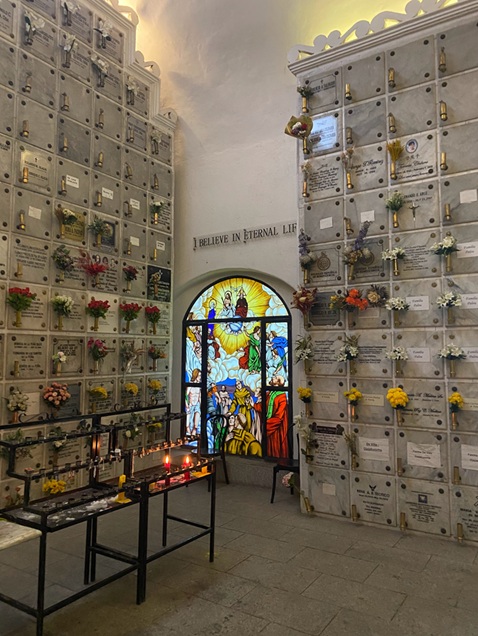
One of the most telling parts of the museum is the crypt. Many of those interred there are prominent members of Spanish colonial society: government officials, military leaders, and clergy. Some spots are still vacant, but they’re already reserved, mostly for individuals with Chinese surnames, whom I can only assume are wealthy entrepreneurs. Their presence in the crypt underscores the close connection between the church and the ruling elite. The crypt doesn’t evoke benevolence so much as it rather inadvertently presents the church as a symbol of prestige. We like to say death is the ultimate equalizer, but step into the crypt and you quickly realize that apparently, even in death, there’s a VIP section.
And here is the museum’s most glaring omission: it overlooks the resistance movements and the long struggle for independence that rose in response to colonial rule. Museums, whether religious, secular, or something in between, hold immense power to form how we understand the past. While it’s understandable for the San Agustin Museum to prioritize its religious heritage and institutional legacy, it’s equally important for it to recognize its role as a cultural institution—one that should aim for critical engagement with history, not just celebration of it.
People can debate the positive contributions of the Church or Spain, and there will always be examples to point to. Leaving out alternative narratives, however, flattens our history and diminishes the richness of what we have and could have. A statue of a saint without hands may be intriguing on its own, but we also have to be curious about where those hands have gone. Were they stolen? Damaged? Lost to conflict or time? Those missing hands, both literally and figuratively, would offer us a more complete picture.