

The intimacies of walking along Iloilo’s popular 9.29-kilometer riverside esplanade
“Oh my god. Does this esplanade go on forever?” I wondered as my feet treaded the brick pathway that meanders along the banks of the Iloilo River. I could’ve checked Google Maps on my phone, but thought, “Where’s the fun in that? I intend to see this through the old-school way: where the rainbow pathway ends by exploring it in real life.”
We don’t do much planning during trips. My early morning walks would usually depend on where we are lodged for the night. As it was located in downtown Iloilo, near the city’s historic buildings—our lodging is also historic, by the way, though in a peculiar way—along Calle Real, the river esplanade was the first thing I spotted.
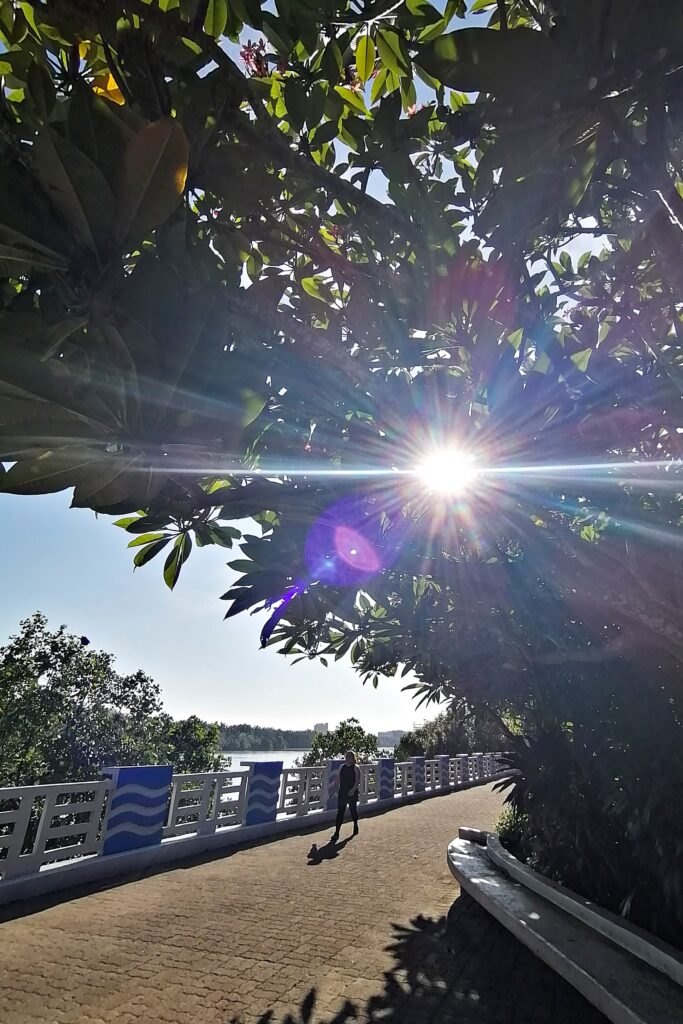
It was absolute luck that I spotted the river as I ambled aimlessly along Calle Real. I thought it was so interesting that it became my go-to place for our almost week-long stay in Iloilo City.
My first acquaintance with Iloilo’s River Esplanade was at the Muelle side of the river, along Calle Aldeguer. From where I was standing, the river paints a shimmering foreground to the neoclassical façade of the Aduana Building, which now houses the Museum of Philippine Maritime History.
This handsome building—symmetrically divided by its central tower—was the city’s former customs house, a fixture essential to the river during the American Colonial Era. The rising sun painted everything in an Amorsolo-esque golden glow.
Turning my back to Aduana, I started walking northwards, passing a bridge painted in rainbow hues. Apparently, Iloilo has a thing for colorful bridges, and it won’t be the last rainbow bridge that I’ll pass.
The modern Iloilo Provincial Capitol soon rose into view, and beside it, Casa Real—the former seat of the province—another neoclassical gem.
I continued on, thinking that after passing a major road artery, the esplanade would probably end, and I’d need to turn back or simply walk along the city’s sidewalks. Iloilo has plenty of them, all clear of obstructions—something you cannot say for most sidewalks in cities of this country.
I arrived at the intersection of Bonifacio Drive, where the esplanade seemed to have concluded, only to lead to the other side of the road.
As a walking enthusiast, it was rare to see an esplanade that’s not half-assed; pedestrians are not the government’s priority. Overjoyed, I pressed on.
Soon, I was joined by fellow morning revelers—walkers, runners, bikers, dog lovers, friends, and lovers—both young and old. A dragon boat practicing for a race pummeled through the waters. Its rhythmic drums—beating in time with our hearts—greeted us with a good morning.
Every so often, I would encounter a mini plaza, where people would sit and rest, converse, and simply gaze at the river.
The esplanade wound on, passing through the back-of-house of residences, restaurants, and other commercial spaces. That distinct estero stench that pervades Manila’s riverside neighborhoods is absent, and the air smelled fresh.
“I can definitely get used to this,” I thought to myself.
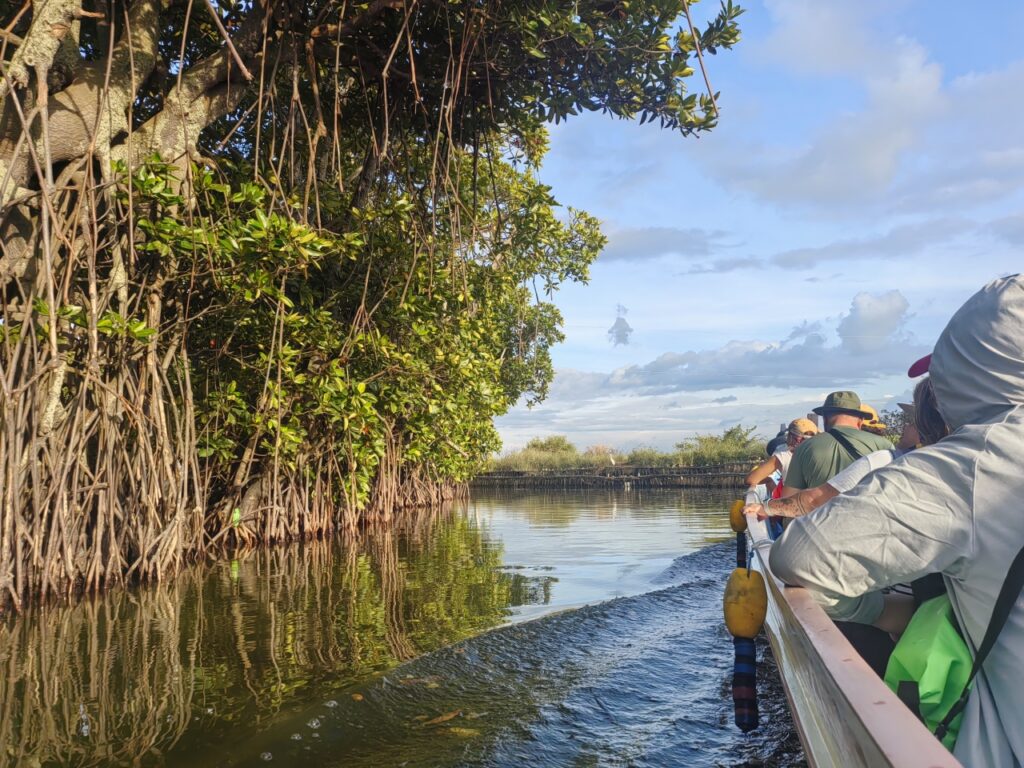
Mangroves mushroomed along the banks—a community project that involved private companies, local groups, and the community. It boasts 22 of the country’s 35 mangrove species, guarding the banks from erosion and serving as a fish habitat.
Soon, I passed by a couple of manongs, lazily fishing along the river. It was almost a full hour of walking, and still, there seemed to be no end to the esplanade.
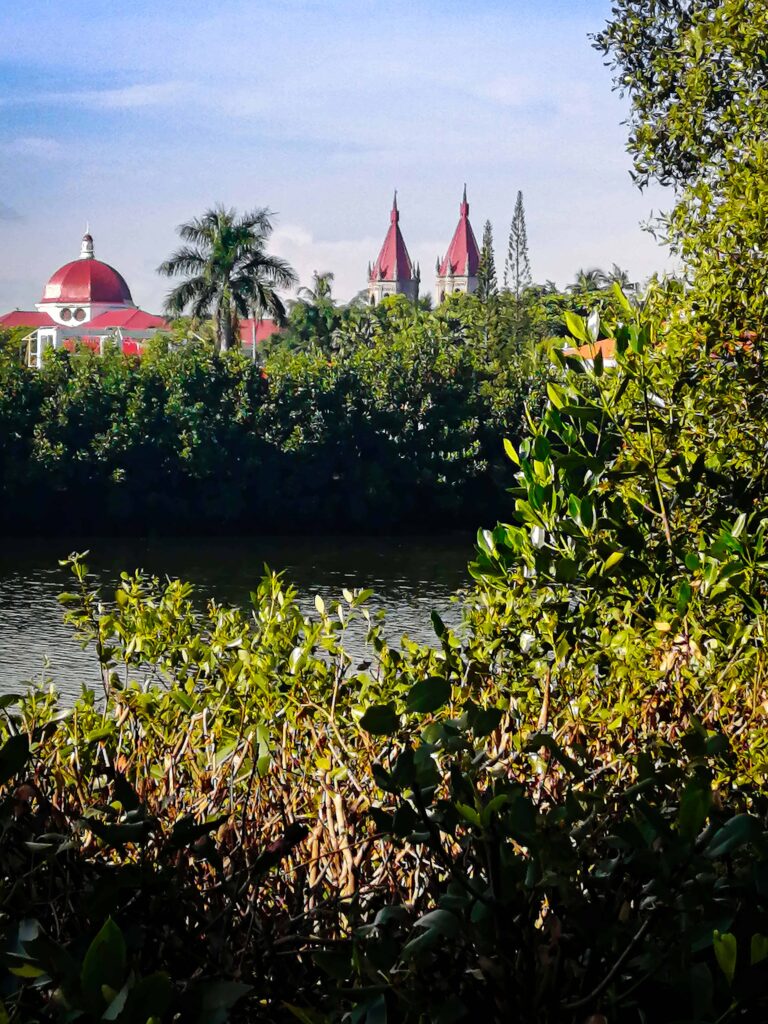
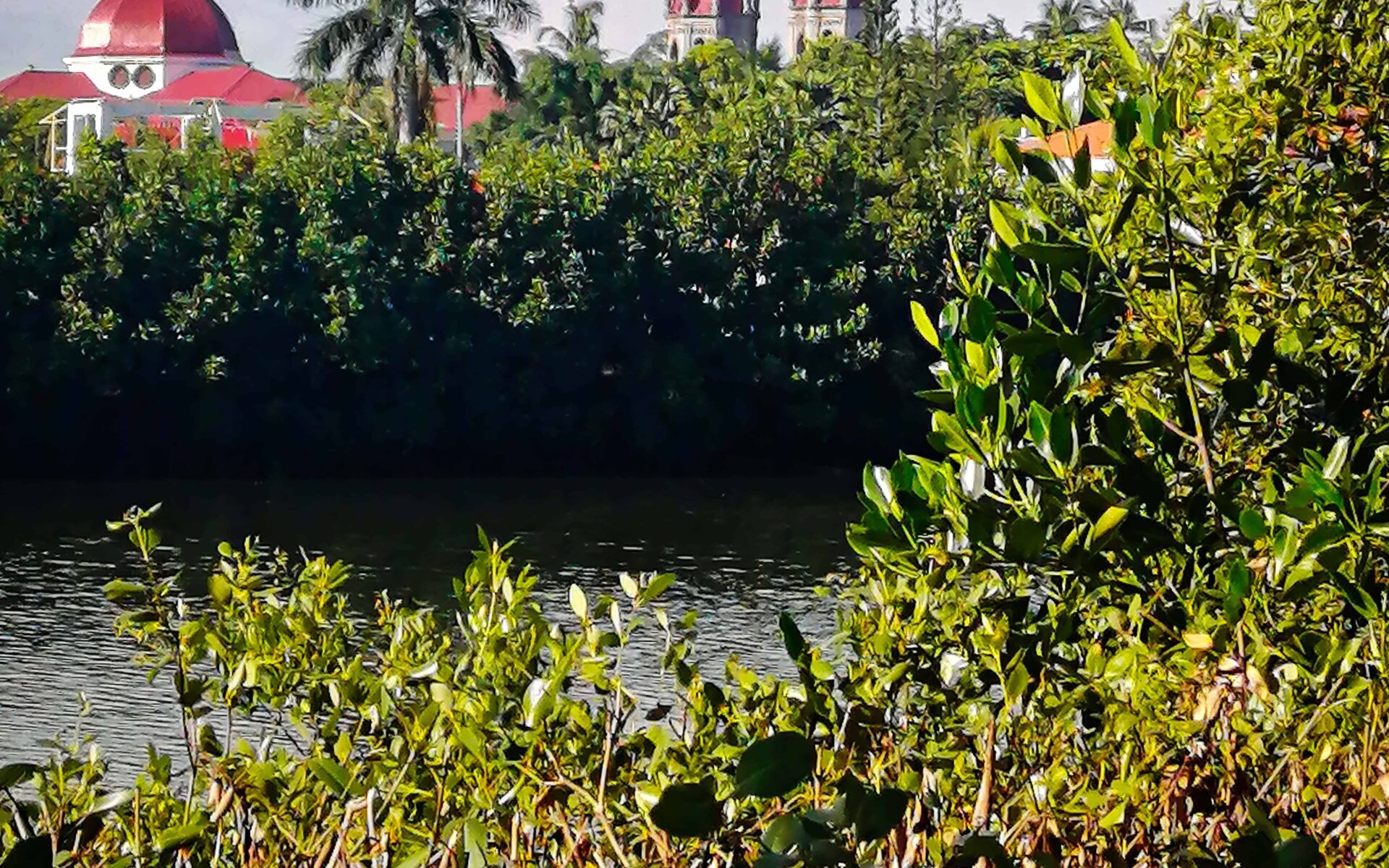
The twin red spires of Molo Church peeked through the trees. Finally, after more than four kilometers, there at The Medical City Iloilo, the esplanade ended…at least on one side.
I crossed to the other side, passing another colorful bridge, the Old Carpenter Bridge, where people posed at the gigantic “I am Iloilo” marquee.
At a nondescript riverside café, Ilonggos enjoyed their breakfast of hot molo soup and tsokolate de batirol. I sat at one of the tables, a cup of thick chocolate drink and a couple of freshly baked pandesal in front of me—the perfect fuel for another round of walking, this time, on the flip side of the Iloilo River Esplanade.