

On nearly missing a flight for a coffee fix and discovering a hidden gem because of it
I almost missed my flight in search of coffee. But if I hadn’t, I would have never stumbled upon ADCD, a 1950s house turned creative space in Dumaguete City.
After revisiting Siquijor and Dumaguete on a solo trip, I had some time to spare before my flight back to Manila. I decided to hunt for Mr. Saigon, a Sino-Vietnamese cafe which was recommended by a friend for their affordable and authentic eats. What I didn’t know was that it was hidden inside a charming mid-century house.
After a leisurely lunch at Esturya sa Kri, a local spot that serves comfort food and craft beer, I let Google Maps lead me to the cafe, but found a house with an open gate and a sign pointing to ADCD instead.
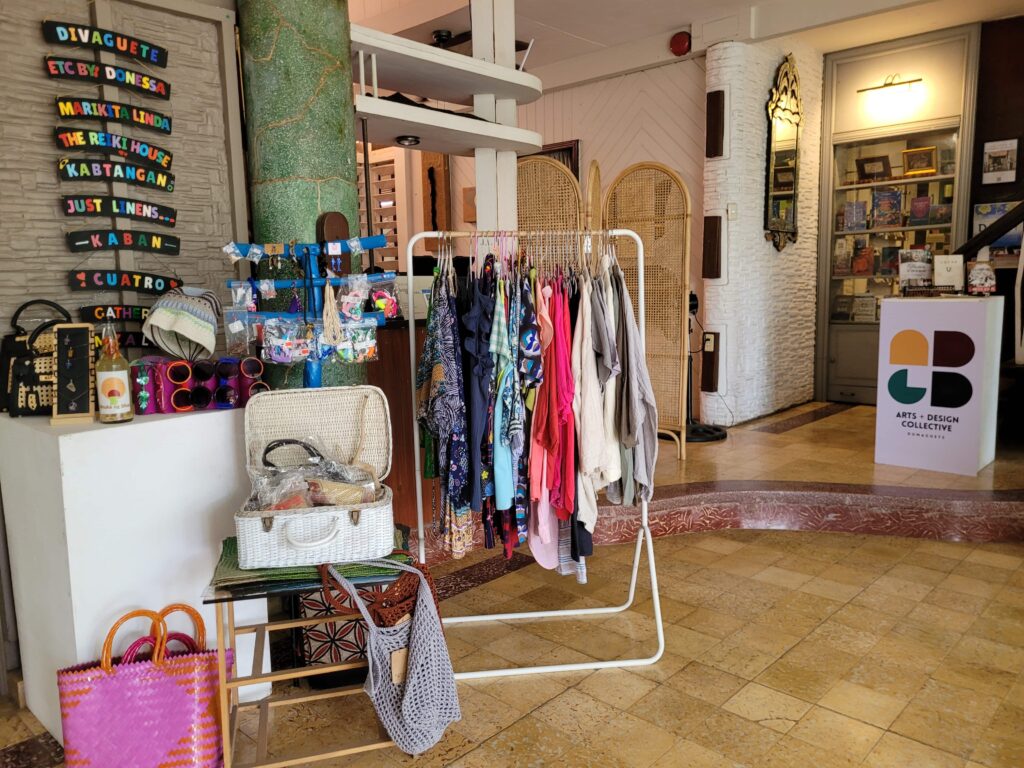
ADCD stands for Arts and Design Collective Dumaguete. Formerly known as 58 EJ Blanco, the 1950s-style house in Barangay Piapi is a space where locals, tourists, and enthusiasts can explore the latest trends in art, design, culture, and food. The hub aims to create a rich artistic ecosystem “that respects heritage, promotes inclusivity, and values the contributions of artists and artisans.”
A stone path to the left of the house led me to Fermentina, an artistic garden cafe and bar under the trees. Right next to it was Ritual, a refillery/eco-shop. A waft of spa-like florals, herbs, and citrus aromatics filled the cozy shop as I browsed through wooden crates filled with organic soaps and sustainable products.
A shed door nearby led to Art Workshop, an artist’s studio with posters advertising watercolor painting and sculpture workshops.
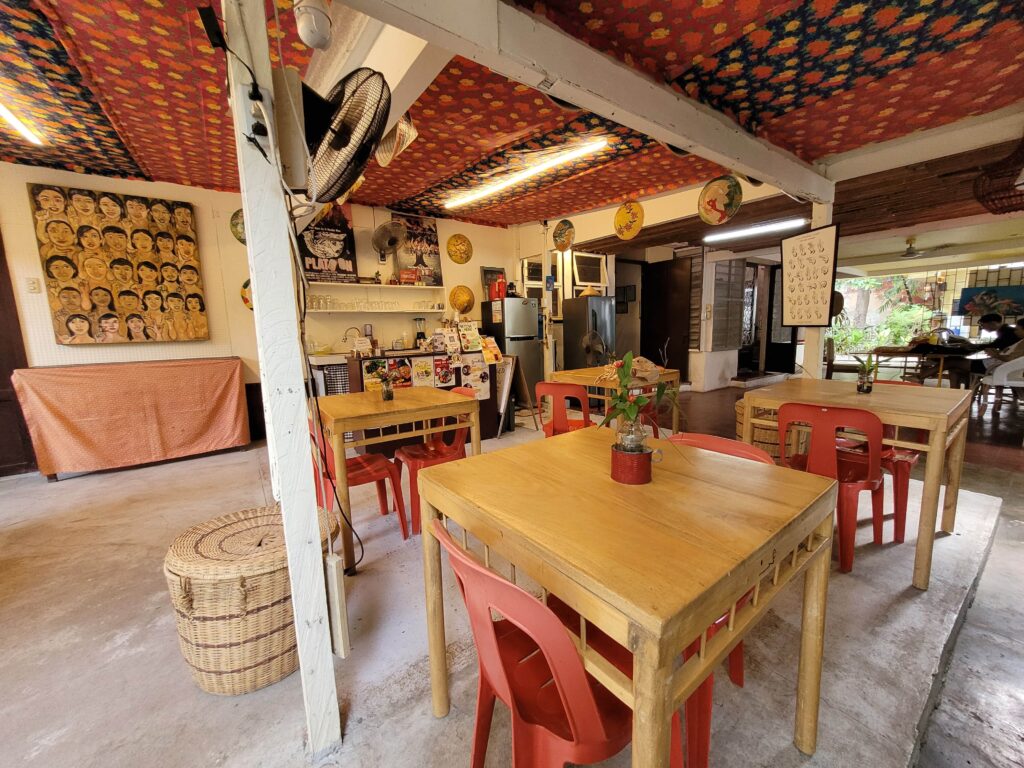
Mr. Saigon, the cafe I was looking for, was a colorful nook tucked behind the back of the house. The server handed me a menu and a marker with a note indicating that the servers were deaf. I appreciated how the paintings displayed around the cafe featured the alphabet in sign language, along with the assortment of books for customers to read.
Had I not just come from a heavy lunch, I would have tried their Banh Mi, which came in vegan and mini versions. I settled for their Vietnamese Coffee with Sea Salt Cream and a silky Coconut Flan instead.
It was a weekday, and I was the only customer at the time, making the cafe pleasantly quiet and introvert-friendly. But you can tell that it’s the type of place that gets buzzing with creative events during weekends.
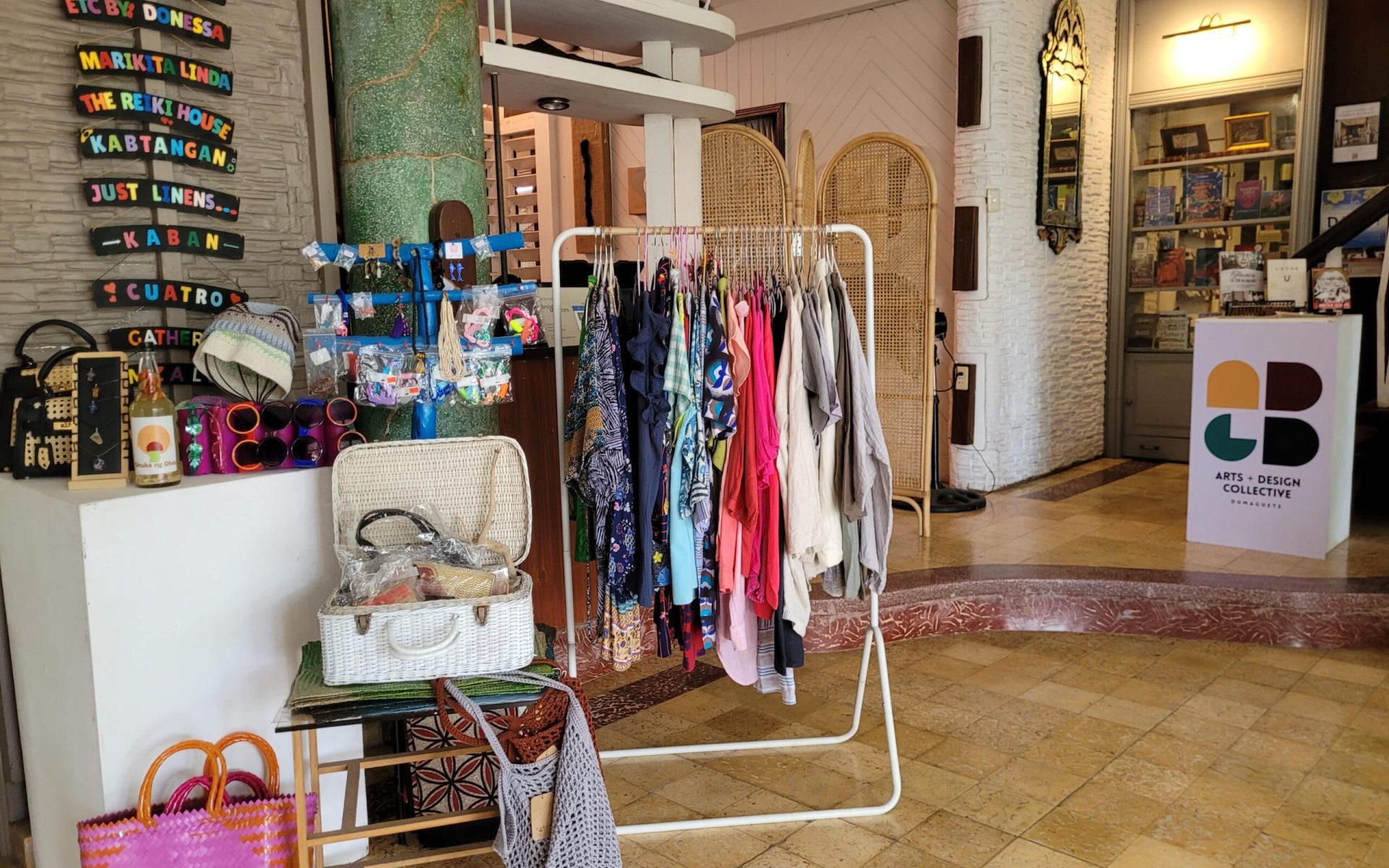
As I entered the main house, I was greeted by a cheerful space filled with racks of thrift clothes, vintage pieces, accessories, bags, scarves, and knick-knacks. After peeping at the studios on the second floor (which were converted from old bedrooms) and leafing through books on the staircase shelf, someone waved from inside.
I didn’t realize that the shelf was another door leading to Libraria, a whimsical bookshop with forest-green shelves, botanical wallpaper, and books dangling from a chandelier.
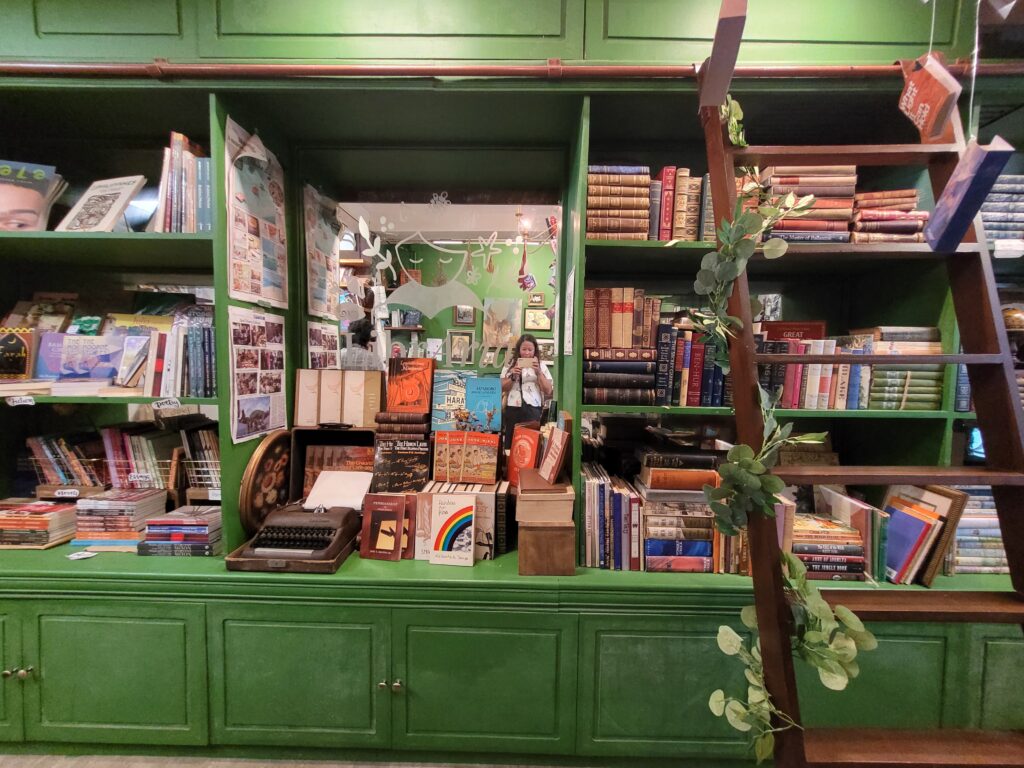
The bookstore was small, but it contained a great selection by local Filipino authors, vintage books, indie komiks, hardbound classics, paper dolls, stationery, postcards, and more. I browsed for a while, hoping to find cat postcards to add to my collection, but ended up buying a cat-related book by a local author. The way the bookshop attendants wrapped my purchase with a floral leather ribbon felt artistic and heartfelt—an experience you don’t often get from mall-based bookshops and chains.
An hour later, I found myself rushing down the tarmac, the last to board and walk down the plane aisle with everybody on the flight comfortably seated. I had underestimated the traffic and travel time to get to the airport. The simple coffee hunt and bonus bookshop turned out to be a delightful distraction.
Arts + Design Collective Dumaguete is located at 58 E.J. Blanco Road, Piapi, Dumaguete City, Philippines.