

Reliving history in a way no classroom could replicate inside an underrated museum in Manila
For years, Manila has functioned as a layover, a city travelers pass through on their way to the country’s more photogenic islands. Independent tour guides hope to change that. Following the launch of the Intramuros Administration’s “Don’t Skip Manila” campaign, various historical walking tours that aim to reintroduce the capital as a destination rather than a pitstop are now being offered to tourists and residents alike.
The overall message is simple: the nation’s stories abound here. Manila’s roster of well-curated museums is proof of this, offering transiting visitors a good reason to stay in the city, and residents to rediscover their hometown.
There’s the old commercial corridors of Binondo and Escolta; and the National Museum complex. Inside the complex is a quartet of institutions devoted to fine arts, anthropology, natural history, and astronomy. Within a walkable radius of each other are Fort Santiago and Intramuros, where the San Agustin Church Museum, Casa Manila, and Museo de Intramuros are situated. Along Roxas Boulevard, one will find Museo Pambata.
And just steps from these vast collection of museums, near Luneta Park, the National Library’s Permanent Gallery offers another surprise revelation—a reminder that the capital still hides stories waiting to be uncovered, as this writer discovered on a random Tuesday—something I always wanted to do—at the invitation of a few history-obsessed friends.
More than Just a Library Visit
Securing a library ID for the National Library was surprisingly smooth: a quick five-minute registration and pose for an ID photo, and my ID card came out hot from the printer, giving me the freedom to return anytime.
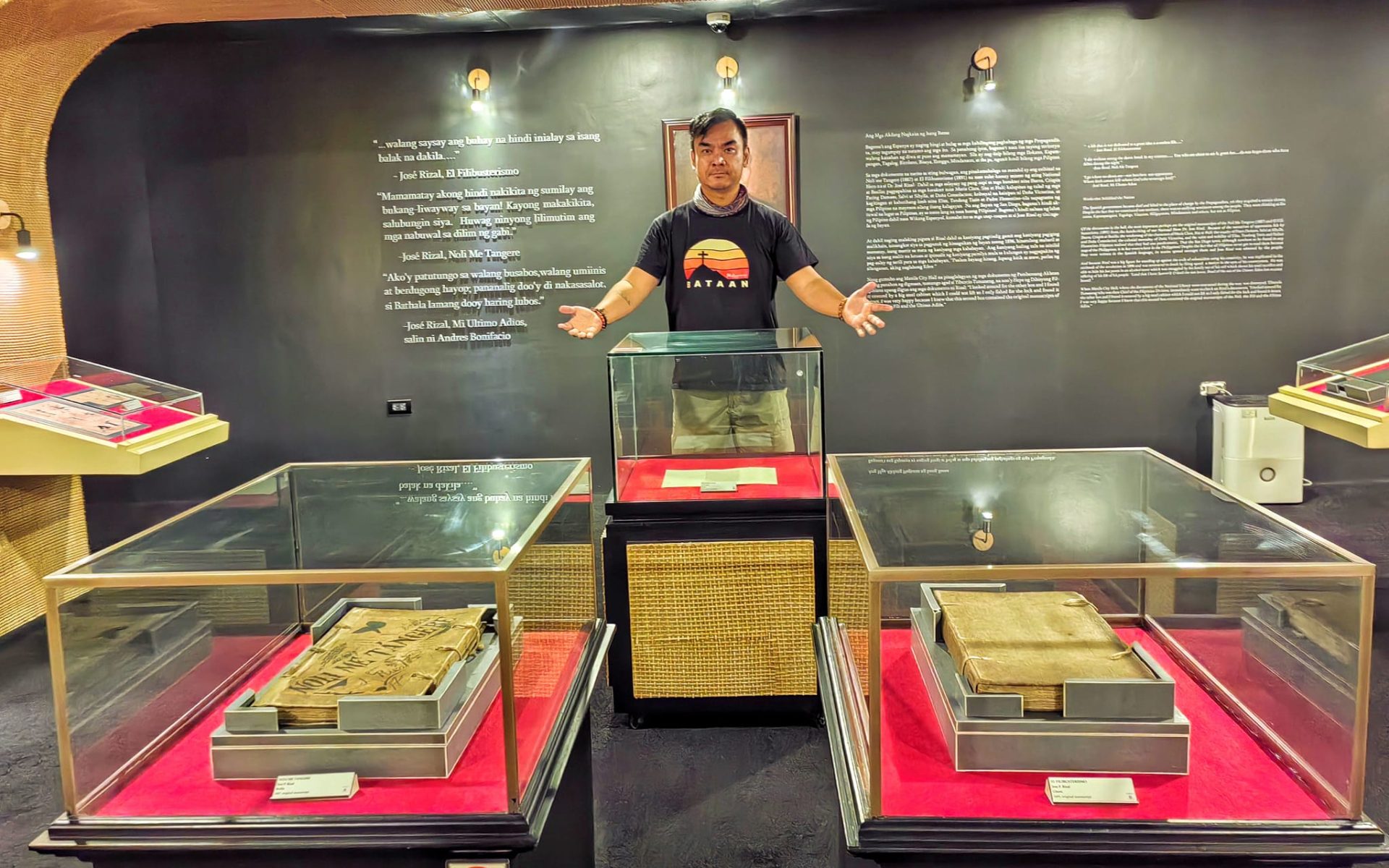
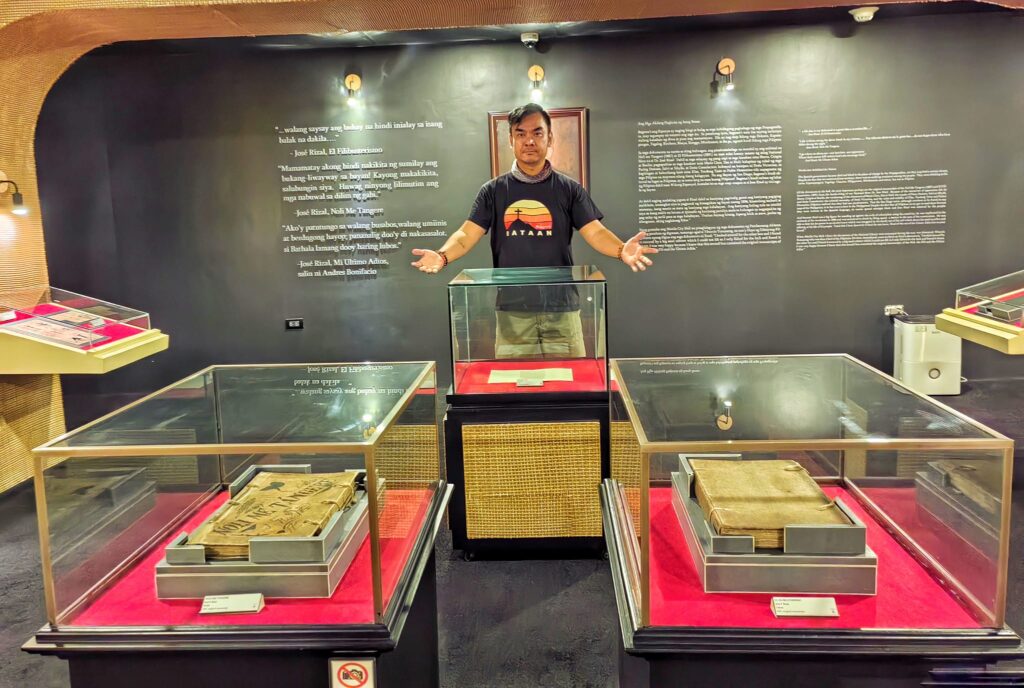
The night before, our friend Stephen Pamorada, heritage advocate and Manila tour guide, sent a message in our group chat: “Be ready to lay eyes on Rizal’s original manuscripts of Noli Me Tangere and El Filibusterismo.”
It made us excited. And then came a follow-up message: “That’s not all.”
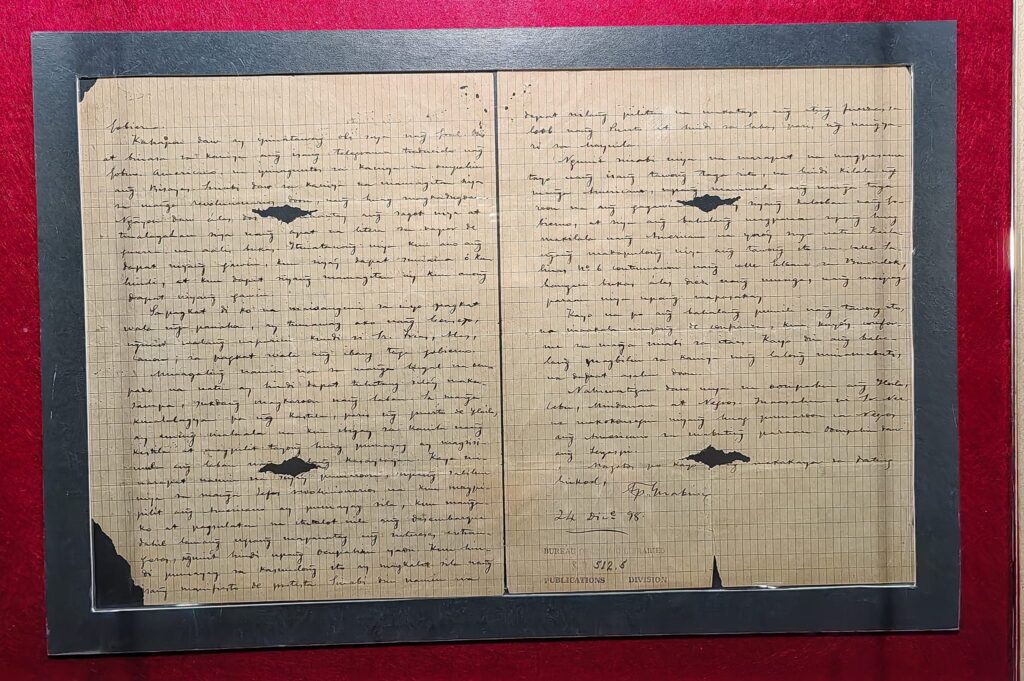
“That’s not all” meant an impressive list of documents pertaining to Philippine history: De Molucis Insulis, the earliest written account of our archipelago following Magellan and Elcano’s first circumnavigation of the world, published in 1523; handwritten notes by Jose Rizal, Apolinario Mabini, and Emilio Aguinaldo; and the 1743 Murillo Velarde Map, the first detailed map of the Philippines and a pivotal document that helped secure the Philippines’ victory over China at the Hague’s Permanent Court of Arbitration. The map shows the contested Spratly Islands as part of the country.
There were also printed issues of La Solidaridad, the trial records of Andres Bonifacio and his brother Procopio; Pedro Paterno’s 1885 novel Ninay, the first ever to be written by a Filipino author; the Treaty of Biak-na-Bato; and one of the first copies of the Philippine national anthem, Marcha Nacional Filipina, with music by Julián Felipe and lyrics by Jose Palma. Pieces of furniture, such as Manuel L. Quezon’s presidential desk and chair, were on display too.
The list extended further: Antonio de Morga’s Sucesos de las Islas Filipinas, annotated by Rizal, and the original 1898 Declaration of Philippine Independence itself.
For decades, the United States had insisted on celebrating Philippine Independence on July 4 to align it with their own Independence Day. In 1962, President Diosdado Macapagal ordered its commemoration moved to June 12, and two years later, through Republic Act No. 4166, formally declared the date as the nation’s official Independence Day.
Macapagal said of the decision: “There had been other Asian revolutions before. But the revolution which culminated on June 12, 1898, was the first successful national revolution in Asia since the coming of the West, and the Republic to which it gave birth was the first democratic Republic outside of the Western Hemisphere.”
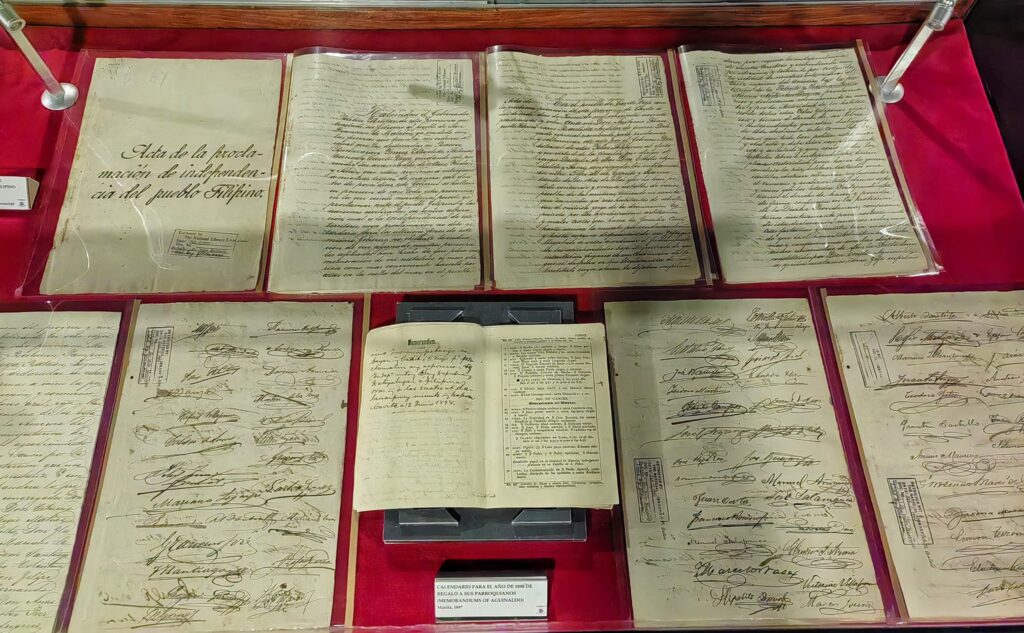
These documents, their pages yellowed and ink faded, bear the weight of that historic afternoon on June 12, 1898, at 4:20 PM, when General Emilio Aguinaldo proclaimed independence in Kawit, Cavite. They are, in a sense, the nation’s birth certificate.
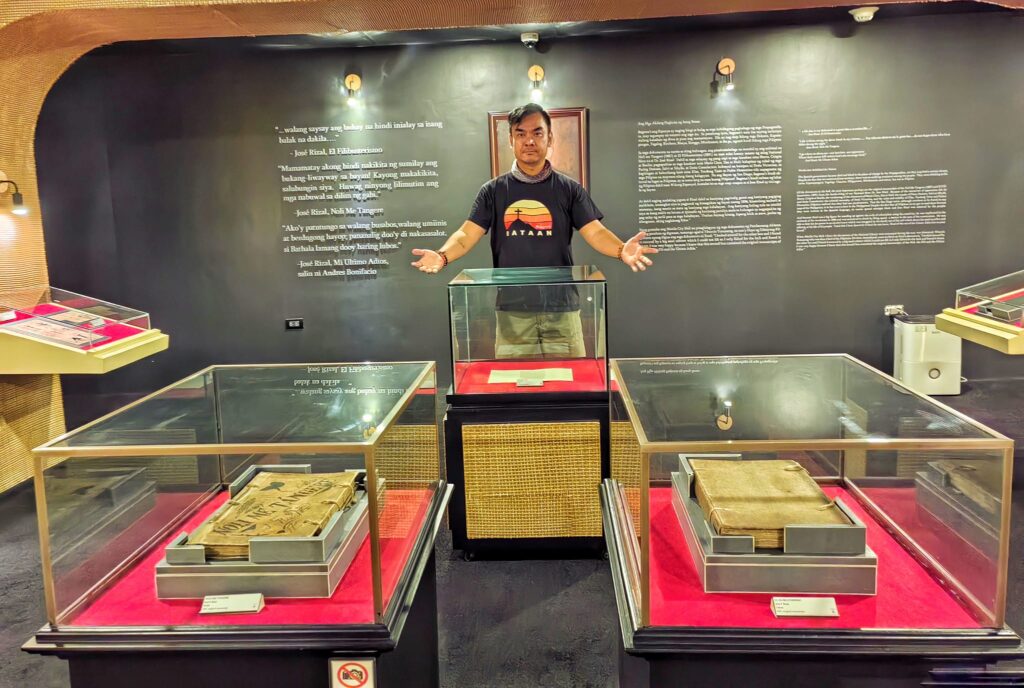
I saved my last wide-eyed stare for the final display in the Permanent Gallery, what I considered the collection’s most significant pieces: the original manuscripts of Jose Rizal’s Noli Me Tangere and El Filibusterismo, alongside the original copy of Mi Último Adiós. Standing before them, I felt goosebumps. Here were words penned under immense weight of Spanish colonialism, words that would ultimately seal Rizal’s fate and cement his place as the nation’s national hero.
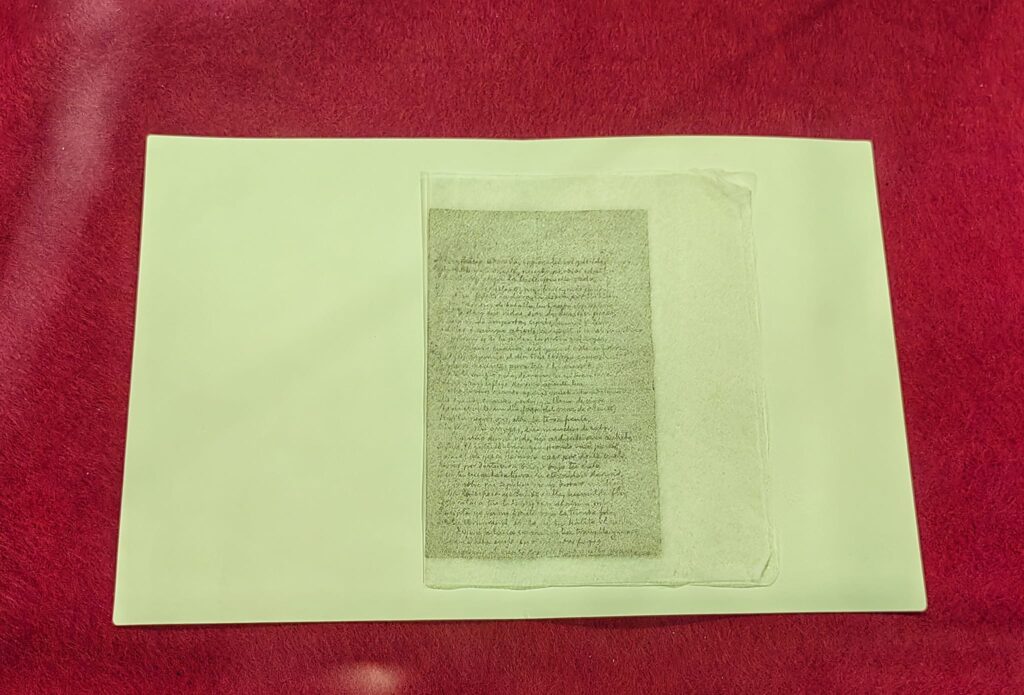
To see these inked letters that had survived the passage of time in person, along with the other historical documents in the Permanent Gallery, was like witnessing history itself in a way no classroom lesson could ever replicate.