

“Travel, I realized, sometimes clarifies the kind of community we are still searching for—and the kind we are capable of building.”
It was around three o’clock when I finally secured a seat on a Baguio-bound bus from Cubao. Because of the rain, I decided to sleep through the six-hour trip. The route was point-to-point; there was no possibility of getting lost. When I woke up, it was already a quarter before ten in the evening, and the bus had arrived in Baguio City.
From the terminal, I took a taxi to our temporary lodging at the UP Baguio dormitory. “Manong, idjay man University of the Philippines—UP,” I said, carefully putting my Ilokano to use and emphasizing the full name. A friend had warned me that taxi drivers often mishear UP as UB or UC, both of which are also located along University Drive. With my unaccustomed lungs struggling against Baguio’s hills and my two large traveling bags, even a short walk would have been too much.
After checking into our lodging, I lay down and ordered dinner. One thing about Baguio is that despite being a city, it grows quiet when the fog settles in—which is to say, almost every day. Baguio City is a city in lowercase—which is to say, it is a city but with seemingly calmer air.
As I was lying on the bed, someone knocked. I assumed it was the food delivery, but to my surprise, it was Sir Rai Salvador, the director of the 10th Cordillera Creative Writing Workshop and the reason for this trip. It was our first meeting. He immediately apologized for what he called the “old” room, which struck me as unnecessary. The room was more than decent, especially considering our early call time the next day for the drive to Sagada, where the workshop would be held. For someone with insomnia, it was enough simply to have a safe place to rest my body.
After he left, my food arrived. I ate alone at a small table outside the room. Baguio, with all its colonial history and gentrified present, still belongs—at least in feeling—to its people. I come home to Baguio more often now than I do to Cagayan or Ifugao, partly because it is closer to Quezon City, where I currently live, and partly because my kuya once lived and married here before leaving to work overseas. Baguio satisfies a particular geographical melancholia in me: a longing for places where my idea of “home” remains unfinished. Negotiated, but still reachable.
Unlike other writers who insist on constantly writing through travel, I have never developed that kind of free-spirited attentiveness. When I travel, I am either thinking too much—about the past or the future—or I am completely asleep. My mental and physical energy are limited, and new places often disrupt my ability to rest. My therapist once suggested that my body registers unfamiliar environments as a threat. Because of trauma, she said, my body stays on guard—alert, awake, sometimes manic. Considering my psychiatric history, this explanation makes sense.
The next morning, we gathered at UP Baguio. It was my first time meeting some writer friends beyond Facebook profiles and literary celebrations. It was also far too early for me. Without coffee, my brain and social instincts refuse to function before 10 in the morning. We were all quiet, shy, like children on the first day of school, instinctively carving out small, temporary territories for ourselves until we were called into the van.
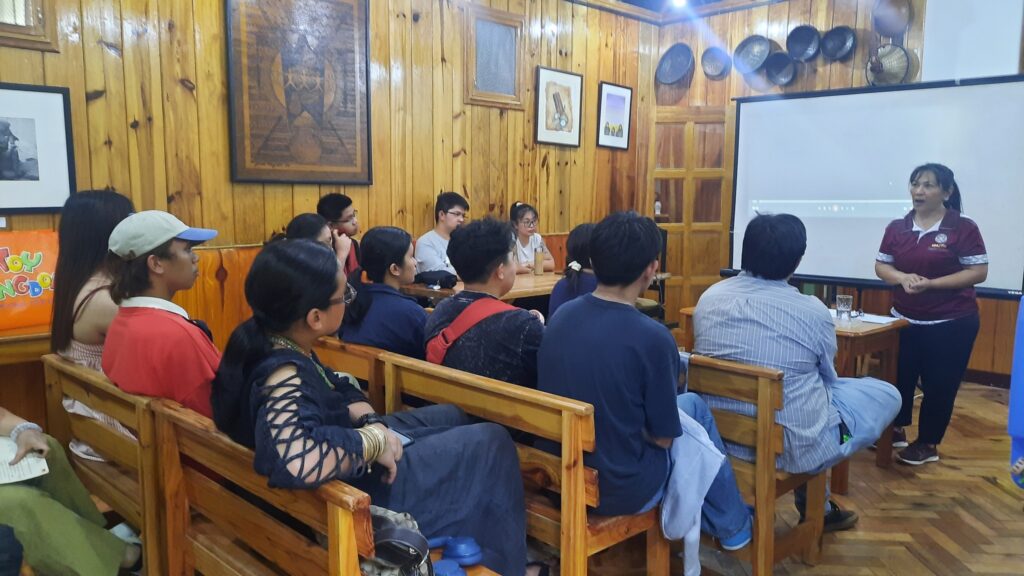
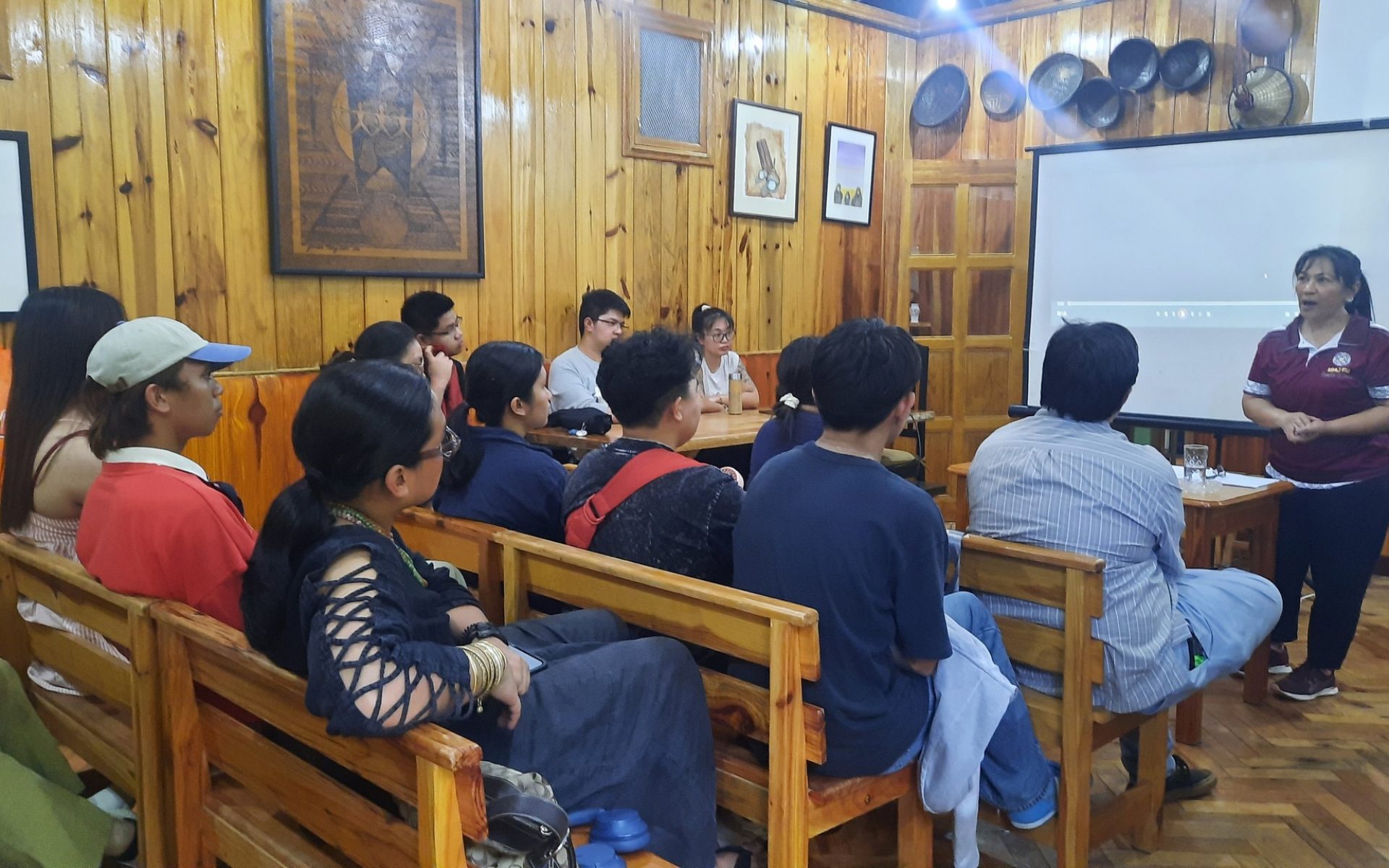
Sagada welcomed us with cold air and a careful slowness. After settling our bags in the cottages, we went to Dogo Siwang Arts Hub, where the opening program of the Cordillera Creative Writing Workshop (CCWW) was held. We were greeted by one of the resident artists, Ma’am Gwen Gaongen. The workshop was born in Sagada, and as the organizers explained, bringing it back here felt like a necessary homecoming to the land that first held its beginnings.
The CCWW emerged as a response to the historical marginalization of Cordilleran voices in Philippine literature, which has long been centered in Manila. It created a space where writing from the regions could develop on its own terms—rooted in land, memory, language, and community rather than institutional prestige. What makes the workshop distinct is that it is organized largely by its own alumni. Generation after generation, writers return not as authorities but as caretakers, holding each other’s work with intimacy and accountability. It is a workshop sustained less by hierarchy and more by kinship.
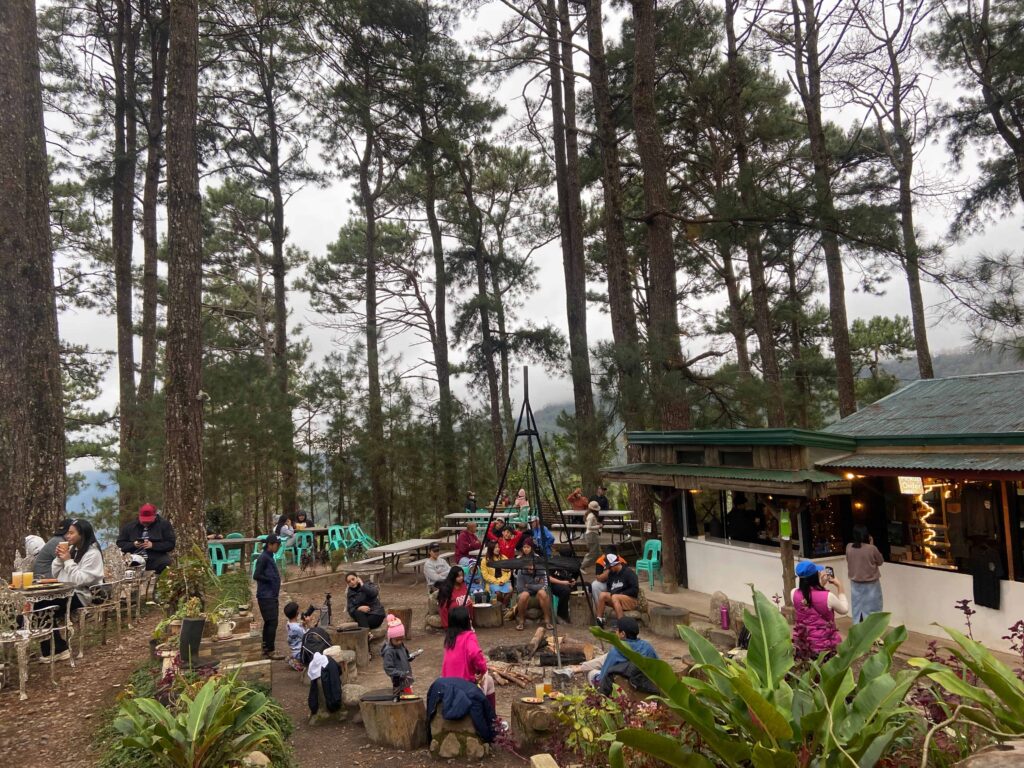
That evening, we had dinner at Gaia Café, a place made famous by the film That Thing Called Tadhana. Overpinikpikan and cups of strong barako coffee, I learned that the owner of Gaia was a fellow in the very first CCWW, which was held in Sagada. Watching the conversations unfold felt like witnessing a reunion of people who once shared (and are still sharing) a youthful devotion to art and literature— now older, grounded—but still tethered to the same, if not better, creative rigor and visions. The workshop revealed itself not as a one-time event but as a long, ongoing conversation.
I write this resisting the urge to label Sagada in the language of tourism. I have seen what such labels do. Baguio, once called the “Summer Capital of the Philippines,” now struggles with overpopulation, water shortages, and the displacement of its own residents. Tourism, when driven solely by capital, commodifies culture and turns communities into attractions. In Sagada, there are attempts to resist this: regulated tourism, community-based homestays, and town hall gatherings modeled after the dap-ay, where collective decisions are made. Still, the threat remains. We passed a massive hotel under construction—an eyesore, for me, and a reminder of how easily “development” can erode the very things it claims to celebrate.
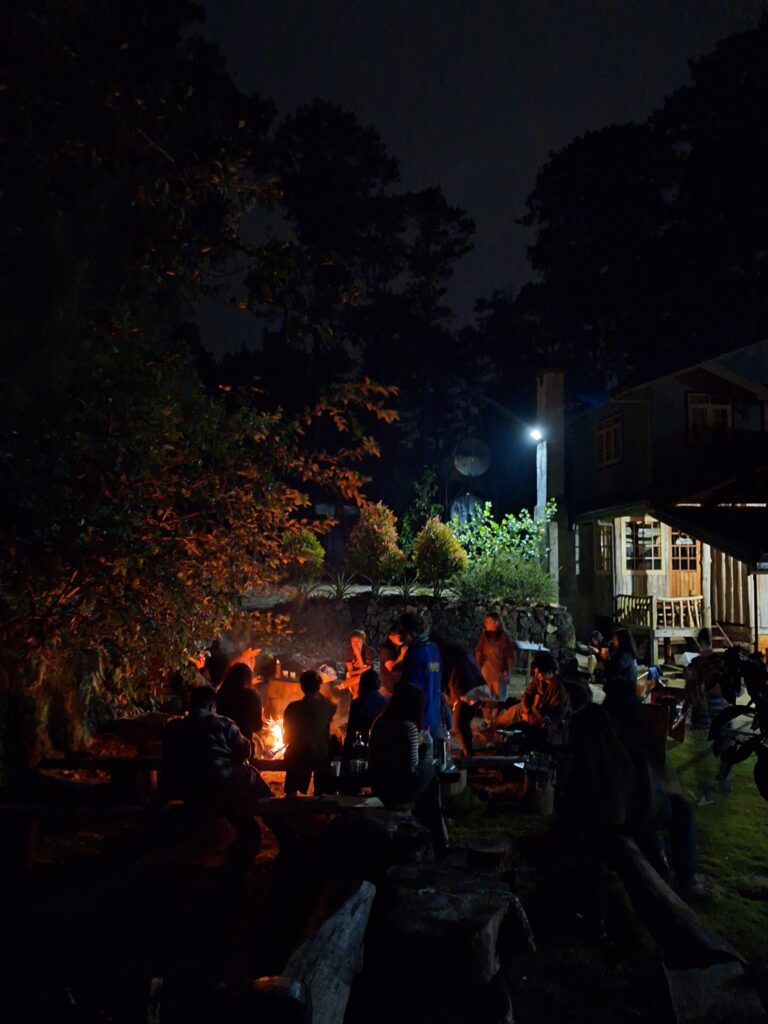
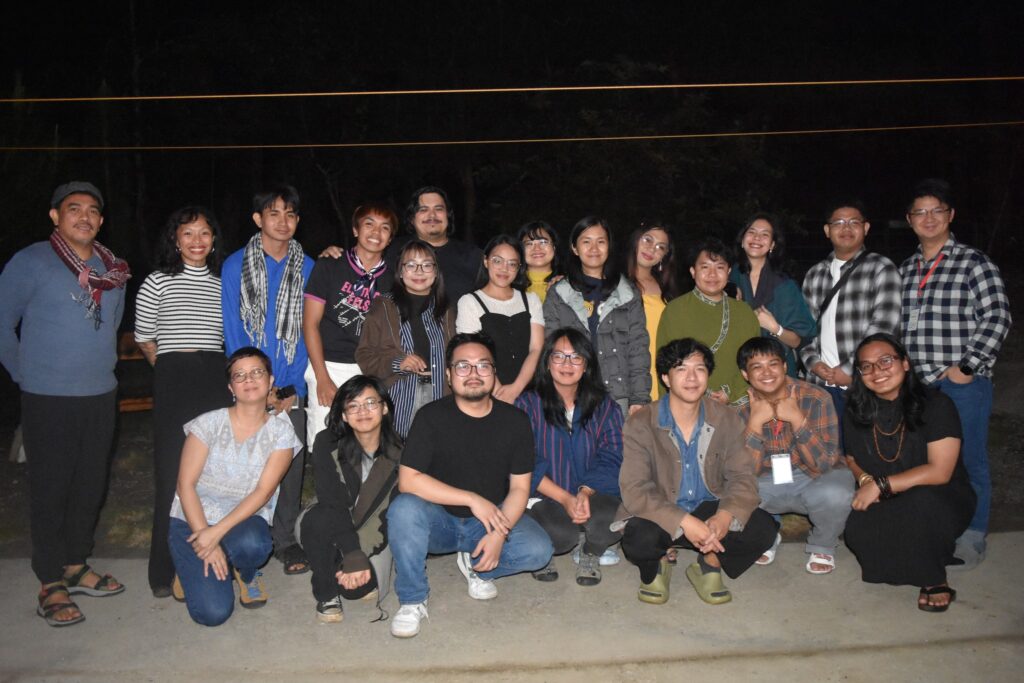
After four days of intensive writing, critique, and conversation, the workshop ended with a poetry night by a bonfire, warmed by gin and shared laughter. Tears were shed and wishes were whispered into the fog. What stayed with me was not just Sagada’s capacity to inspire creativity, but its model of community. It offered me a space to negotiate my ambitions and my disillusionments—as a writer, as a person, as an emerging poet from the regions now based in the dense and saturated terrain of Metro Manila. The community extended beyond Sagada itself. It existed in us—ten writing fellows, who journeyed there together and shared drafts, silences, jokes, and vulnerabilities. There is a particular sense of belonging that comes from building a community around a shared language—whether that language is literature, inside jokes, or one’s mother tongue.
When I returned to Manila, it took months before I could write about Sagada. I resurrected my journal, piecing together fragments written during breaks. These fragments helped me remember how the people I met and the histories I encountered, seemingly rearranged something in me. Travel, I realized, does not always reveal new places. Sometimes, it clarifies the kind of community we are still searching for—and the kind we are capable of building.