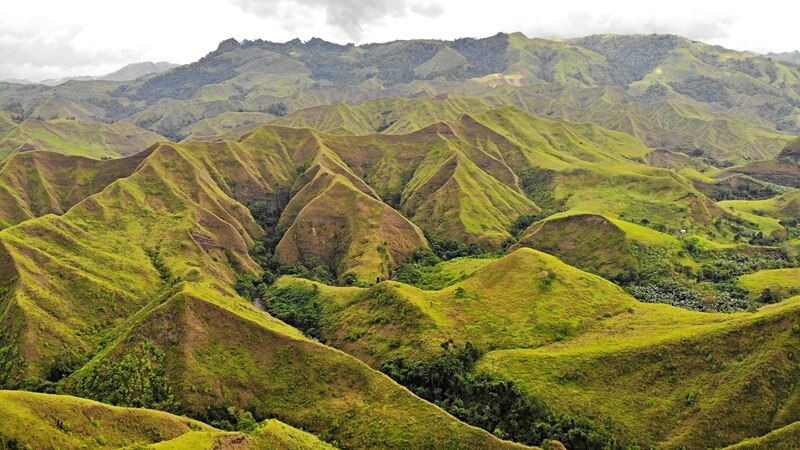

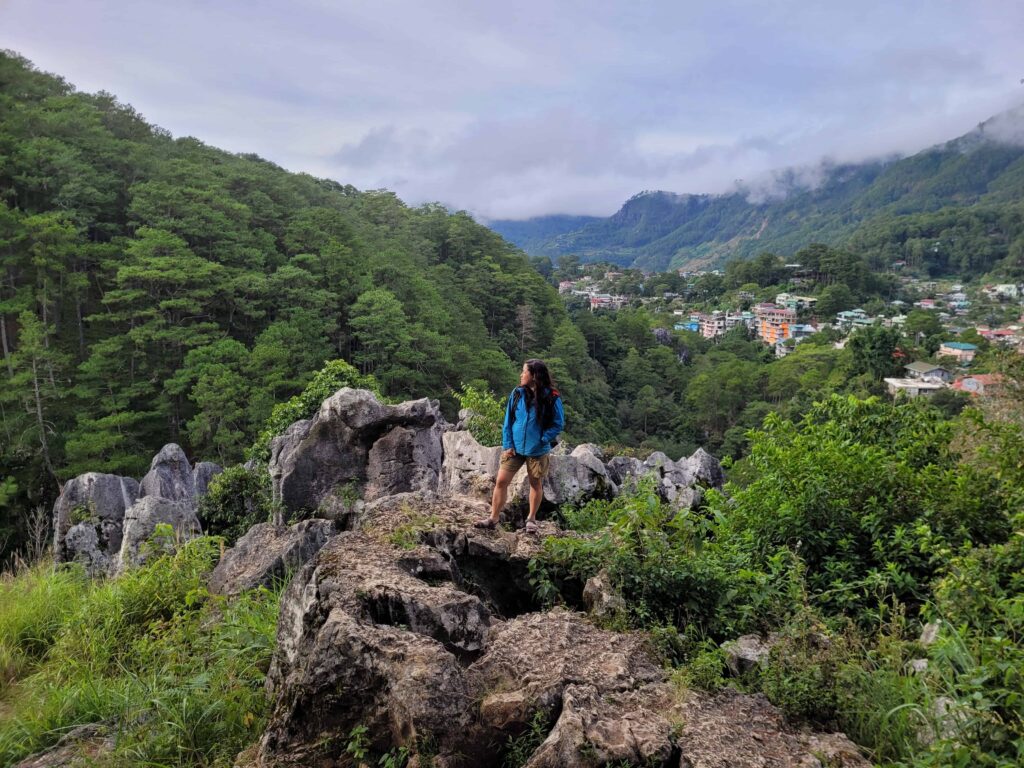
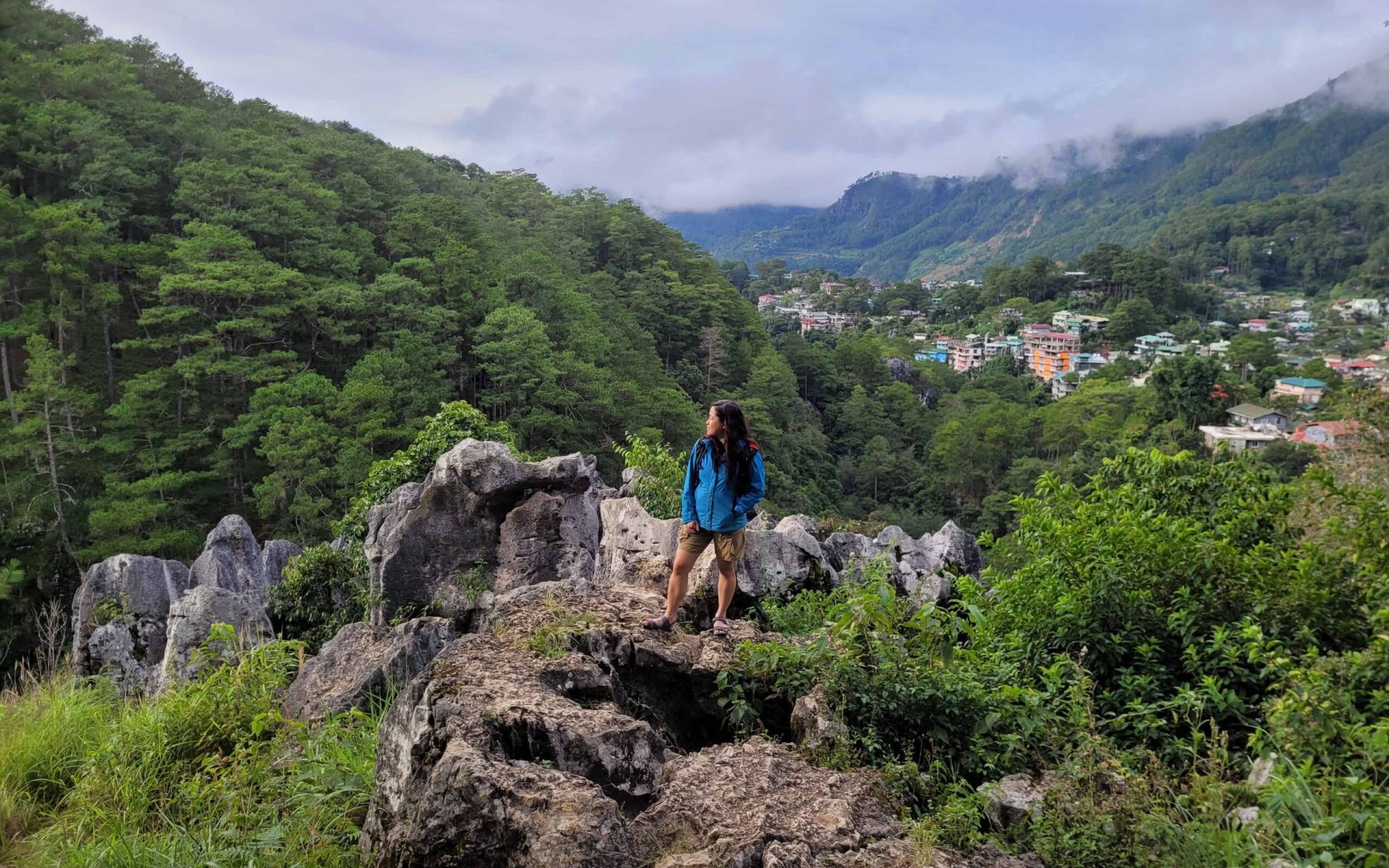

Every step through Sagada’s sacred mountainous landscape is a lesson in the art of slow travel.
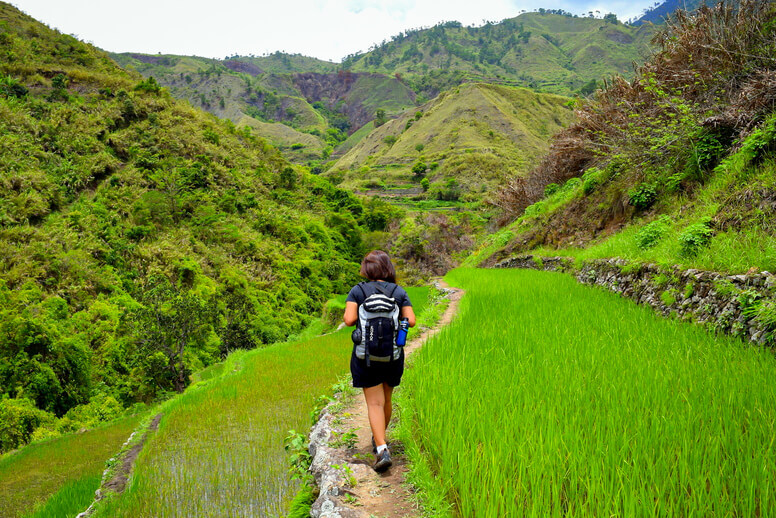
In a span of three hours, I found myself trekking with a view of lush mountains, gazing up at century-old coffins perched on cliffs, and wading through rocky streams of an underground river. I was on a solo trip in Sagada, a town in the Mountain Province in the Cordillera Region. Every second felt precious.
To make the most of my limited time, I decided to trek the Paytokan Trail right after I had woken up at the crack of dawn in hopes of witnessing a sea of clouds blanketing the landscape from Marlboro Hills.
Despite not being a morning person back home, the mountain town seemed to come with a built-in alarm clock that jolted me awake. In Sagada, adventures are ripe for the picking even before the sun rises. I wanted to seize every minute to taste everything it had to offer.
The Paytokan Trail is a two to three-hour long guided hike that passes through several traditional and religious areas in town. Guides are required to ensure that visitors remain respectful of local traditions and leave the natural sites as they found them.
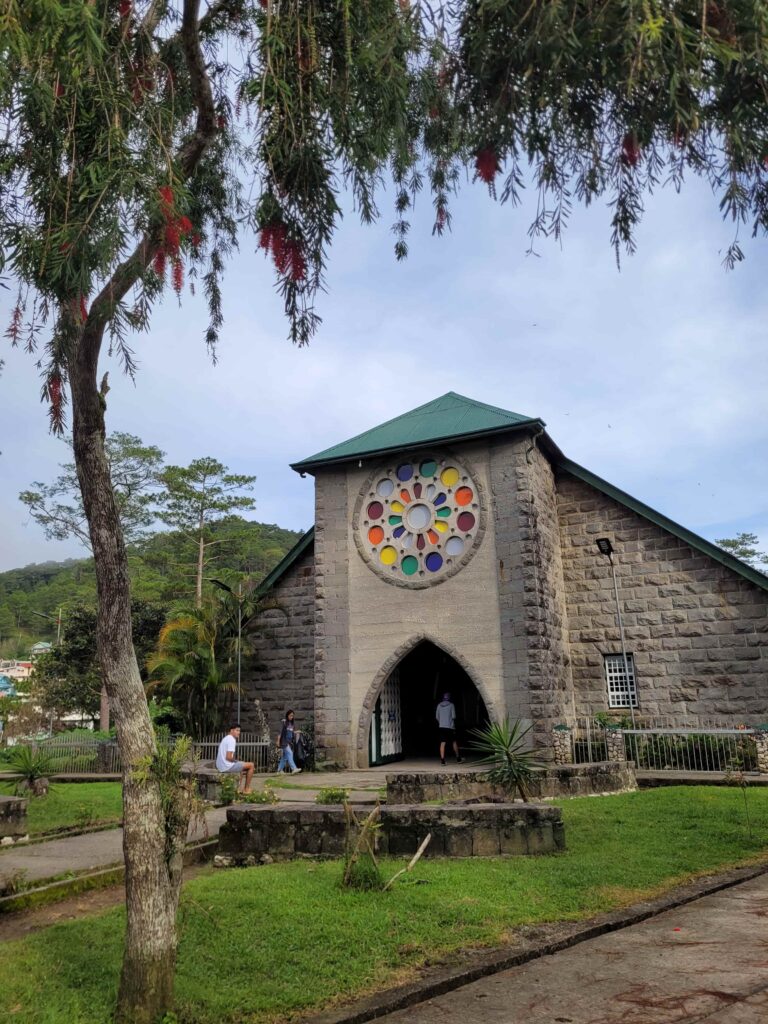
The trail starts at the Church of St. Mary the Virgin, an Episcopal church adorned with stained-glass windows. Built in 1904, it’s said to be the oldest church in the region, with locals continuing to restore and preserve its original structure. A cluster of rocks serves as the altar’s base, adding to the church’s earthly aura.
From the church, my guide and I walked toward Echo Valley, a sightseeing spot overlooking limestone cliffs and lush pine forests. Historically, locals used to shout in the valley to announce the arrival of a new, deceased member of the community, their voices resonating below.
Hikers, however, are advised to minimize noise and avoid shouting. Shrieking in laughter or yelling out profanities about work or heartbreak, as some unruly tourists often do, is considered disrespectful.
Nearby is the Sagada Town Cemetery. It can be quiet on an ordinary day, but I recall witnessing a vivid local ritual here during a previous visit more than a decade ago. Every year on November 1, locals observe Panag-apoy, which translates to “lighting a fire.” Rooted in the Kankana-ey customs of remembering the dead, the tradition involves using sa-eng or pinewood to light bonfires on graves in honor of the departed. The fires are meant to symbolize warmth, light, and guidance for souls.
Minutes later, we arrive at the Hanging Coffins of Sagada, the most accessible spot that shows the Igorot culture’s ancient rituals and burial traditions. Wooden coffins dangle from cliffs and caves, each suspended to the sides of the limestone cliff in Echo Valley. My guide explained that the people of the Cordilleras believe that the higher the dead are placed, the greater the chance of their spirits reaching a higher state in the afterlife. While most burial spots are hidden in the mountains, this particular spot can be appreciated from afar along the trail.
Walking down to the bottom of Echo Valley takes us to Baw-eng Coffee Farm, where visitors normally learn more about the various coffee beans that grow in the area. Having visited on a weekday during the low season, the coffee shop was closed, as most locals tend to other tasks if they’re not expecting tourists. I find it amazing that a farm-to-cup cafe can be found seemingly in the middle of nowhere. It’s a worthy stop midway for a coffee break.
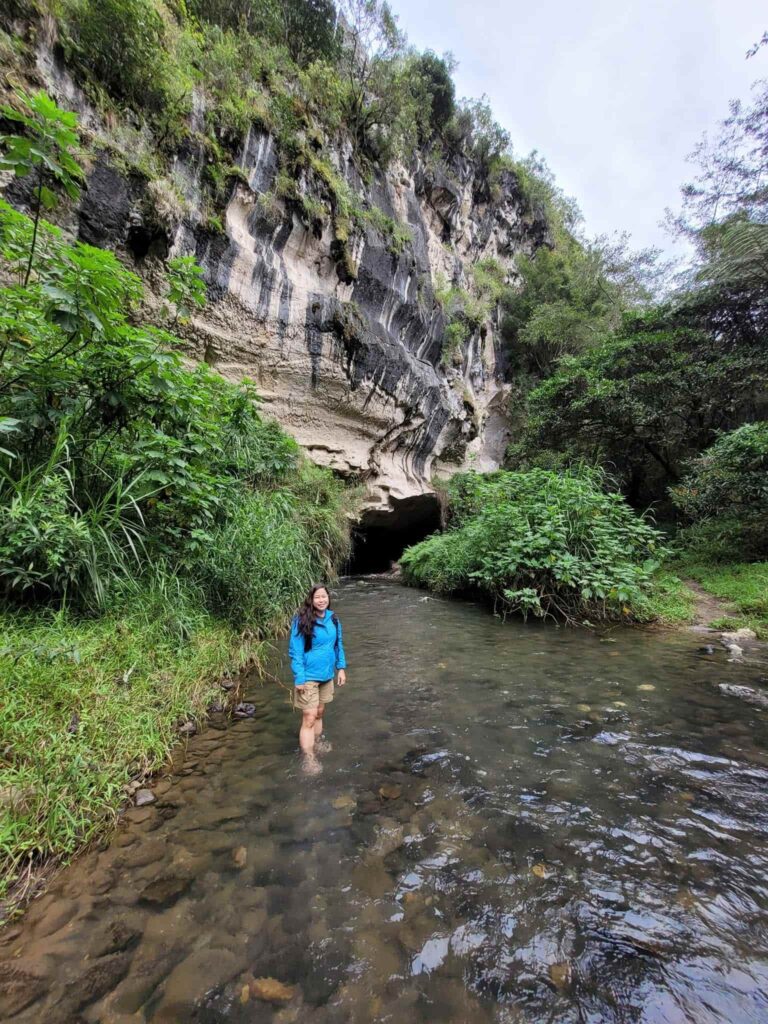
We continued our trek to the Sagada Underground River, which involves wading through shallow ankle-deep waters and climbing up boulders through Latang Cave. With nothing to see in the icy cold darkness, I stash my phone away safely and focus my attention on stepping carefully over the rocky terrain and try not to slip into the water. Minutes trickle by in the dark before we reach the other end of the cavern. From there, we trek through a narrow, muddy footpath that eventually leads to a tiny waterfall.
Bokong Falls offers a refreshing spot for tourists to take a dip – if they want to brave the cold, that is. The waterfalls may be small at just 20 feet high, but they contain a deep natural pool for cooling down. I was content to spend some time here in silence, splashing my face and dipping my feet in the pool. I felt exhausted, yet somehow invigorated.
I often find myself killing time in the noisy, traffic-choked and fast-paced city where I live. Yet I count the days when I can pause and soak in the stillness of the mountains and nature once again, like my time in Sagada, where every moment is well-spent.