



Part 2 of “The Mundane Series”
Airports have never been anyone’s favorite destination. Nobody books a flight just to see an airport—unless they’re an air traffic controller or one of those aviation geeks who can name every plane model by sound. The seats are stiff, the Wi-Fi pretends to exist, and the food somehow manages to be both overpriced and underwhelming. And yet, in these squeaky glass walls ventilated by recycled air is where some of life’s strangest, quietest dramas unfold. They say “getting there is half the journey,” but nobody mentions that this half often smells of instant noodles and jet fuel.
The hours between check-in and boarding exist in a strange kind of limbo—too early to start the trip, too late to back out. It’s a crash course in patience, a workshop of endurance.
Sit long enough and the background starts to come alive. The janitor pushing a cart, half ignoring his own wet floor sign. The security officer arguing with a colleague about lunch plans while waving people through. The barista who’s clearly on her ninth hour of pretending to care about names. I’ve been called Wong, Juan, and once, inexplicably, Susan. I wouldn’t be surprised if they spell every name wrong on purpose for their own amusement.
There’s something oddly democratic about airports. Everyone looks equally exhausted. The wealthy business traveler and the broke backpacker alike must remove their shoes at security. Status dissolves here; everyone becomes a mild version of a lost soul in purgatory.

But not every trip is fueled by wanderlust. Years ago, I flew home on short notice to see my grandmother for the very last time. It was the longest hour I’ve ever spent at Gate E42, wedged between a family excitedly taking selfies and a man loudly arguing with his wife over a forgotten power adapter. The world kept moving, oblivious, while my boarding pass felt like a last ticket to something irreversible. There’s a kind of heartbreak airports don’t advertise: the kind that happens in the in-between, when you realize that every departure is a small goodbye to a version of you who will never be the same, ever again. When I flew back days later, I realized I wasn’t just leaving home. I was leaving behind the version of home where my lola existed.
If airports could hear passengers’ thoughts, they’d have enough material to fill a library. Gate lounges would whisper stories of honeymoons and breakups, of new jobs and last chances, of family reunions and final farewells. Imagine if that inner noise had subtitles on the departure screens, or worse, was announced over the PA:
“Passenger 22B of Flight PR501 is reconsidering her life choices.”
“Toddler at row 18 is discovering the power of screaming in transit gates.”
“Someone at Duty Free Counter 2 just realized a perfume costs half his monthly salary.”
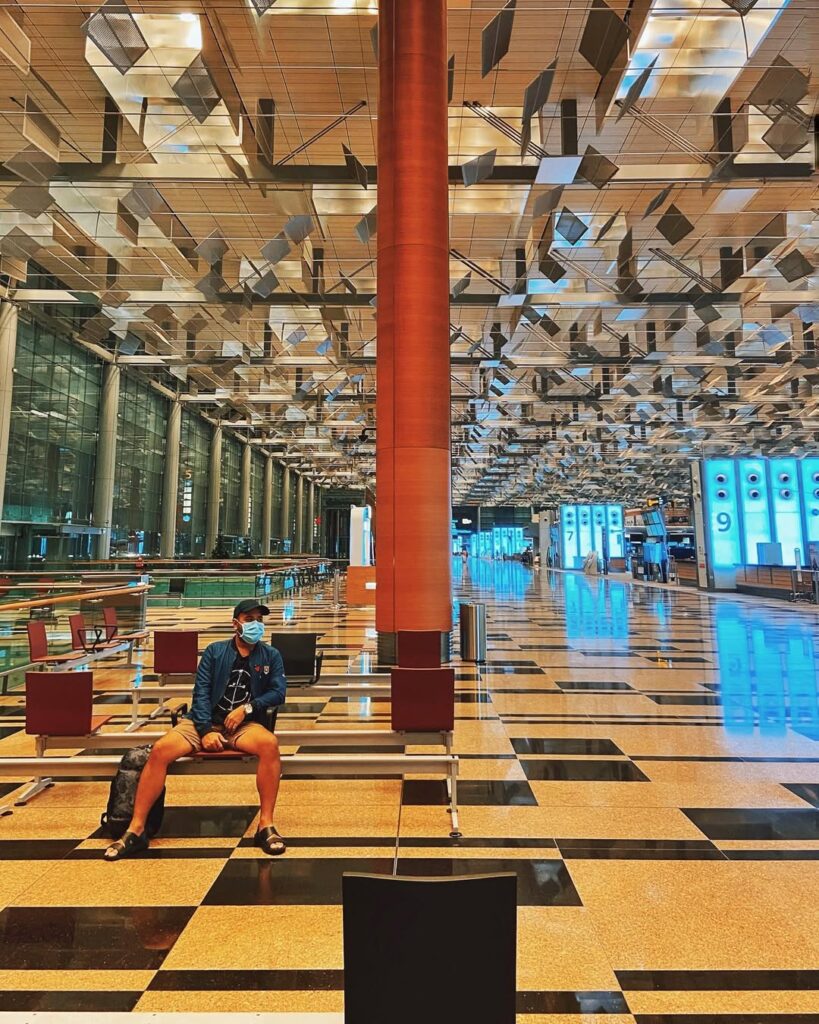
Perhaps that’s what makes airports fascinating—the impermanence of it all. Thousands of people you’ll never meet again, suspended in the same brief orbit before scattering across continents. It’s both comforting and absurdly ridiculous. You can fall in love with a stranger’s smile in the immigration queue and lose them forever two minutes later because your gates are on opposite ends of Terminal 3. That’s how life works, I suppose—the chance encounters, letting go, and moving on.
Still, there’s beauty in the lulling rhythm of terminals: Bangladeshi workers shuffling in boarding lines like Lego blocks stacked horizontally, mindless business passengers unzipping laptops and removing belts, the collective groan when a flight is delayed. Airports are temples of transition—equal parts trust and hope. Movement, no matter how routine, is still a small act of faith, an agreement to be at the mercy of the unknown for a few hours. Air traffic, force majeure, some random Karen creating free transit entertainment.
At the end of every trip, by the time we arrive, adrenaline dips and reality returns. The trip becomes memory, the memory becomes story, and the story often begins, ironically, at the most overlooked place of all. Maybe that’s why I’ve learned to love airports. Not for the glossy shops or terrible sandwiches, but for their quiet honesty. They hold the truth most destinations don’t: travel isn’t always about where you’re going or even who you’re with, but who you are when you surrender in the in-betweens while waiting to get there.