

Notes on stubbornness and single-origin coffee from a conversation with a sustainable coffee shop owner
Stubbornness runs in my blood.
I got it from my mother who, against her doctor’s orders, would buy maja blanca from the ladies who peddled it in the palengke. Got it from my grandmother, who refused to expand her outdoor kitchen because it meant cutting down the eggplant she grew from seeds. Got it from a father who ran from his mother, wife, and kids with only the clothes on his back.
It is no surprise then, that shortly after my cardiologist advised me early in 2023 to strike coffee from my diet, I sneakily sipped on an iced latte with a single shot of espresso. I had been prescribed beta blockers to manage my anxiety, worsened by clashes with my late grandmother’s family. For a few months, I had been living on tea. But I just couldn’t give up my cup of joe.
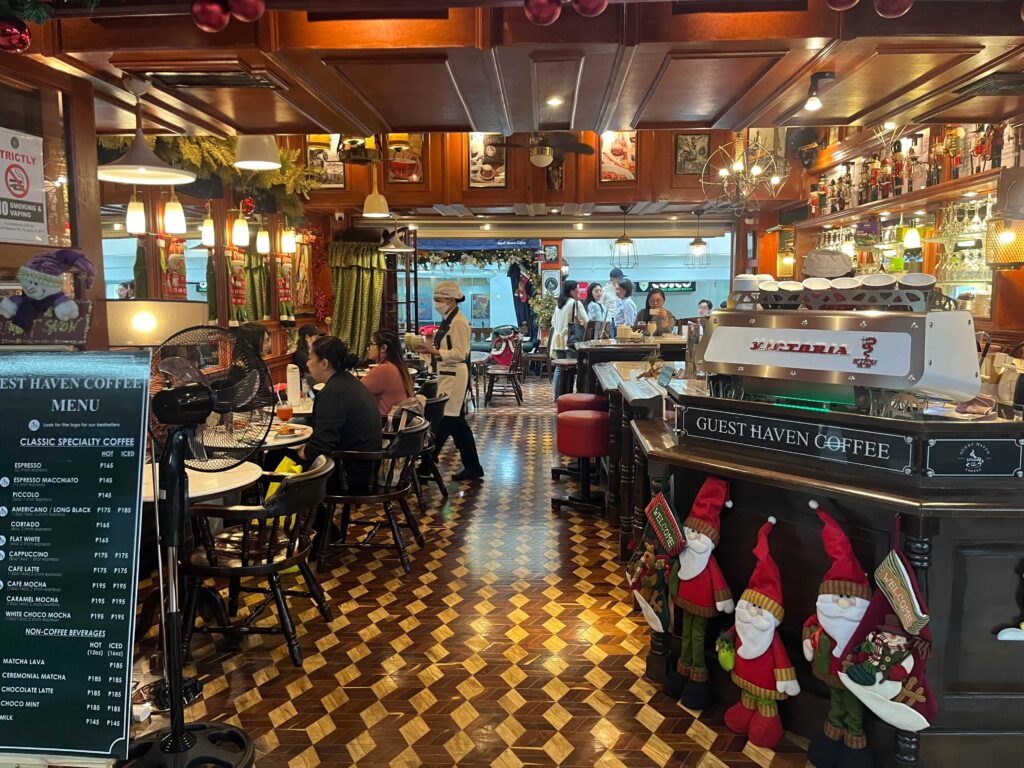
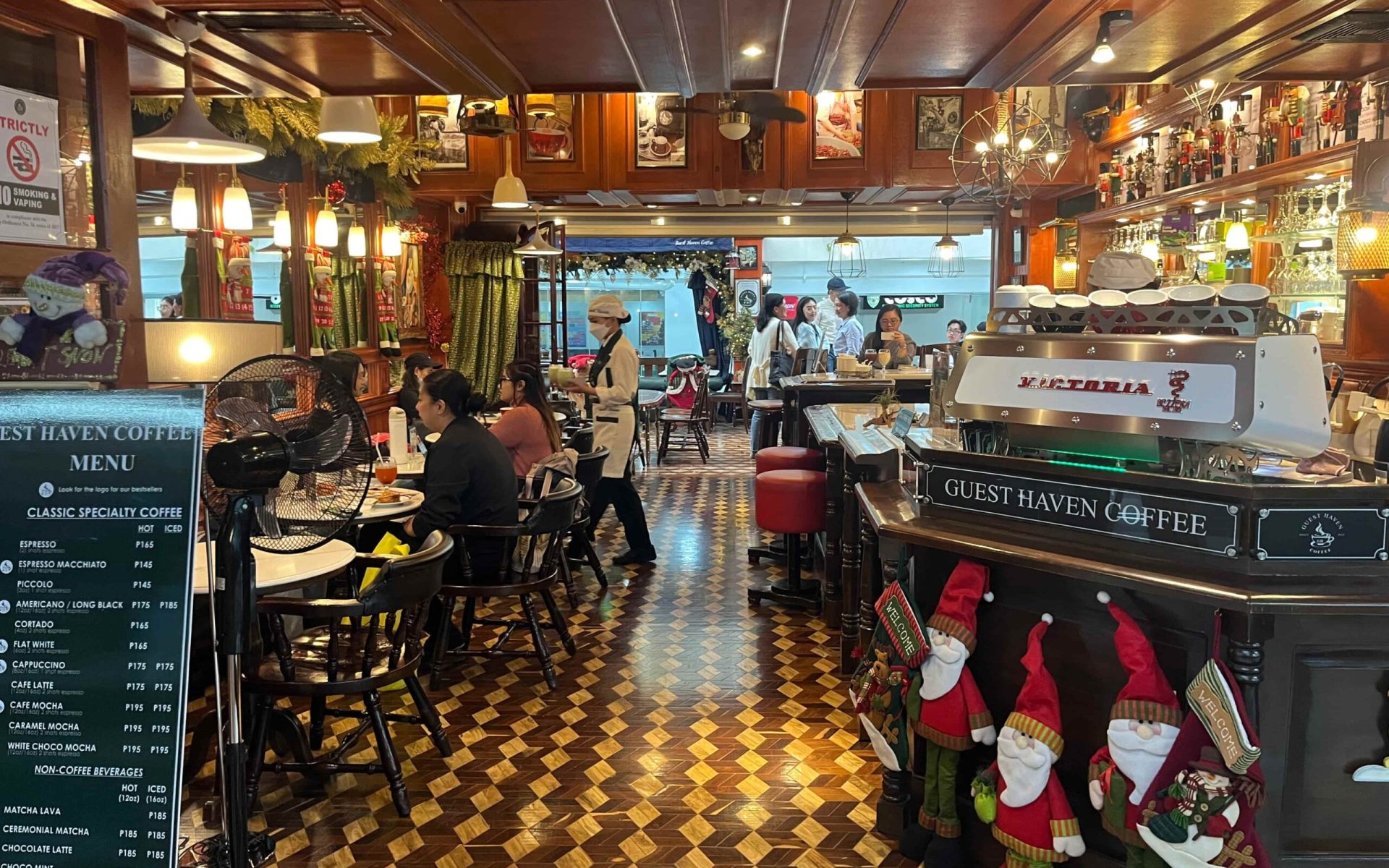
There is a lot of stubbornness that dwells in this story. But this is also a story about coffee and care, as I chanced upon them three years ago in Guest Haven Coffee, a specialty coffee shop with two locations along Session Road.
My (Re)Introduction to Coffee
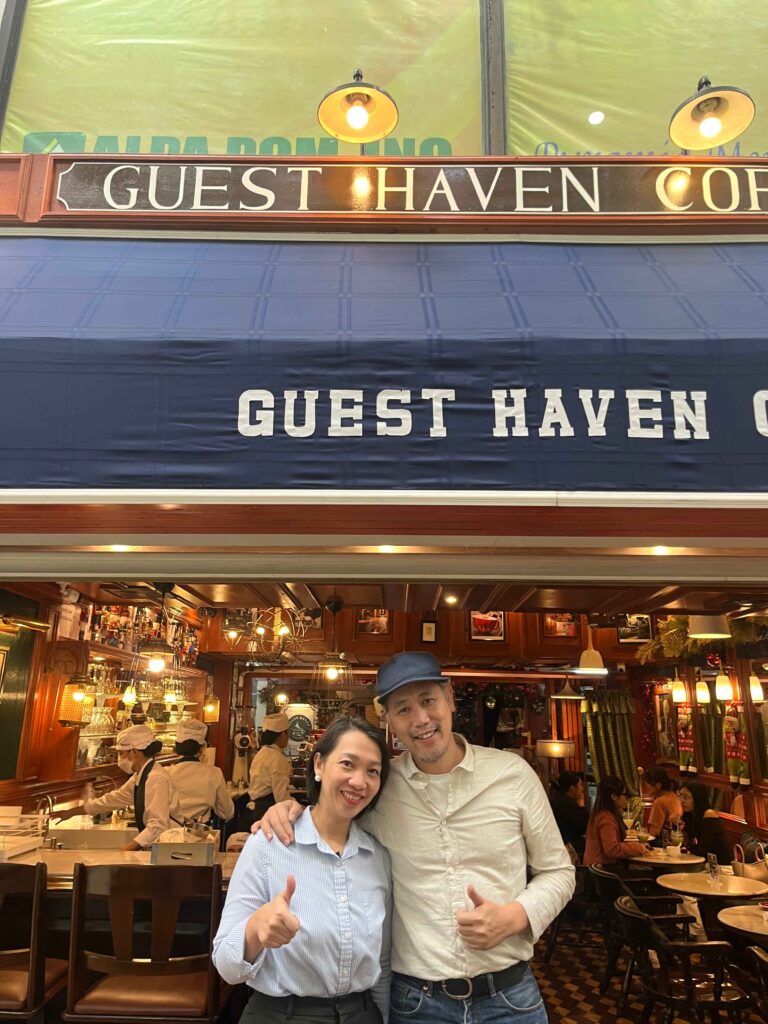
After three years of chitchatting at their cafe bar, I sat down with Venus Carling, one-half of the couple from Mountain Province who owns Guest Haven Coffee. She and her husband, Gino Carling, have been in the hospitality industry for 14 years.
I told Ma’am Venus – as I call her – that it took me a long time to find an espresso-based drink I genuinely liked. When I started earning enough to buy something other than instant cappuccino, I found most cafe blends too bitter or sugary. I reached a point when I wondered if I just wasn’t cut out for fancy drinks. I survived college on 3-in-1 coffee, after all.
“Coffee is not just bitter,” she told me. Quality coffee, according to her, has a distinct flavor profile that could include notes of strawberry or chocolate, depending on the beans and processing methods.
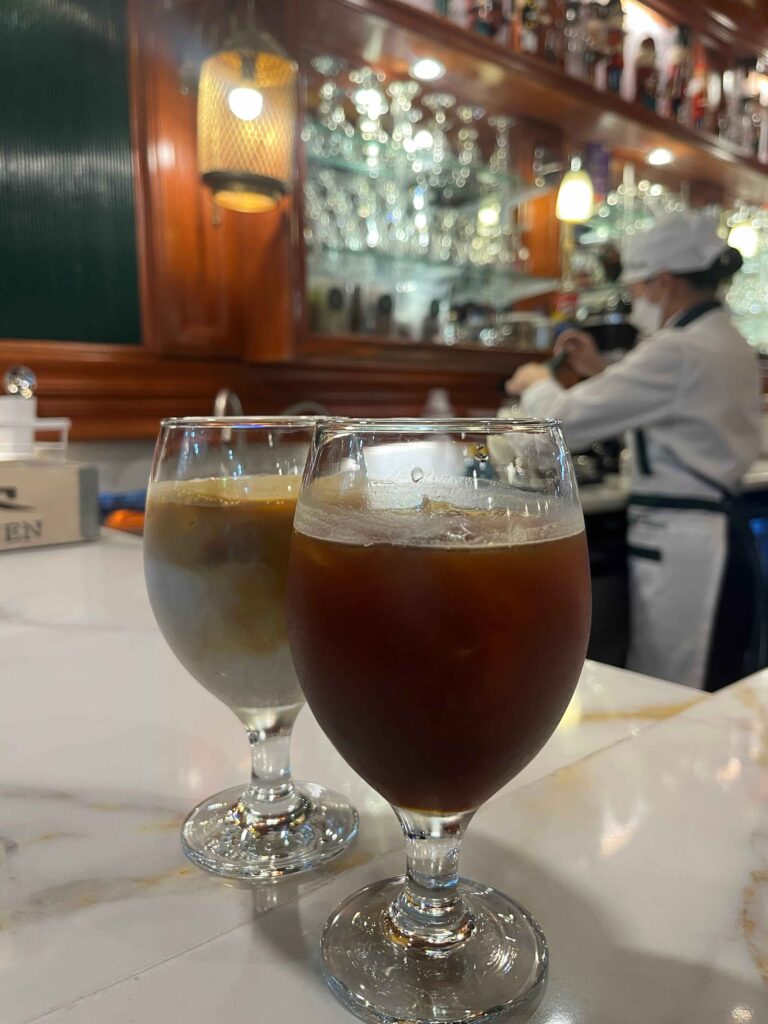
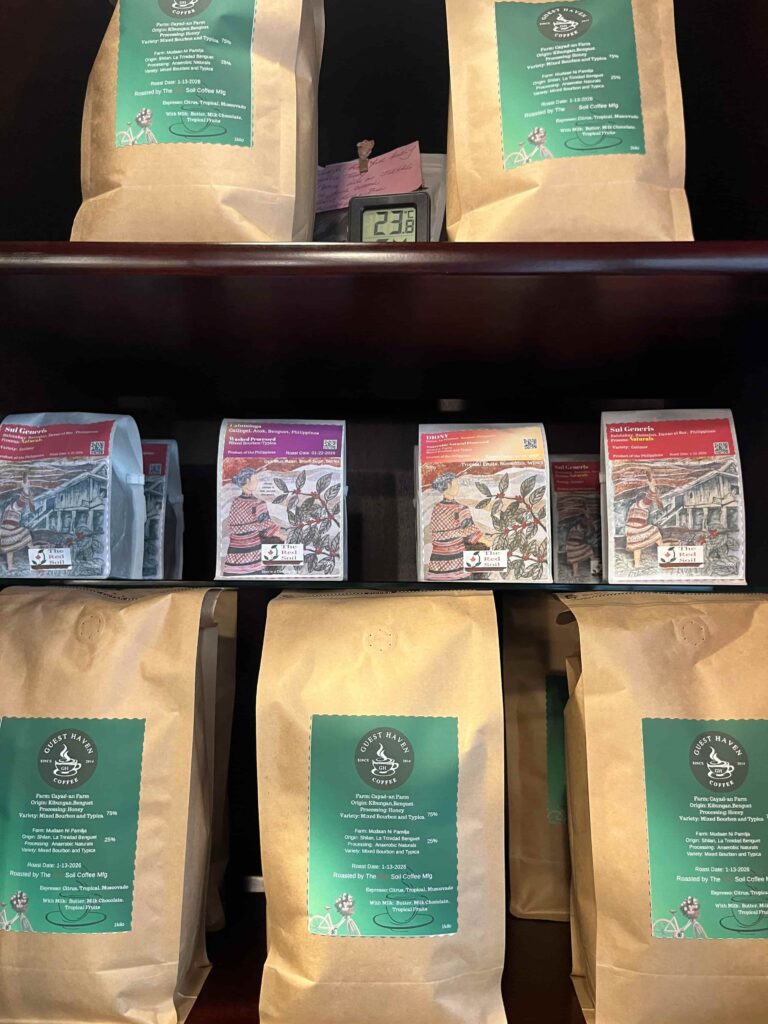
I could in fact almost smell the chocolate from their cafe latte, my go-to. The card it came with identified the beans as 100% Benguet arabica: 75% from Kibungan and 25% from La Trinidad. When mixed with milk, the beans are expected to bring out notes of “butter, tropical fruits, and milk chocolate.”
She explained that the farm-to-cup model distinguishes specialty from commercial coffee. They source beans from neighboring suppliers who handpick organic coffee cherries from their modest farms. When regional yield runs low, the couple sometimes orders coffee from Davao and Bukidnon. They then partner with local coffee processors and the sought-after Baguio roastery, The Red Soil Coffee.
What’s Brewing at Guest Haven?
Guest Haven’s roots are in the bed and breakfast business. Two years after they opened their B&B, the duo decided to brew their own coffee exclusively for their guests — and they loved it! Seven years later, the couple would open their first cafe.
“Many of our suppliers have been our partners since 2012,” Ma’am Venus enthused. This was also how they acquired new products: local coffee beans and marmalade.
Because of their long-standing community partnerships, they were able to secure quality beans and baked goods in 2021, when most new businesses were struggling to find their footing.
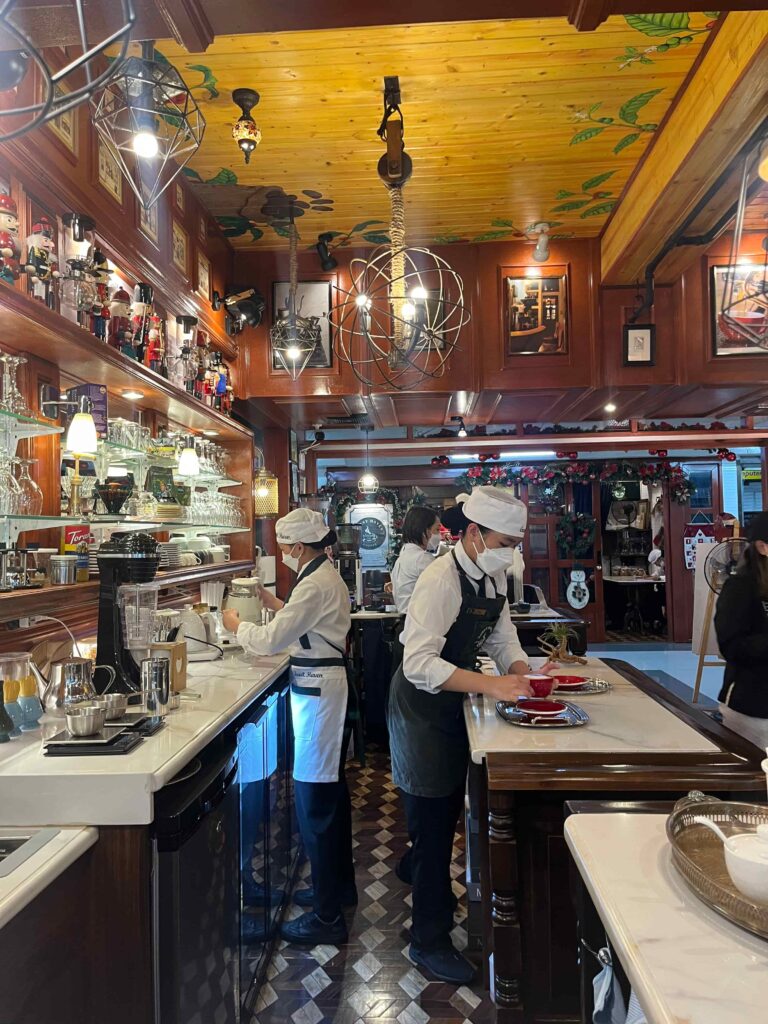
Initially, the Carlings had been scouting for an office for Sir Gino’s architectural practice. They found a vacant room on the top floor of the Patria de Baguio building, near the Baguio Cathedral. Inspired by the room’s Juliet balcony, Architect Carling opted to design a charming coffee shop instead. He revamped the old office interiors to match the building’s European-style facade.
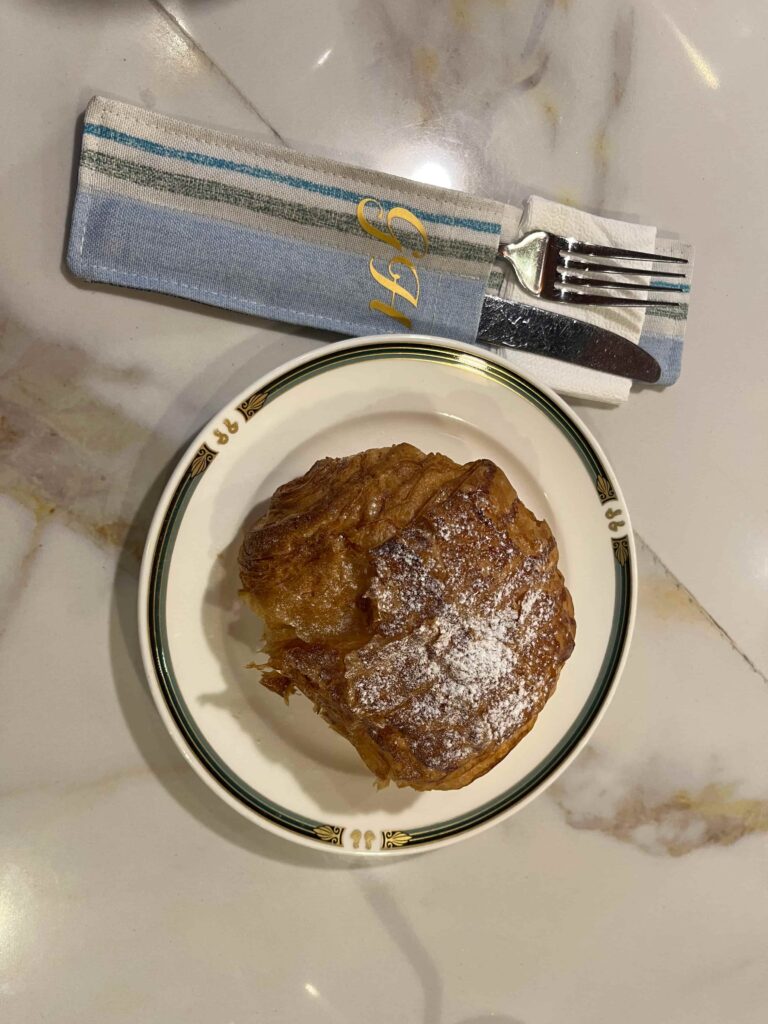
This elevated design, coupled with their monogrammed cutlery pouches and stylish uniforms, is replicated in their Porta Vaga branch. They serve their drinks in fancy glass goblets instead of plastic cups — a decision that also supports their larger sustainability efforts.
One More Cup, Please!
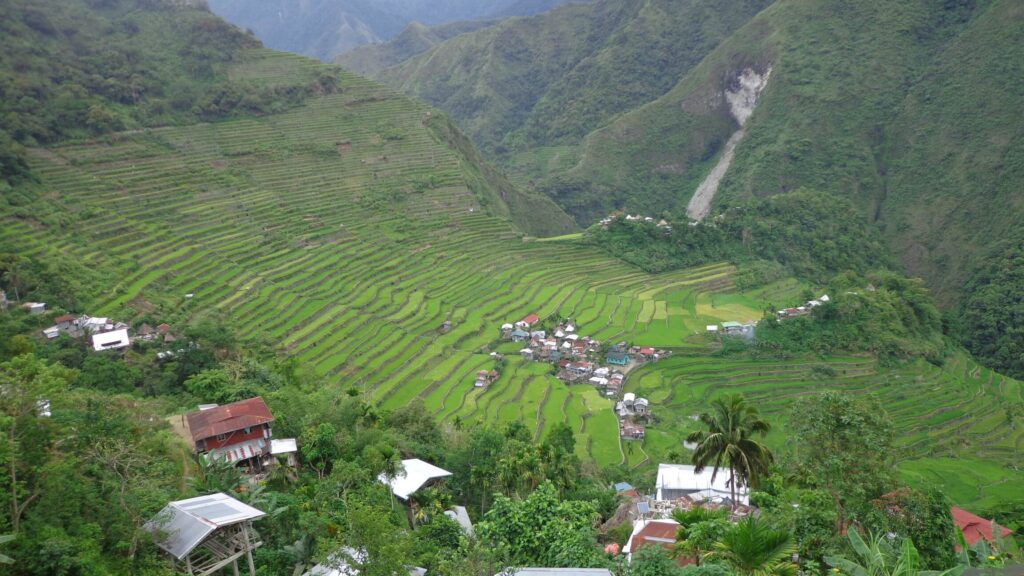
For Ma’am Venus, coffee is life itself. That is gospel here in the Cordillera highlands, where a cup of hot coffee shields against the biting cold.
Last year, I finally took her advice and began taking two espresso shots with my latte. I haven’t gone back since.
Through the strength and lightness of Guest Haven’s brew, I have traced my own connections to coffee and met comfort. I taste notes of honey in memories of my Mama selling coffee to vendors shivering in the wee hours. I catch the unmistakable aroma of my Lola’s kapeng barako, heated over her dalikan (Kankanaey for “stove” or “fireplace”) and shared with neighbors who gather at dawn to swap stories and warm up.
I’m happy to report that I am now equipped to sense and seek many more notes in my life than “burnt” and “stale.” Thank heavens for my stubbornness.