

On places that remind us that food isn’t about stellar ratings, but sustenance, memory, and community
The Michelin Guide has recently arrived in the Philippines, sprinkling stars across Manila and Cebu. But here in Davao, the idea of a Michelin inspector stepping into Bulcachong feels absurd. Imagine them scribbling notes while locals watch TV in the air-conditioned dining room, or chat casually outside on plastic chairs under the humid night air. They might frown at the imperfection and the unapologetic chaos. And that is exactly why it is perfect.
Michelin stars often reward sterility and exclusivity; Davao rewards soul. The best meals here are not plated for Instagram but are served steaming, heavy, and communal. They are eaten by taxi drivers, students, workers, and families who don’t need validation from a Eurocentric rating system. Michelin may have its stars, but Davao has its own constellations: bowls of soup, plates of kakanin, mugs of sikwate. No stars required—just sustenance, memory, and joy.
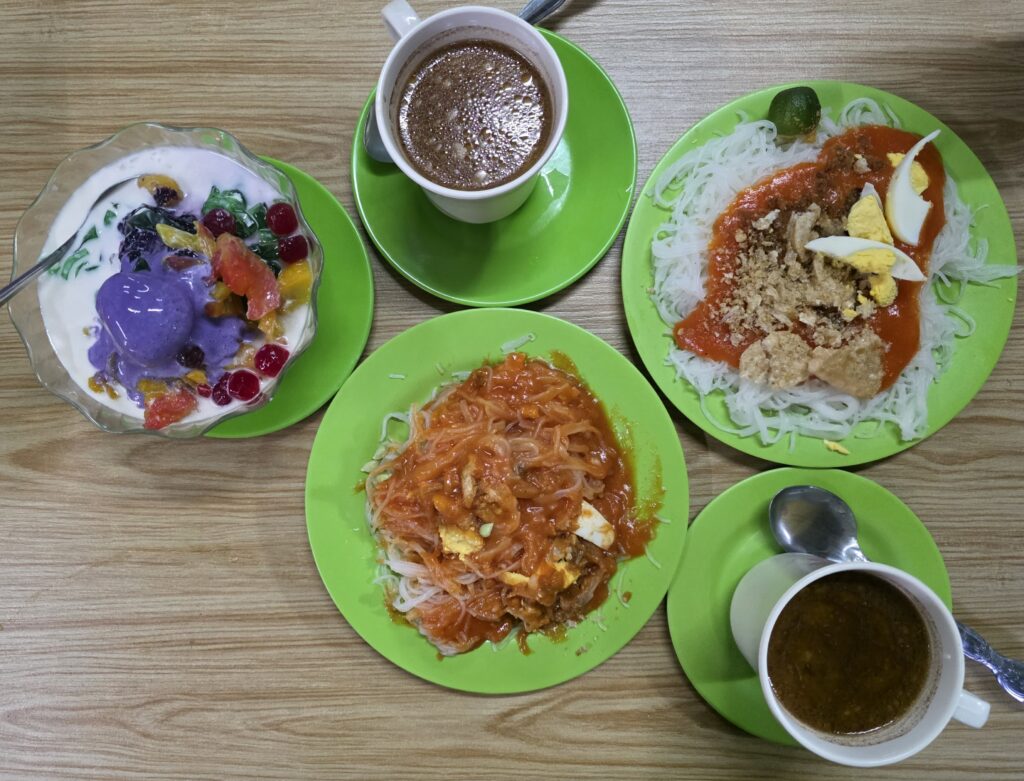
The Dish: Bulcachong
Bulcachong sits calmly near People’s Park, a place that hums from late morning until midnight. Inside, the air-conditioned room offers respite: diners lean back, watching TV while spooning broth. Outside, the atmosphere shifts—plastic chairs, chatter from colleagues unwinding, students in a hurry, taxi drivers grabbing a quick meal before the next ride.
The dish itself is unapologetic. Carabao soup arrives with a color of burned clay and a thick broth. The smell is earthy, pungent with garlic and ginger. One sip and you taste the beast of burden itself: the carabao, whose muscle and sweat shaped the land. Eating bulcachong is consuming strength, a precolonial act of nose-to-tail eating that refuses waste.
Here, the community gathers with insomniacs, workers, and students all sweating the same over a hot bowl. Michelin would dismiss it as crude. Davao knows it as communion. And with opening hours stretching from 10:00 AM to 1:00 AM every day except Sunday, Bulcachong is always there when you need it.
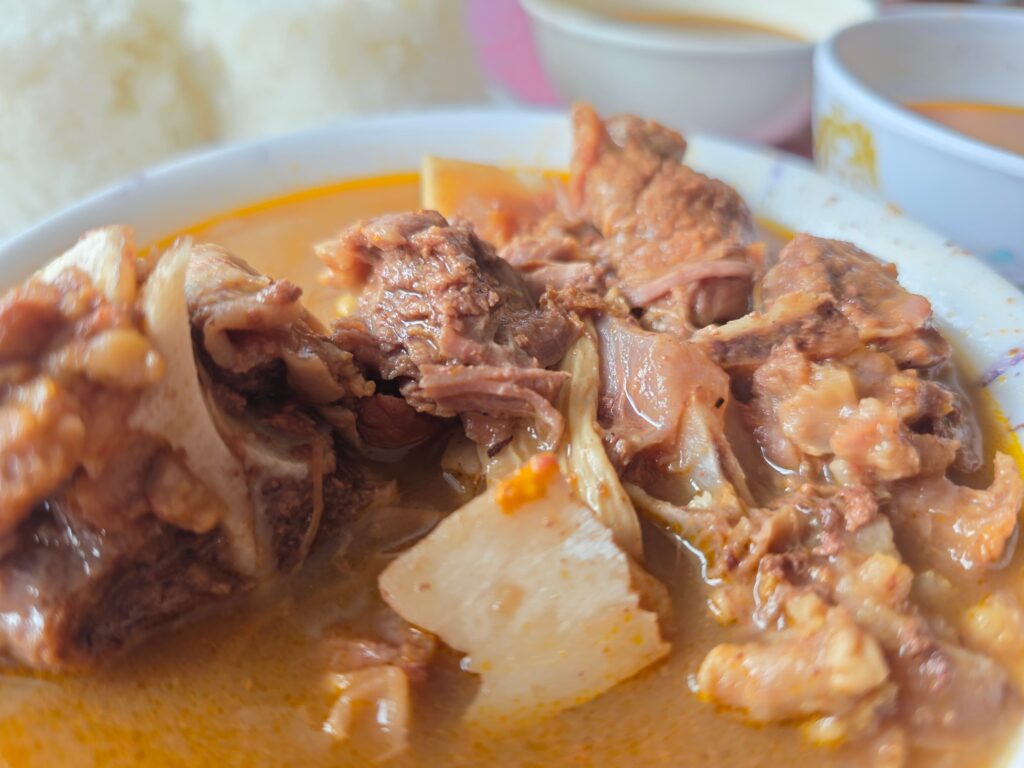
The Scene: Bangsamoro Kainan Ante Movina’s Muslim Eatery
In the Poblacion District, Bangsamoro Kainan Ante Movina’s Muslim Eatery has been serving Maranao food for 15 years. Owned by Movina Sarico, the establishment thrives on family recipes, now in its fifth year at a new location with parking.
Here, the menu is a mosaic of Mindanao’s flavors: native chicken piaparan simmered in gata, bakas (tuna grilled and bathed in coconut milk), inaluban tilapia, bihod, kinilaw na tuna, even fish innards. These are dishes once reserved for datus, now shared with Muslims, Christians, workers, students, and business owners alike.
The piaparan is fragrant, milky, alive with turmeric, potato, and ginger. Western palates might call it “too bold” and lacking polish. But this is not food crafted for stars; it is food for the people. It is fresh, layered, unapologetically Filipino. Perfect.
Open from 6:00 AM to 10:00 PM, it is a place where heritage is served unceremoniously, steaming, every single day as conversations overlap and laughter punctuates bites.
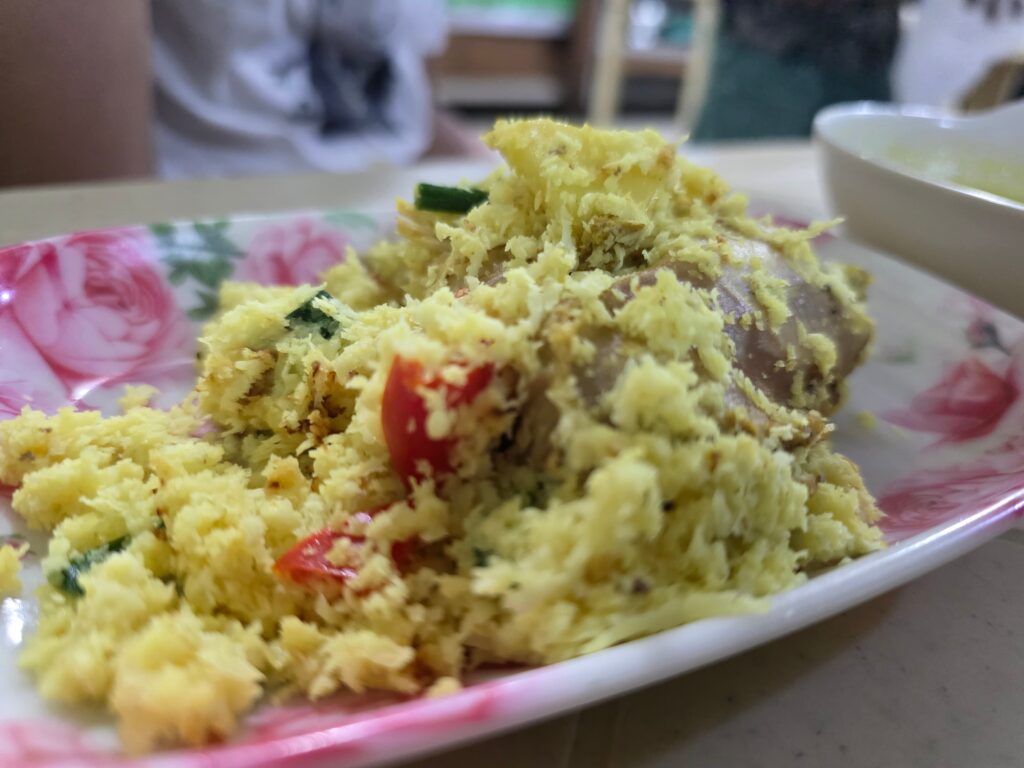
The Tradition: Anak ni Baby Puto
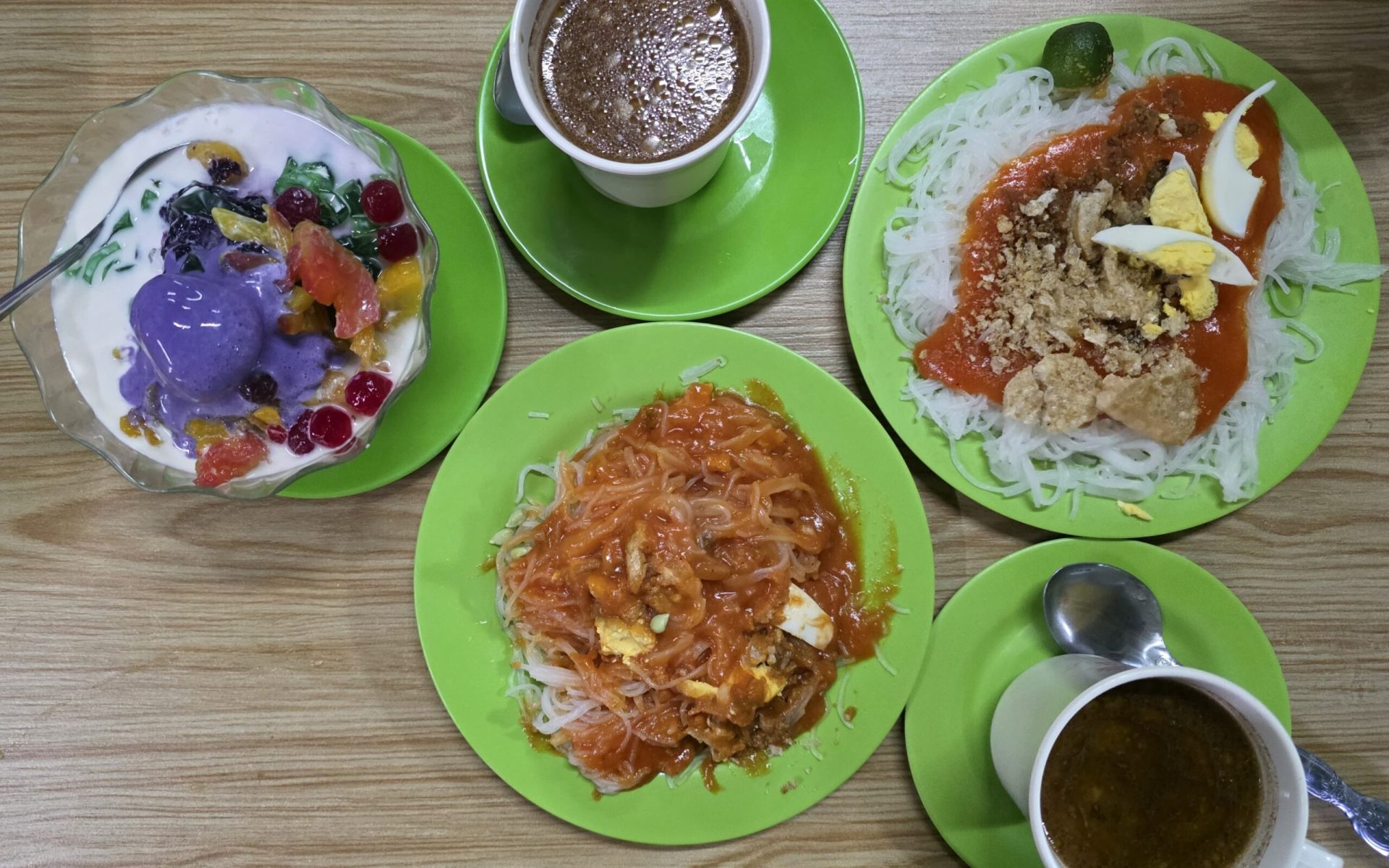
Inside Agdao Public Market, Evelyn Laroa has been serving puto maya and sikwate since 1984. The recipe is original, passed down, and has carried the business through decades. They even thrived amid the pandemic by tapping into food delivery services, eventually branching out to four additional locations.
The sikwate is thick, mildly bitter, and oozing with cacao goodness. It coats the tongue, warms the chest, and tastes like childhood mornings. Paired with puto maya, the experience deepens: the slightly salty rice cake becomes a canvas, allowing the bittersweet chocolate to bloom into a dessert that is both humble and transcendent. It is a pairing that speaks to Filipino ingenuity; simple ingredients transformed into harmony.
Alongside it, trays of kakanin, palabok, and other Filipino staples remind you that food is memory. But Anak ni Baby Puto is more than nostalgia. It is a success story rooted in resilience. Evelyn’s emphasis on tradition extends to her staff, treating them with dignity even when inflation bites into profits. She believes that food without respect is empty; food with dignity nourishes beyond the stomach.
The clientele here is diverse, ranging from students on tight budgets to factory workers grabbing merienda, to palengke goers resting after errands. The tables are always crowded, the air sticky, the laughter unpretentious.
The Conclusion: The Soul of a Place
Why do we keep coming back to these places? Because it tastes like home. Because it reminds us that food is not about stars or ratings but about nourishment, memory, and community. Davao’s soul isn’t found in fusion restaurants or spotless dining rooms but in the steam rising off a bowl of bulcachong at dawn, in the milky broth of piaparan, in the bitter sweetness of sikwate sipped from a chipped mug.
We don’t need Michelin stars. We need places that feed us, body and spirit. And in Davao, the soul of the city is served daily—plastic chairs, noisy fans, imperfect but perfect all the same.