

(Part 4 of “The Mundane Series”)
The Psychology of Travel Souvenirs
Souvenirs act as “tangible anchors” of a travel experience— at least if you ask Littrell et al. (1993). They’re the physical evidence that you were, in fact, somewhere else and not merely trapped in yet another existential rot inside a cubicle in BGC.
Here you are, after paying thousands of pesos for flights, hotels, and insurance. And sure, you promised yourself this trip would be spontaneous. “By the seat of your pants,” you said, like a disheveled indie-film protagonist surrendering to fate and not the version of yourself hunched over your phone calculating roaming charges. Yet, anticlimactically, the moment you land in a new city—eyes still adjusting from cabin lights, pores recalibrating to unfamiliar humidity—you find yourself marching straight into the least spontaneous place imaginable: that halogen-scorched boutique nook of a souvenir shop. Touching keychains shaped like miniature Tokyo Tower and contemplating buying a mug the moment the green siren beckons you from the corner.
Why do we do this? Why do we succumb to the gravitational pull of trinkets? Are they substitutes for treasure loot, modern-day quest markers, side missions you automatically unlock the moment you buy yet another same-design- different-print, all-made-in- China mug? Maybe souvenirs are symbols, or totems of the traveler’s feat, reflecting interests, values, and aspirational identity.
They say you are what you collect. It’s the visual representation of your unconscious personality. If you collect magnets, you probably have attachment issues, clinging to metal surfaces because humans are too unstable. If you collect “I Love” shirts, maybe you fall too easily for people who merely hold the door for you. And if you collect mugs, perhaps you are like mugs of coffee: warm— and occasionally full of yourself.
You’ve barely stepped into the sunlight of a new corner of the world, scarcely inhaled the foreign pollution, and you’re already thinking of objects that will remind you of the trip. Remind you of what exactly? That you survived immigration? That the taxi fare felt like emotional robbery? That your first thirty minutes weren’t awe-filled but steeped in WiFi separation anxiety?
And then there’s the pasalubong. Filipino pasalubong culture is a study in guilt economics. You hand your colleagues a gaudy buy-1- take-1 keychain as a compensatory mechanism, a way of saying: “Thank you for doing my work while I sunbathed in Siargao and hunted for AFAM. Here’s a trinket. You’re welcome.” The louder the SIARGAO printed on the item, the more sophisticated the workplace manipulation. A gaslighting masterclass. Then, just to salt the wound, you sprinkle the crumbs of the dry piaya you panic- bought 15 minutes before boarding.
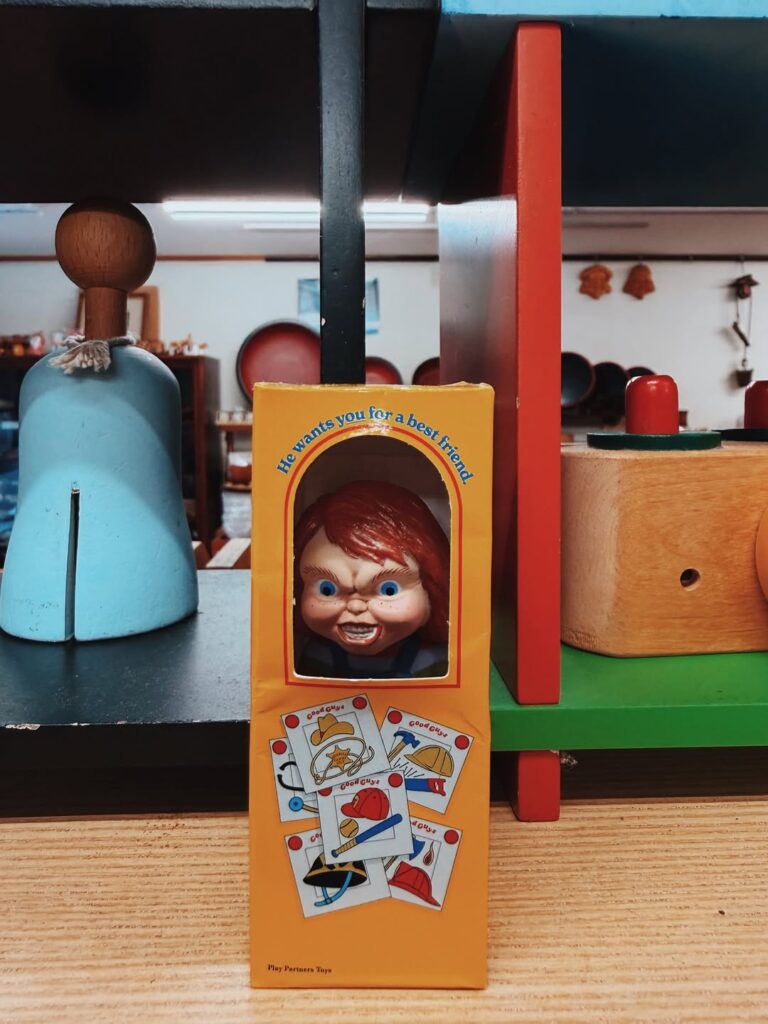
(In my humble opinion, souvenirs shouldn’t be given as pasalubong. Why would someone want an “I Love Dili” refrigerator magnet when they don’t even know where— much less what—Dili is? )
But 20 trips later, we realize the truth: it’s just clutter, dust magnets, and, quite literally, added baggage. And no matter how we convince ourselves that these are artifacts of sorts—reminders of that “mysterious Middle East immersion,” (a.k.a. that five-hour Dubai layover)—they’re really just badges of how our life has been a series of amuse-bouche travels: tiny, forgettable, indulgent nibbles.
Eventually, though, you start to see that the value of souvenirs is not in the object but in the ritual that precedes it. Zauberman, Ratner, and Kim (2009) describe this as “strategic memory protection.” The act of looking , choosing , even haggling becomes a small performance of presence. A way of convincing your future self that you were truly there. And maybe that’s the quiet magic of souvenirs: in an era of online shopping , algorithmic distraction, and TikTok- erased attention spans, the effort it takes to acquire them becomes the tactile proof that for one fleeting moment, you were fully, stubbornly, undeniably present.