


Mouthwatering gems you’ll find in Malabon market, as told by a Malabon native
Markets excite me. The vibrant atmosphere. The no-frills food stalls. The market goers in their come-as-you-are attire. But above all, I love the food being hawked alongside the chaotic menagerie of fresh vegetables, meats, bottled what-nots, the freshest seafood, and everything else in between.
One particular market I really love to go to is our very own Malabon Central Market. I literally grew up eating most of what it offers—but not at the market itself, but at home—as nanay and tatay slid packets of crispy okoy and delectable kakanin on our table every Sunday as they arrived back from the market for a week’s worth of food to cook.
Now all grown up, I literally dream of what I would eat at the market the night before a scheduled visit to Malabon’s bayan.
Okoy
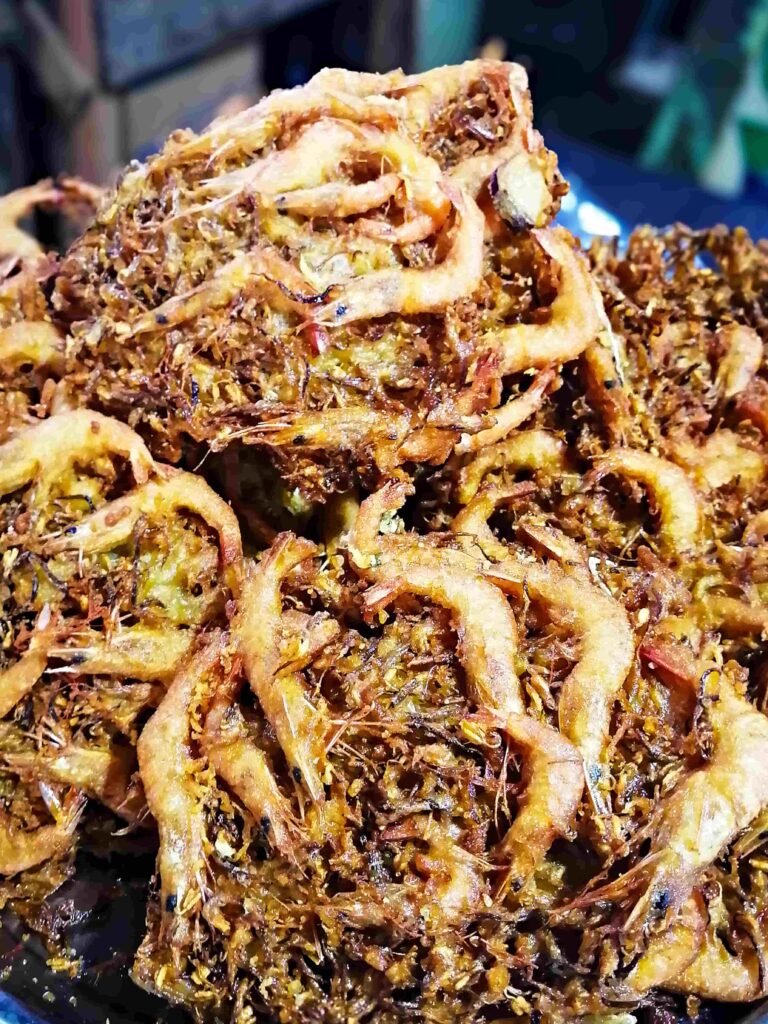
First on my list is crispy okoy—deep-fried fritters made from a batter of galapong and mung bean sprouts, topped with huge unpeeled shrimp. There’s a nameless one at the gate of the market, and there’s Yolly’s Okoy, which is a few steps in. Both are offspring of the original stall that started selling okoy in Malabon during the ‘60s.
Pancit
I usually grab one of these, then head over to the carinderias inside – Marie’s Lugawan, my usual spot – to sit and pair it with. The choices would be either a bowl of palabok or pancit luglug. The difference lies in the noodles used— palabok has thin noodles, while pancit luglug usesthicker ones. The meat toppings also differ: pork giniling for the former and pork lengua for the latter. Both are topped with an orange-colored sauce (made from fish sauce, shrimp stock, and achuete), chopped green onions, sliced eggs, and labok or tinapa flakes.
Lumpia
If I’m particularly hungry, I’d add a helping of sumpia (fried vegetable lumpia) or lumpiang sariwa (fresh lumpia) on the side. In Malabon, both are usually wrapped with the same flimsy wrapper, giving them a slightly salty flavor.
Dessert
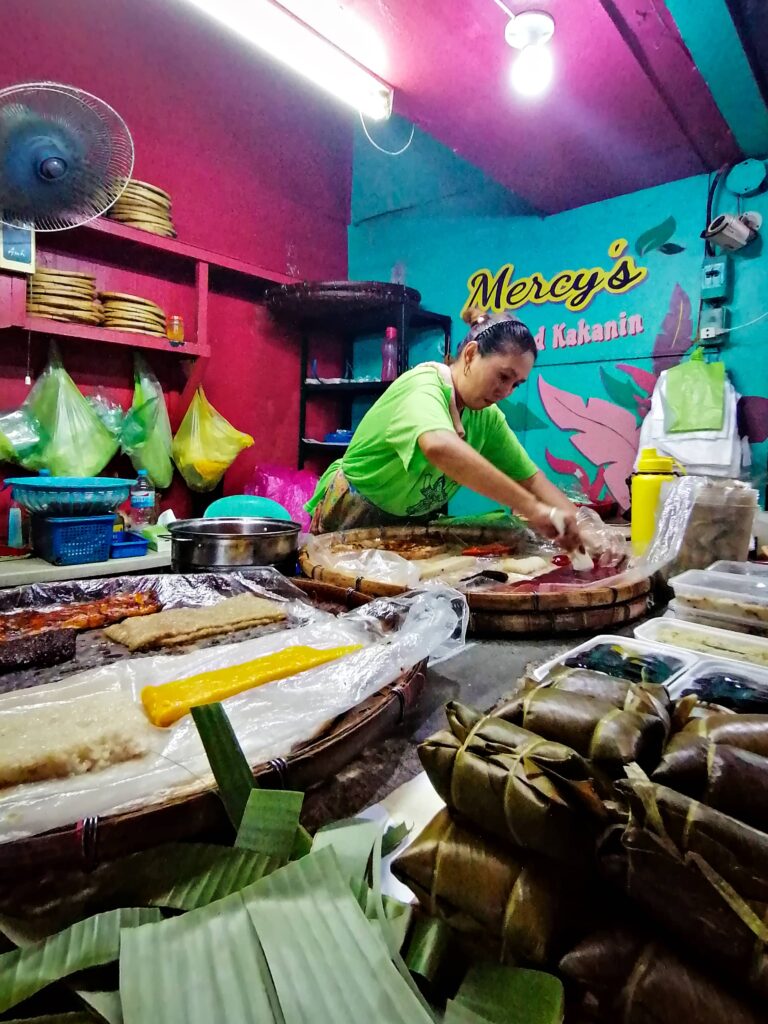
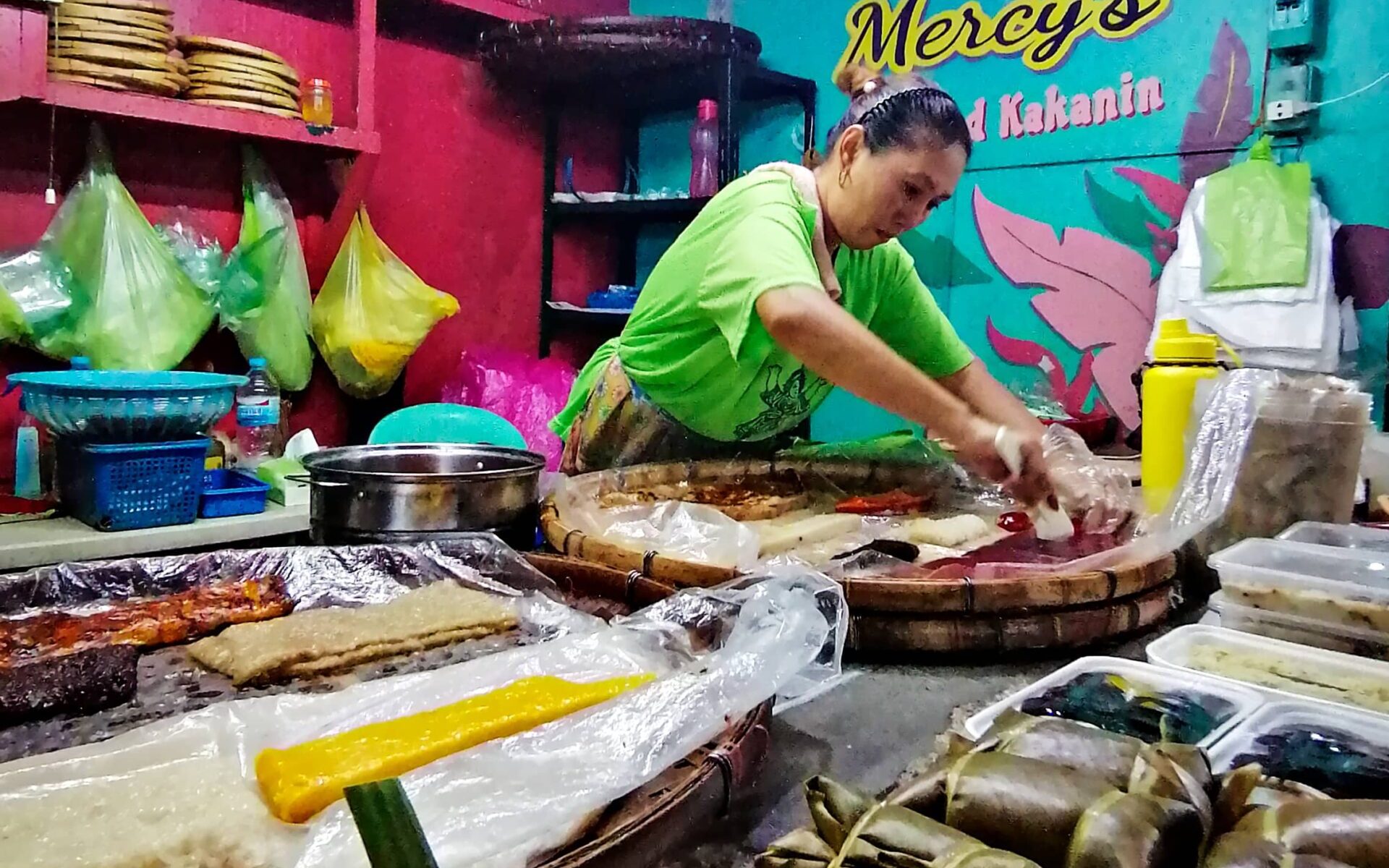
Dessert is just a hop away at Mercy’s Assorted Kakanin. This is our favorite stall for what most people refer to as sapin-sapin. This beloved stall offers a color-wheel-like bilao filled with a variety of kakanin (rice cakes). Besides sapin-sapin, thebilao also has strips of mais kalamay, ube kalamay, kutsinta kalamay, kamoteng kahoy, regular biko, and bikong puti.
Just across from Mercy’s is Amor’s Puto Special, which offers freshly cooked (that is, you can watch staff preparing it inside their stall) pizza-sized platters of puto made from rice and topped with grated cheese and sliced salted duck eggs.
Pasalubong
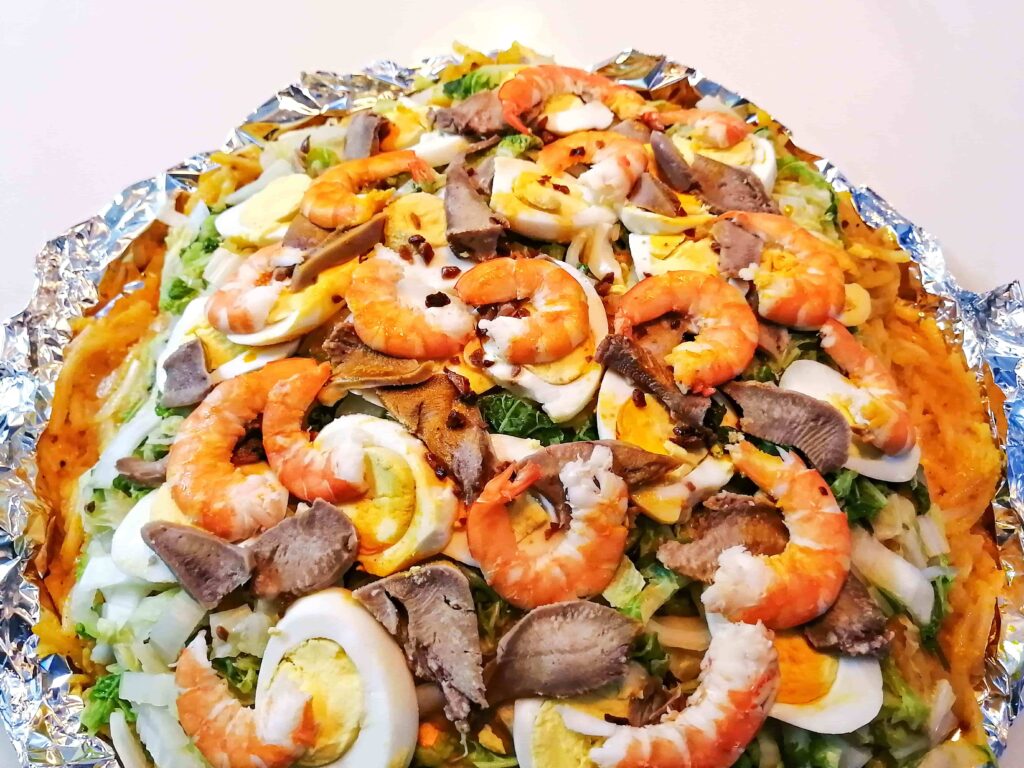
Before heading back home, make sure to grab a bottle of atchara, a handful of Chinese kikiam, or foiled rellenong bangus at the market. Or take home one of Malabon’s most important contributions to the country: its Pancit Malabon.
This particular pancit is different from palabok and luglug in that its sauce—which is already mixed in with the noodles—uses crab fat and crushed chicharon. It often has chopped pechay Baguio, boiled pork bits, and an abundance of seafood like shrimp, adobong pusit, and sometimes, even oyster and mussels.
While Malabon’s Public Market does not have a stall selling it, Dolores Pancit Malabon along Rizal Avenue, is only a minute or two away on foot. One of our go-to posts for special occasions, they serve one of the best Pancit Malabon in the city — the ultimate final stop before burping your way back home!