
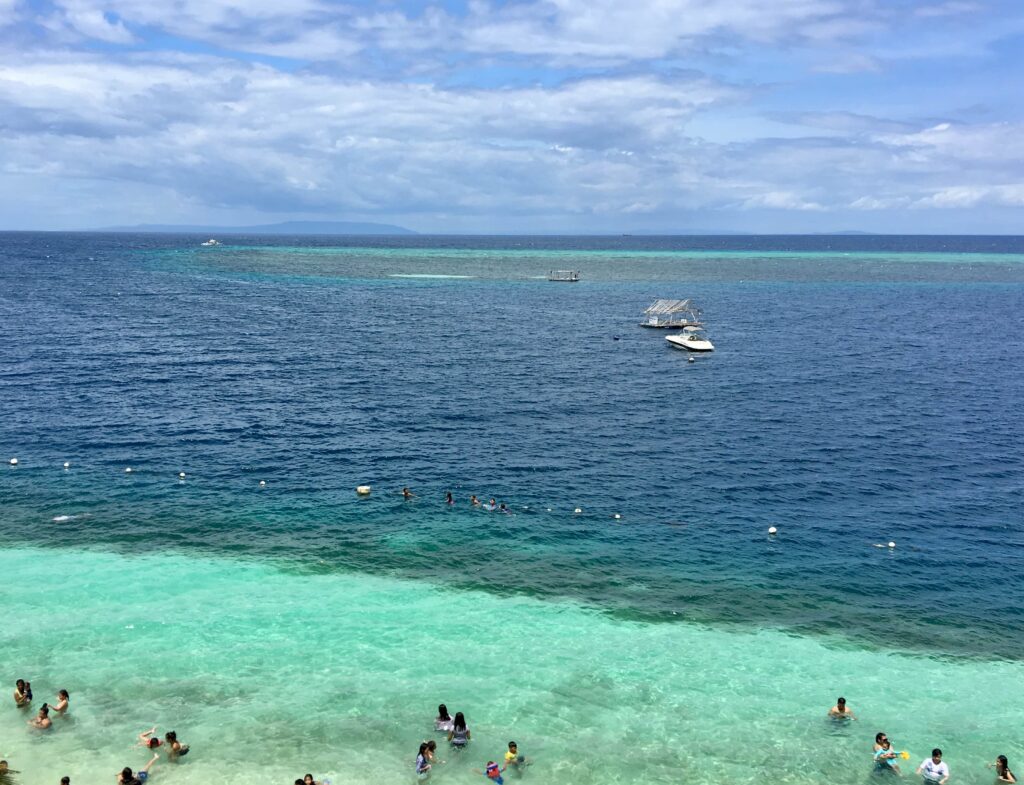
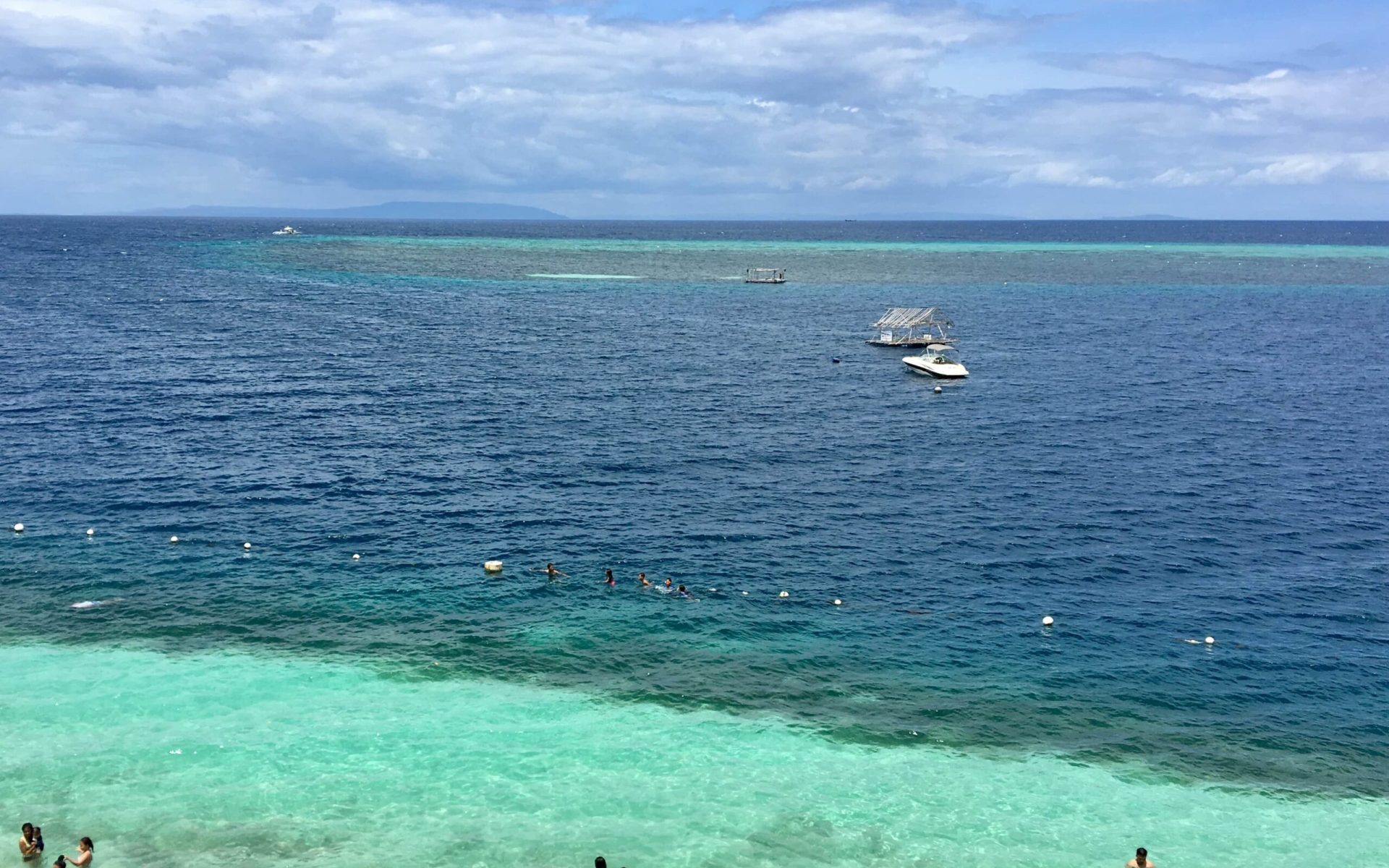

An open water swimming enthusiast shares the joys of the sport, waters to explore, how to get started, and where to look for swimming events
With my face in the water, I tried to make out the sea floor, but it was as if someone had slipped a blindfold over my eyes. A trail of bubbles drifted from my nose each time I exhaled, the only thing visible in the darkness. Being one and a half kilometers away from shore, the depth didn’t surprise me. But with nothing on except goggles and a swimsuit, I couldn’t help feeling a little exposed. something as simple as drinking water suddenly felt like a stunt.
Tourists normally travel this route by boat on island-hopping tours, passing dramatic rock formations and experiencing its colorful underwater world. Today, I was experiencing it the slow way: one breath, one stroke, one bubble trail at a time.
There I was, in the middle of my f irst-ever open-water swimming event, held in the stunning waters of Caramoan in the province of Camarines Sur. The route was a five-kilometer loop from Gota Beach to the islands of Lahos and Matukad, then back to Gota.
With the waves pushing hard against us, the start was tough, but I had trained for this. I reached the first hydration stop: a floating pontoon anchored in the middle of the sea. After accidentally gulping seawater, I was thirsty. While wrestling with the waves and trying hard to remain afloat, I reached up to grab a bottle from one of the volunteers (swimmers are not allowed to climb aboard), took a quick sip, then handed it back before swimming off.
I was amused that The water toward Lahos Island, about 1.1 kilometers away, kept jostling me. Instead of f ighting it, I settled into my rhythm—slow, steady, patient. A few jellyfish stings pricked me like tiny pins. They startled more than they hurt, small reminders that I was swimming in their home. So I kept going, watching the island grow closer.
Soon, the underwater scenery shifted. The sandy bottom came into view, followed by Lahos’s striking rock formations. After a volunteer slipped a bracelet onto my wrist as proof I’d reached this point, I headed toward Matukad, the last stop before the final 1.4-kilometer push back to Gota Beach.
Matukad is known for its soft sand, dramatic limestone cliffs, and a hidden lagoon that locals believe to be the home of a mystical bangus (milkfish). I was glad I’d been able to enjoy it slowly the day before. Pressed for time and focused on the swim, there was no chance to linger.
As I turned back toward Gota Beach, I realized the best part wasn’t the finish line. It was every slow, delightful moment in between: marveling at an oddlooking fish darting past, spotting corals that resemble miniature brains, or simply enjoying the water with my thoughts whisked away from life’s chaos.
I finished the swim in three and a half hours. A competitor in the 10K category completed his in two and a half. My time was slow, but I didn’t join the race to compete. I was there to see what lay beneath the water and to do it safely within the cutoff.
It was an adventure I never would have achieved on my own; just the thought of arranging boats and mapping a safe course is daunting!
Yet, experiences like this highlight a larger irony about the Philippines: despite having thousands of islands and world-renowned beaches, open-water swimming remains surprisingly underrated.
One reason for this becomes clear when considering accessibility. Swimming isn’t a mandatory part of the national school curriculum, so the skill often depends on who can afford lessons or who has easy access to water.
Still, beneath the surface lies a whole other world of vivid corals, teeming marine life, and quiet moments far from land, waiting for anyone willing to take the plunge.
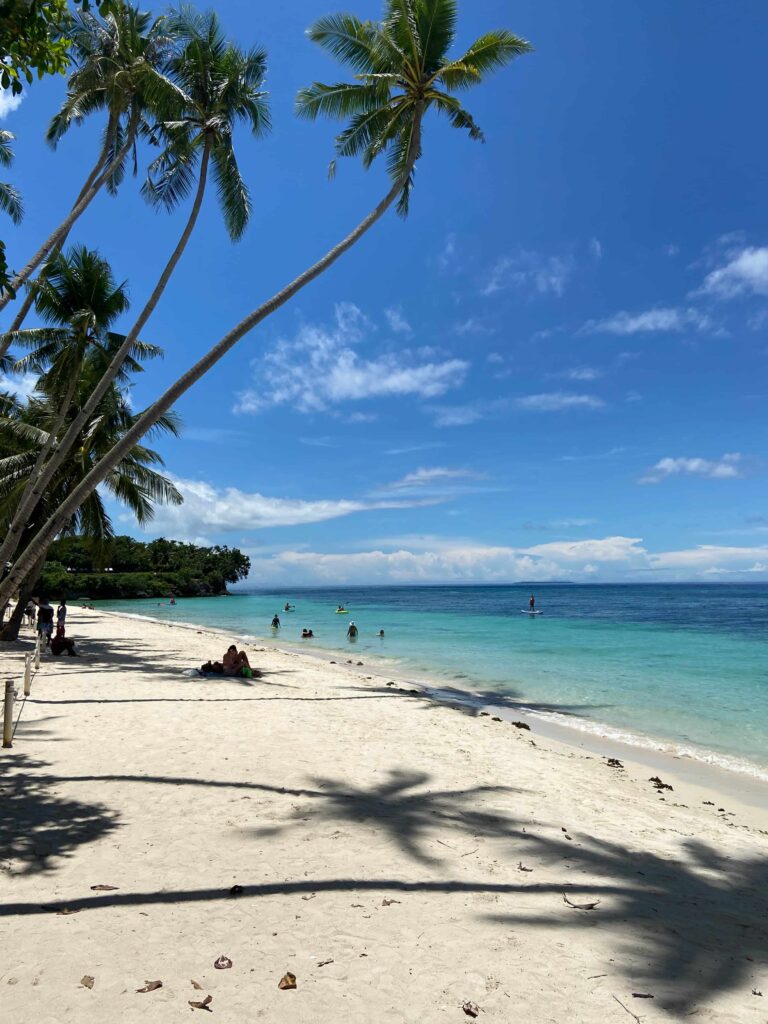
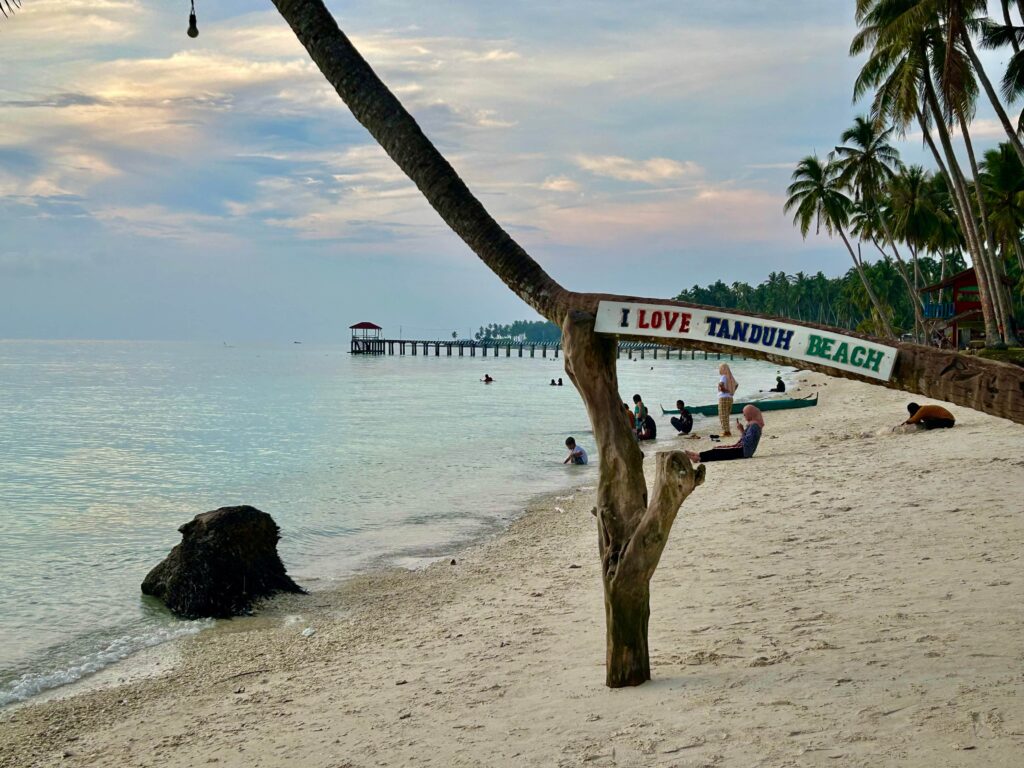
For those ready to explore, the Philippines offers no shortage of swimming spots. From Tanduh Beach in Sulu, beloved for its velvety sands and calm turquoise waters, to the northern shores of Zambales, where strong waves and deep water offer a playful challenge, there’s something for every kind of swimmer.
Lobo in Batangas is dotted with resorts and offers a glimpse of the Verde Island Passage, called by marine experts the “Center of the Center of Marine Biodiversity” for its rich underwater life. Of course, one cannot skip the usual favorites: Cebu, Boracay, and Palawan. These are just a few of the countless swim-worthy spots in the country.
If you’re new to open water, lessons can make the experience safer and far more enjoyable. Swimming events are often posted on the Facebook pages of reputable local organizers, such as Swimjunkie Challenge and The Swim Academy PH, to name a few.
And no matter the location, being in the water feels different. Each stroke carries you through refreshing seawater, sometimes past coral gardens, sometimes just open blue, but always leaving you calmer, refreshed, and a little happier. You don’t need to be fast or strong; just willing to jump in and notice the small wonders along the way—one breath, one stroke, one bubble trail at a time.