

For many of us, we were made to believe that the communities that lined the aging Philippine National Railways (PNR) tracks were nothing more than squatter settlements – clusters of improvised homes said to be occupied by people who stole steel from the rails themselves. There was a widely repeated story of a segment of track sawed off clean and halting the Manila-Bicol line years ago, and it became an easy picture for the way many of us viewed those who lived beside the railway as troublemakers, the batang riles, drifters, or people who existed beyond the rules that governed everyone else.
It turns out that not all impressions exaggerated by movies and headlines accurately reflect the communities that exist along these old PNR tracks.
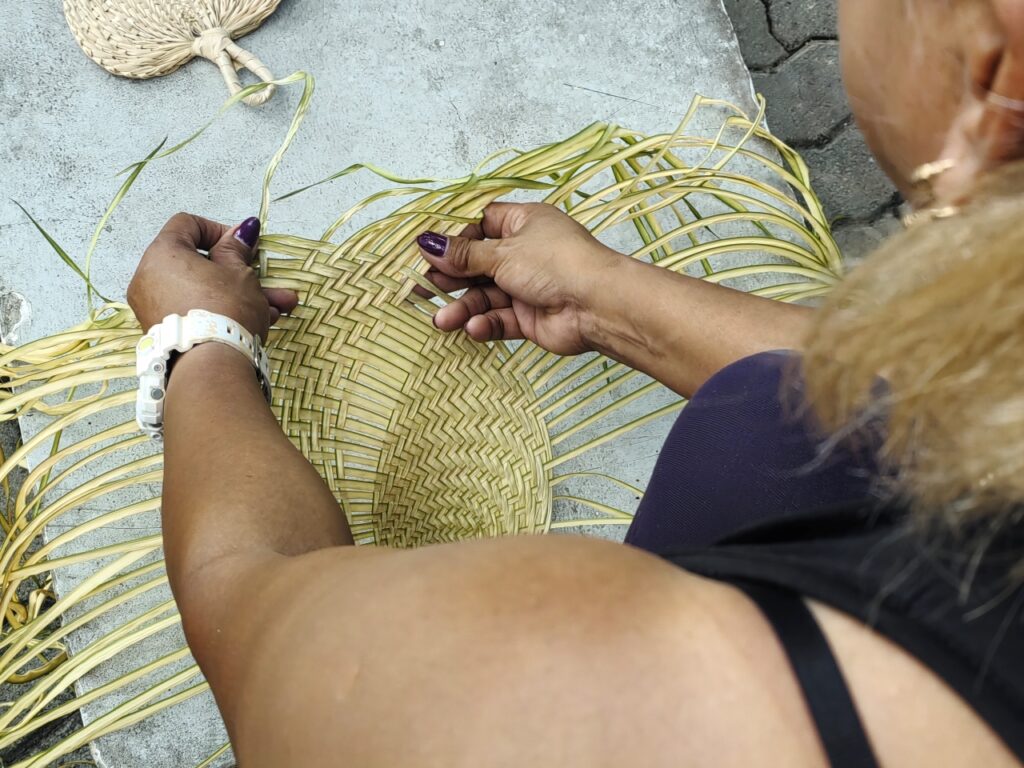
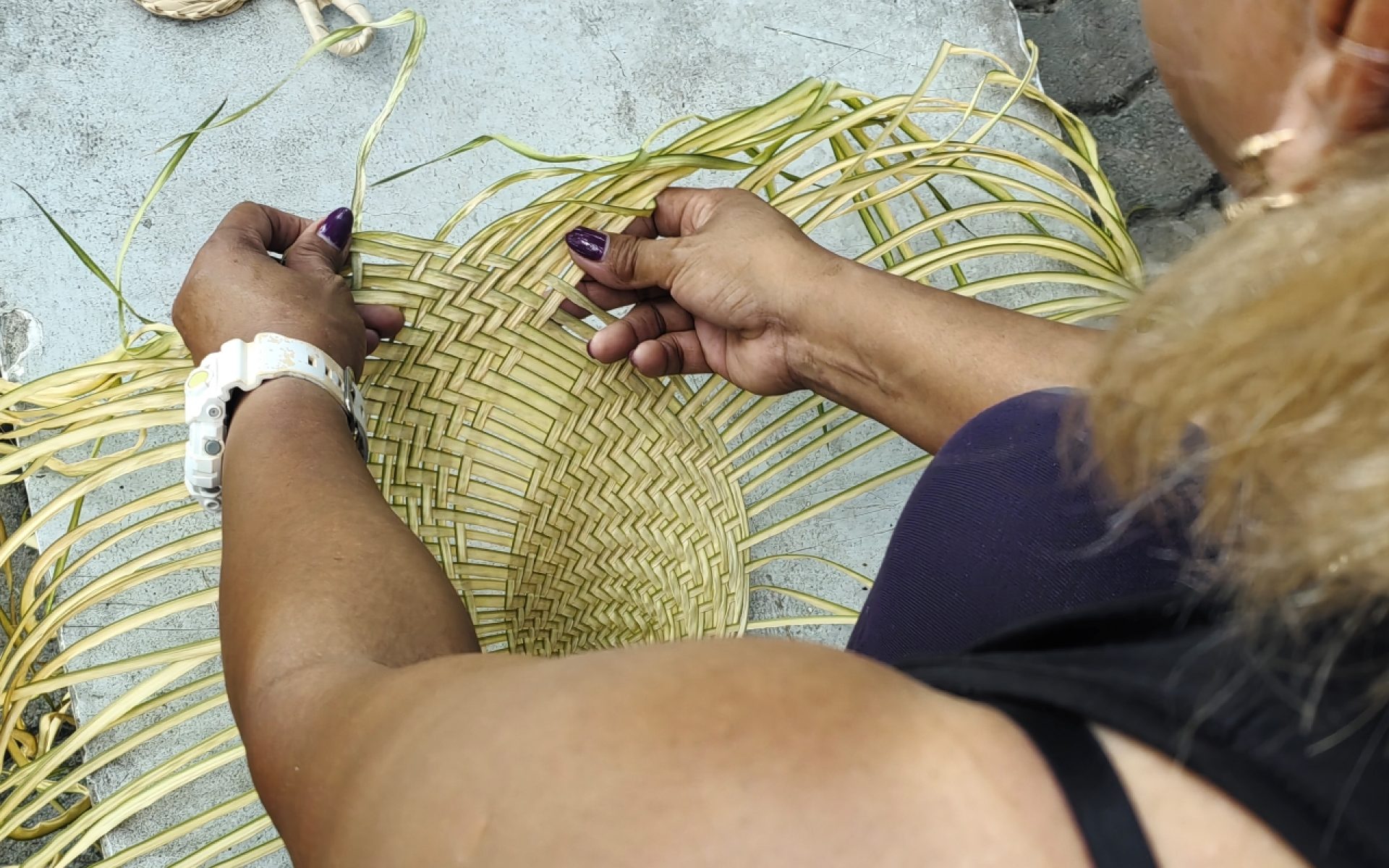
Over time, many of these neighborhoods have settled into ordinary, stable communities. In the town of Lopez in Quezon Province, the old railway corridor now reveals something else entirely: a hub of local craftsmanship. Homes that once stood beside the tracks have become small manufacturing spaces, producing woven pamaypay (fan)made from buri or anahaw leaves, coconut shell crafts, baskets, and even blacksmith-made tools.
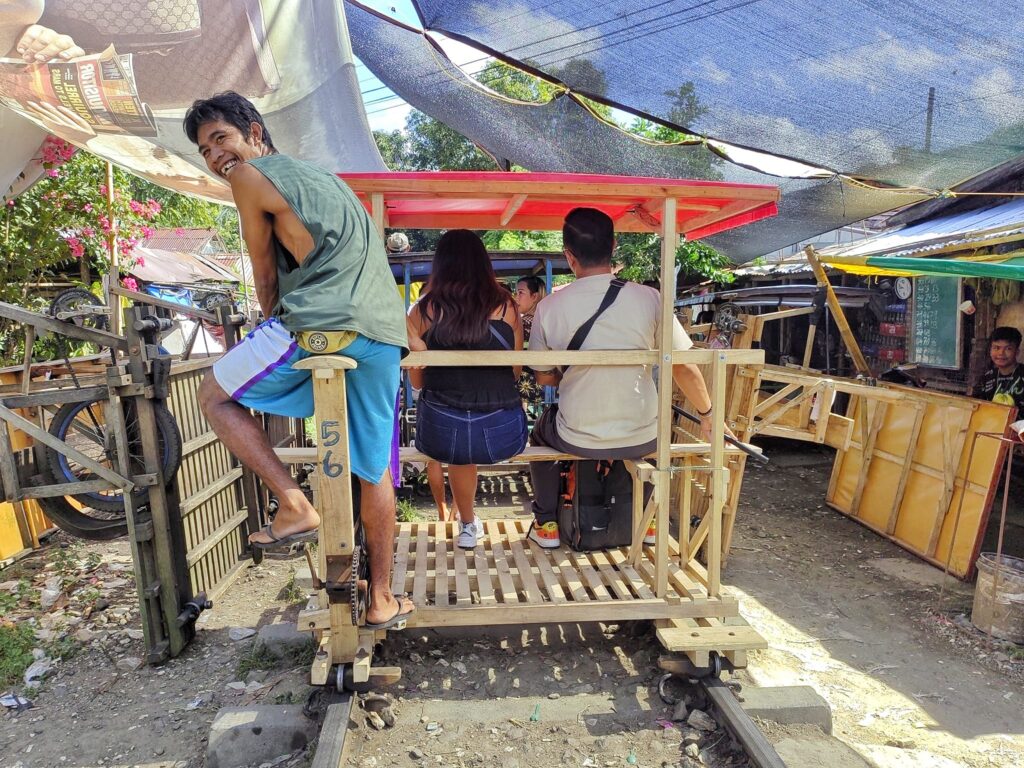
Beyond that, it is also a place where ingenuity is applying a band-aid to an ongoing problem: a novelty ride that offers visitors a unique experience while serving as a daily lifeline for local commuters navigating the country’s neglected transportation system.
Riding My First “Skate”
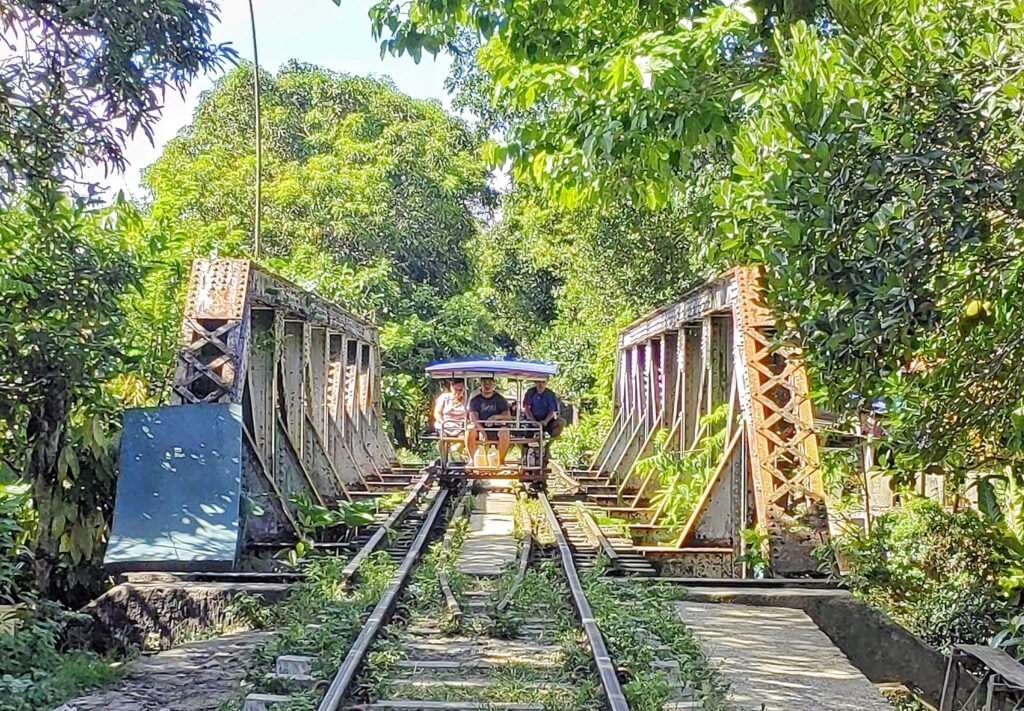
Together with members of the Tourism Promotions Board Philippines (TPB), the marketing arm of the Department of Tourism, we set out to scout communities that could be included in the agency’s community-based tourism (CBT) program. Our journey took us to the old Philippine National Railways tracks in Lopez, where we got the chance to ride the region’s most unconventional form of transport: the so-called “skates.”
My first ride on a skate was a lesson in local initiative. Rather than letting the abandoned tracks fall into decay, residents had repurposed them into a makeshift railway for hand-built trolleys. Constructed from wood, steel, and salvaged materials, these vehicles move along rusted rails, powered by pedals or by hand, their clattering wheels echoing across fields and small villages.
Sometimes jokingly referred to as “kits” or “bullet trains”, these trolleys carry school children, passengers, and market goods, following the same route once traversed by PNR trains. In communities long underserved by conventional public transport, the skates have become a practical grassroots solution, connecting people to schools, markets, and neighboring towns, and sustaining daily life along a railway that has largely been left behind.
Discovering Lopez’ Craft Hub Along the Tracks
Also along the same tracks in Lopez, where the old PNR trails stretch across Quezon, we stumbled upon a handful of backyard industries or, more accurately, garage workshops. Men and women were weaving baskets, another group crafting anahaw fans, and just a few dozen meters away, a blacksmith forging knives and small swords in front of his home.
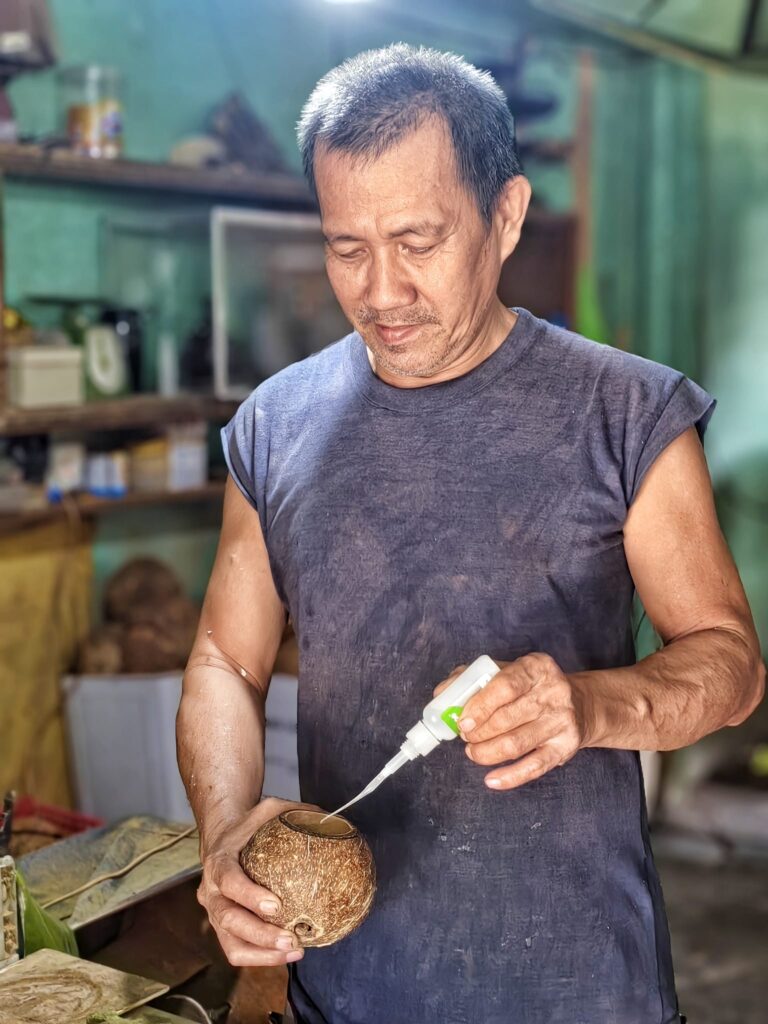
Amid these pockets of creativity, one workshop drew us to stay and observe longer than the rest. Its owner, Mang Jessie, was not just crafting objects; he was shaping stories from discarded materials, turning ordinary scraps into something extraordinary.
From Stroke Survivor to Skilled Artisan
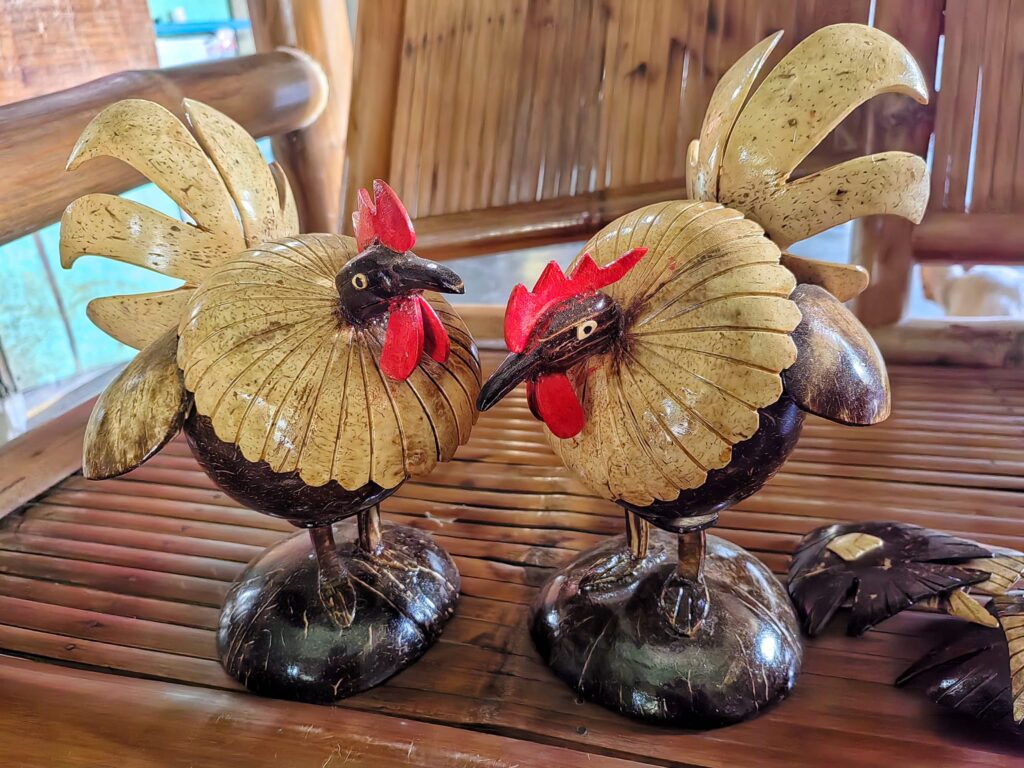
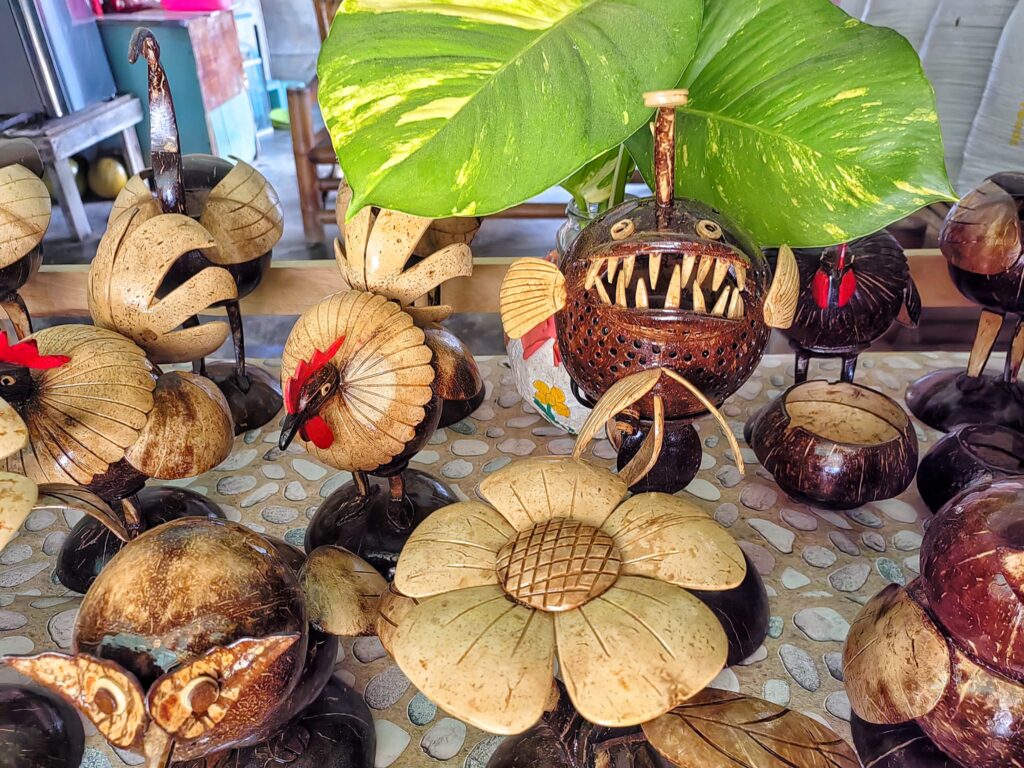
During the long lockdown, when his small coconut store slowed, Jesus Abatayo, also known to his neighbors as Mang Jessie, began experimenting with husks and discarded coconut shells. “He just started shaping them into little things,” his wife, Avanceña, recalled. “Before we knew it, there were flowers, animals, even tiny houses,” she explained in Tagalog.
What began as a lockdown experiment grew into an unexpected livelihood. From coconut husks to smiling faces, animals and other objects, his pieces sell for a few hundred pesos and have become cherished fixtures in the community.
A stroke survivor for more than a decade, Abatayo has done more than carve out an income. In turning scraps into items of beauty, he has shown his neighbors that reinvention, like art, often grows from the most ordinary materials.
Together, the crafters of Lopez and the skate drivers prove that creativity and resourcefulness are often harnessed by local communities, driven by institutional neglect in basic services like transportation and livelihood. That it’s this strong network that makes things work.