
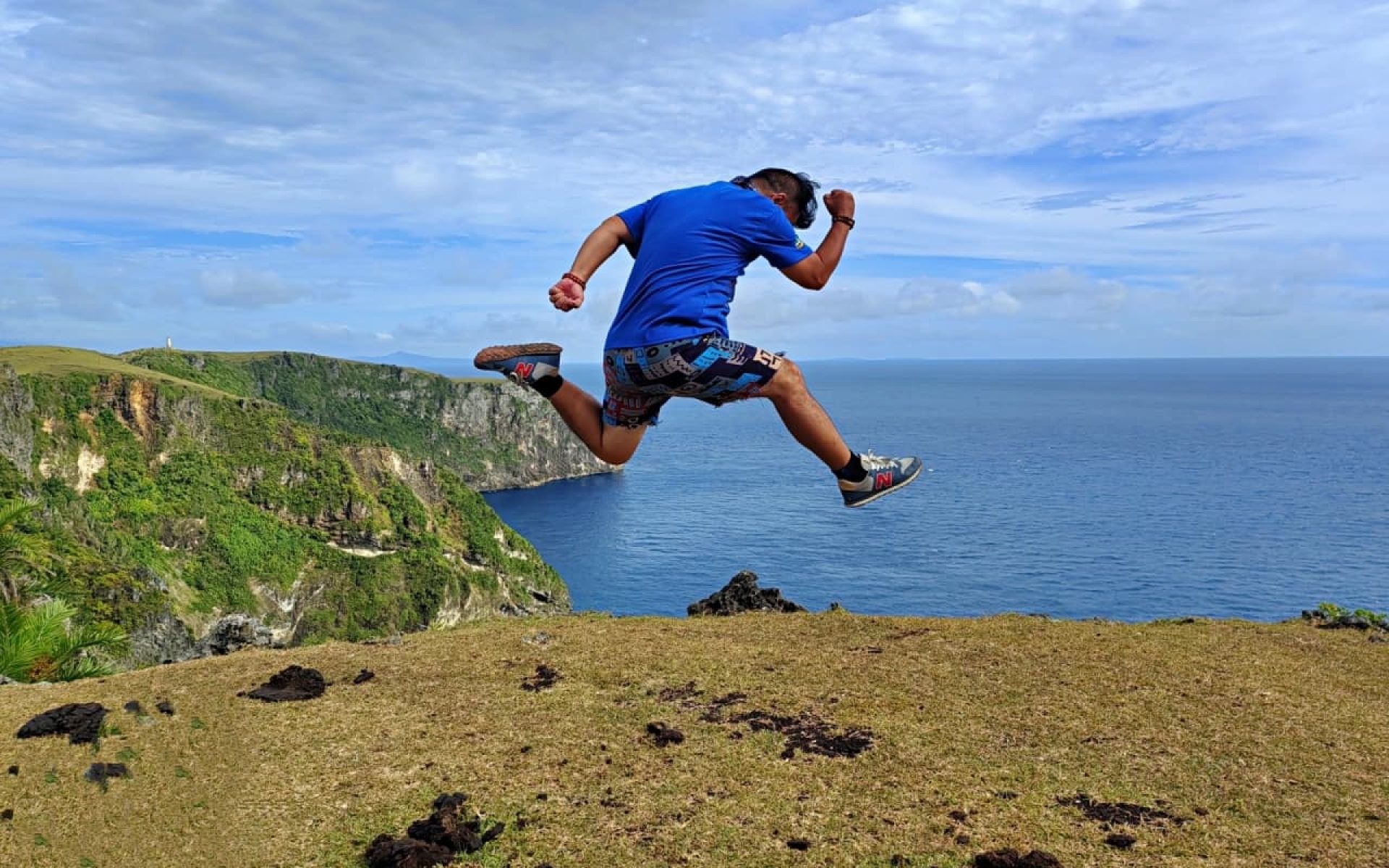

On history, humility, and how small we are against wind-carved cliffs and topsy-turvy seas
On the journey back to Batan Island, I found myself fighting off nausea aboard a small faluwa, the Ivatan boat built for the rough, unpredictable currents between the islands. With its open deck and deep hull, it rose and plunged over the heaving Philippine Sea. I gripped the rails, steadying my balance, silently praying that my stomach doesn’t turn against me. To distract myself, I replayed the past three days in my mind.
Itbayat came in flashes, like scenes from a film. Rolling hills rising toward jagged limestone cliffs. Vast grasslands where cows and goats wandered as if they owned the island. I had heard stories from friends and thought I knew what to expect. I didn’t. The island felt bigger, wilder, more cinematic than I had imagined.
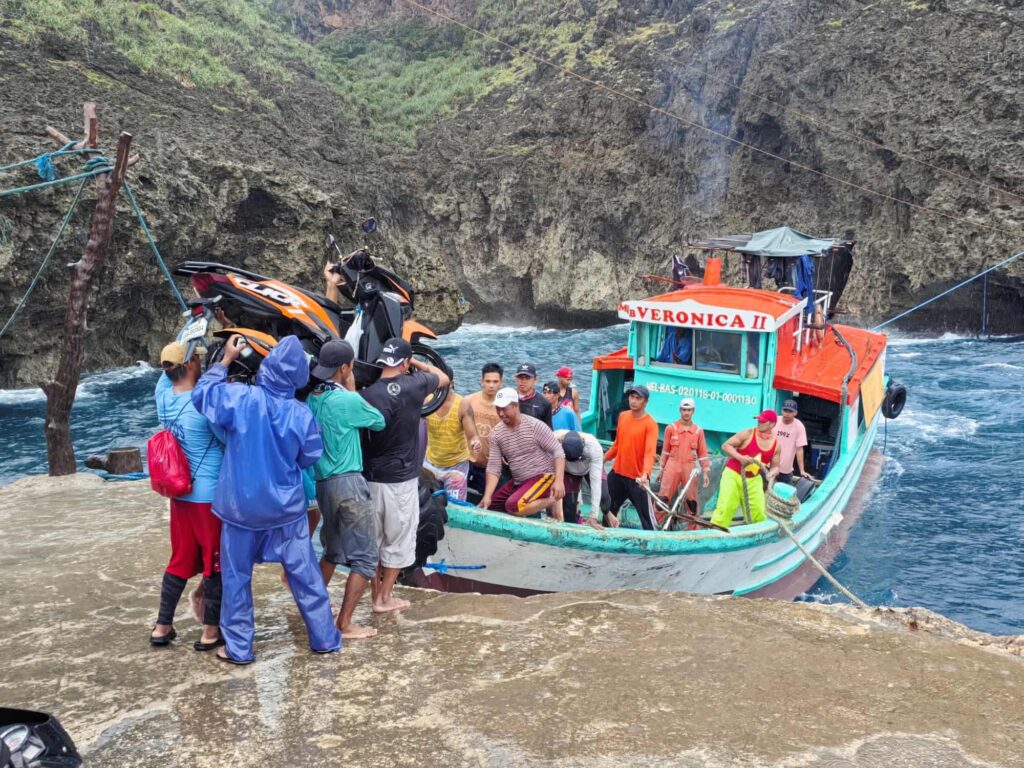
Even arrival was a test. Disembarking from the faluwa meant timing your steps with the waves. “You’re lucky the sea wasn’t that high today,” a local told us in Tagalog. Four in our group were already seasick.
On an island without a modern port engineered to withstand such a rocky shoreline, locals have come to accept the treacherous ritual of embarking and disembarking as part of everyday life.
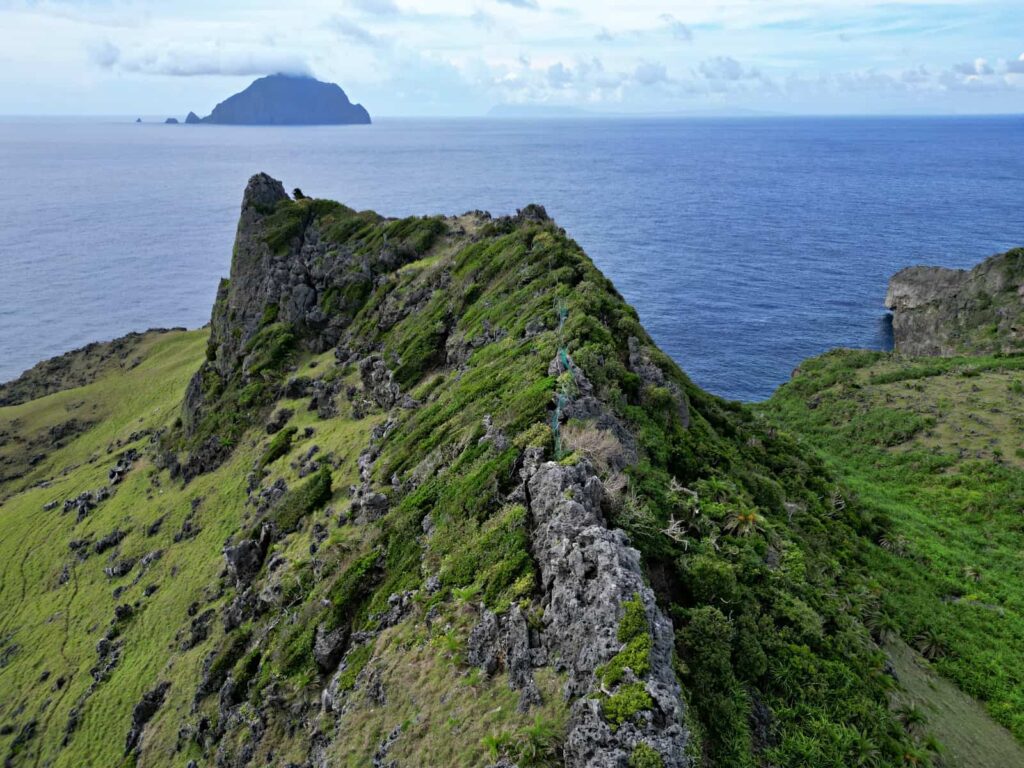
Once inland and away from the swells, we laced up our hiking shoes. The countryside revealed itself in steady climbs. Rapang Cliff felt like stepping into another realm, its flat, sea-facing ridges reminding me of The Wall in Game of Thrones. The five-kilometer hike stretched longer than expected, not because of difficulty but because of the postcard-like scenery. We kept stopping to catch our breath, take photos, and enjoy moments with nature.
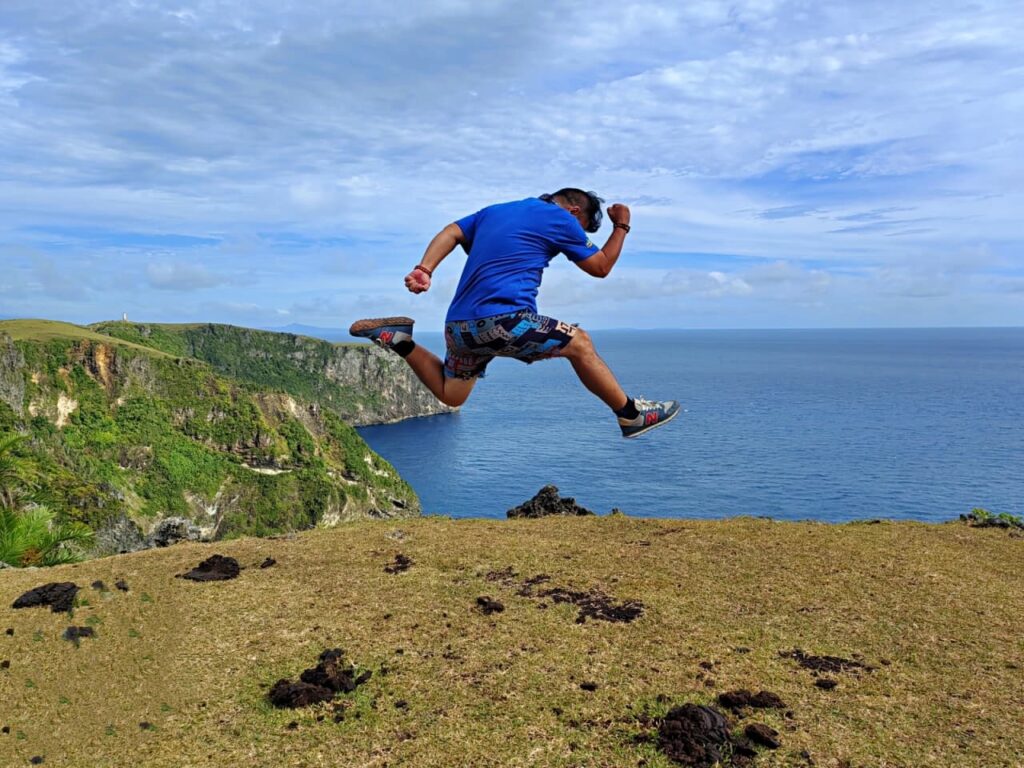
At Mauyen Cliff, beauty came with a warning: the drop-offs commanded respect. We reminded one another not to inch too close – else, it’s ‘Sayonara, world’. Even from a safe distance, the 360-degree panorama of sea and sky delivered that mix of awe and adrenaline. It was a cinematic mic drop to end our first day.
Cavaywan Lake offered a different mood. Its still waters projected calm, but the surrounding reddish soil told another story. Our guide explained it may be rich in iron, lending the landscape a distinct character.
Torongan Cliff, however, gave the most interesting new learning. Inside Torongan Cave – now inaccessible after a typhoon damaged its entrance – archaeologists found evidence believed to be among the country’s earliest human settlements.
Nearby stands the Axurud, a boat-shaped stone tomb pointed toward the sea. It is thought to hold the remains of an Austronesian-speaking family who lived here between 2,000 and 4,000 years ago.
The direction in which it was pointed is deliberate. For early settlers, the sea was both highway and horizon. In death, the spirit was believed to return to the ocean, completing its journey. Archaeological findings trace these settlers to Formosa, modern-day Taiwan, part of a vast maritime migration that shaped languages and cultures across the Philippines and the Pacific.
Standing there, I found myself revisiting an old question: who came first: The Negritos believed to have crossed ancient land bridges from Borneo? Or the boat people from Formosa? The debate continues.
With only around 13,000 tourist arrivals in Batanes in 2024 and less than 10 percent reaching Itbayat, the island remains one of the country’s least visited destinations. Most travelers stay in Batan and Sabtang. Few brave the three-hour boat ride or risk the tiny plane, often canceled due to weather.
That may slowly change. As Itbayat gains attention and discussions of improved infrastructure surface, the Tourism Promotions Board of the Philippines (TPB) emphasizes a community-first approach. The aim is low-impact, “leave no trace” travel that protects fragile ecosystems, preserves Ivatan culture, and ensures locals benefit directly.
After more than a decade of imagining that faluwa ride, I finally crossed to the island I once skipped on my first Batanes trip. Now I understand the hesitation and the reward. Itbayat is home to stunning hills that make you want to run like you’re in The Sound of Music, even if you don’t know the lyrics. I stepped on cow dung more than once, but that only underscored its rawness. No filters. No tourist trappings.
And then there are the people. Morning walks turn into spontaneous exchanges of greetings. Strangers talk to you as if they’ve been expecting you. Guides double as storytellers, equal parts historian and comedian. The scenery feels like it was carefully composed by the greatest filmmakers: with Terrence Malick’s moody reflections, a hint of Wes Anderson, yet the sweeping drama of Braveheart.
As our faluwa neared Batan and my motion sickness slowly eased, I realized something. Itbayat didn’t just give me landscapes. It gave me perspective on history, on humility, on how small we are against wind-carved cliffs and topsy-turvy seas.
Absolute cinema, indeed.