

As climate change accelerates coastal flooding, a vast land reclamation project backed by a corporate giant is reshaping the shoreline and may be hastening the ground’s descent.
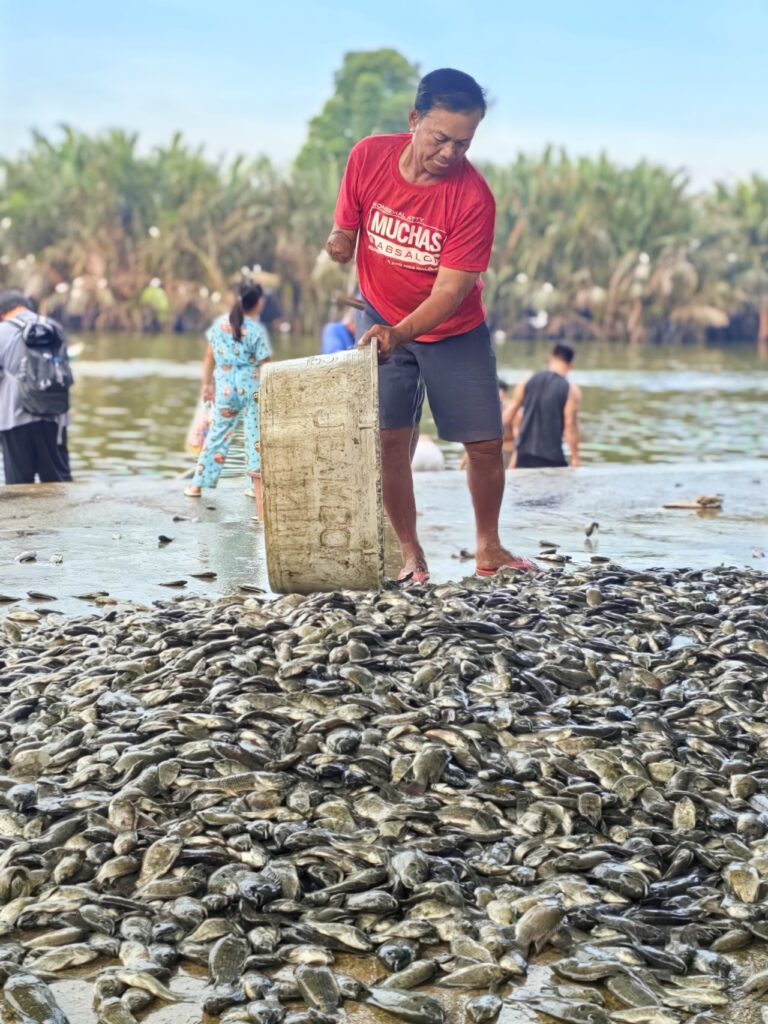
A small cat padded cautiously across the wet concrete, a tilapia nearly half its size dangling from its mouth. Behind it, heaps of fish lay scattered across the wet floor of a low-roofed shed that serves as the Panasahan Fish Port in Malolos, Bulacan.
At the edge of the Kalero River, one of the narrow waterways that thread through Bulacan before emptying into Manila Bay, a motorized boat eased into dock. Its catch was hoisted into a metal container by three fishermen and slid across the floor toward the shed. Moments later, another boat arrived, this one carrying not fish but passengers: a reminder that in this part of the province, water remains a vital thoroughfare as much as a source of livelihood.
“They probably came from Pamarawan,” said Jing Ordona, our guide and the lead organizer of the coastal tour. His ManiLakad curated tours focus on history, local culture, and community life. Pamarawan, he added, was our next stop.
Para-Paraan (Finding a Way) on Pamarawan Island
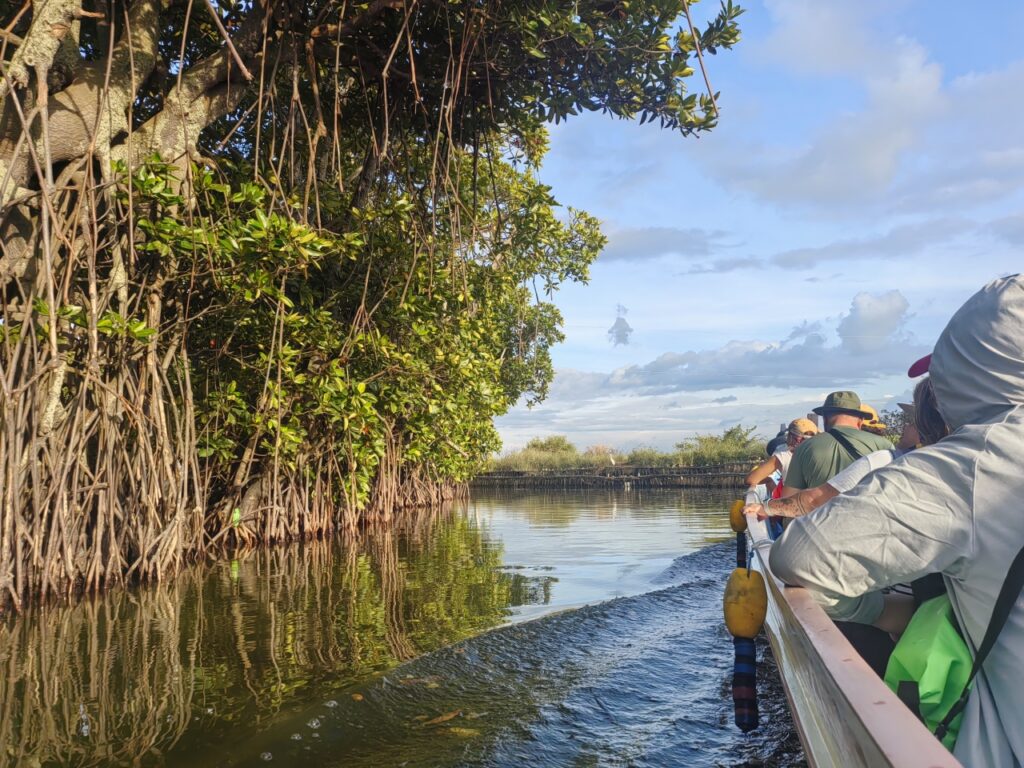
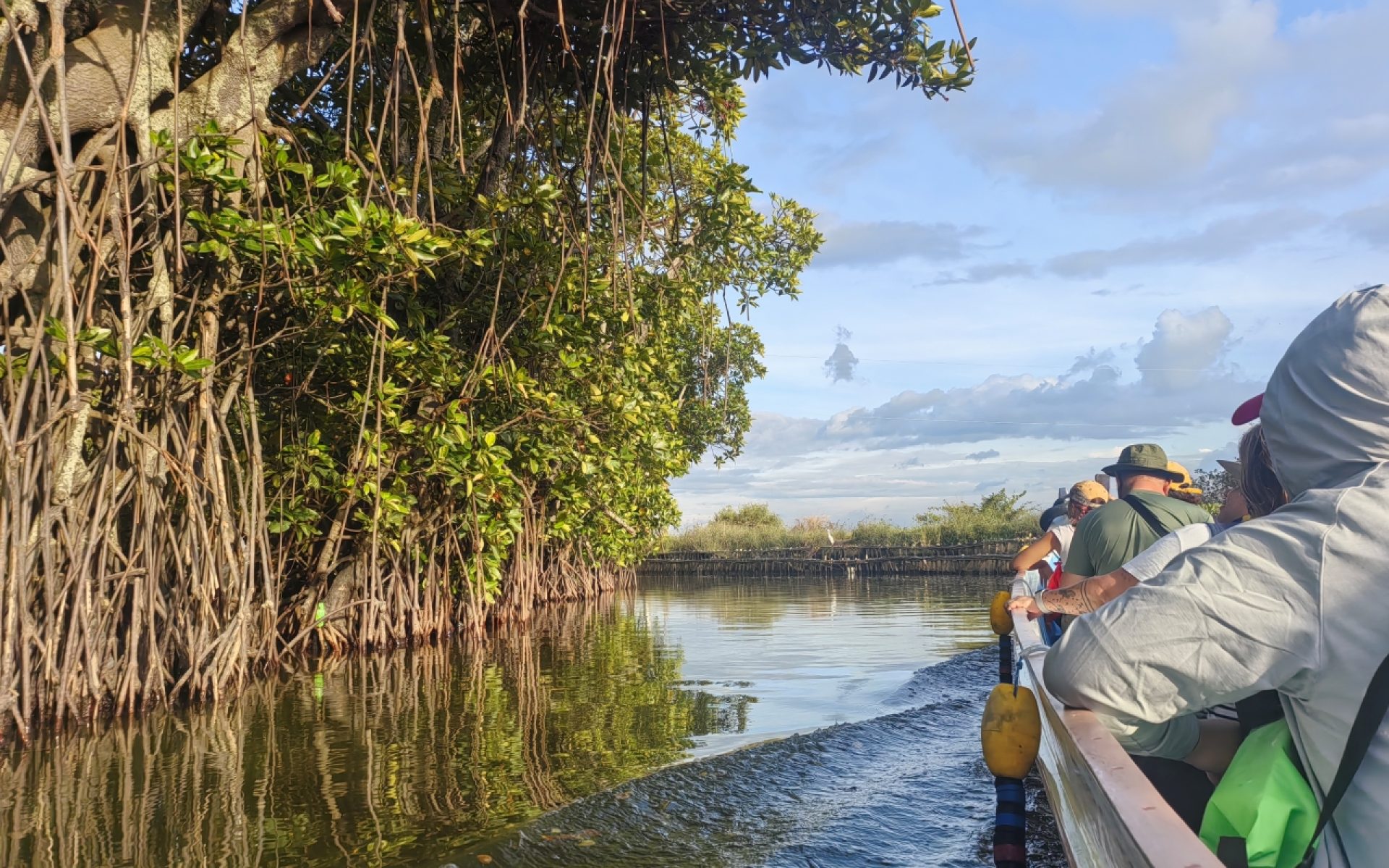
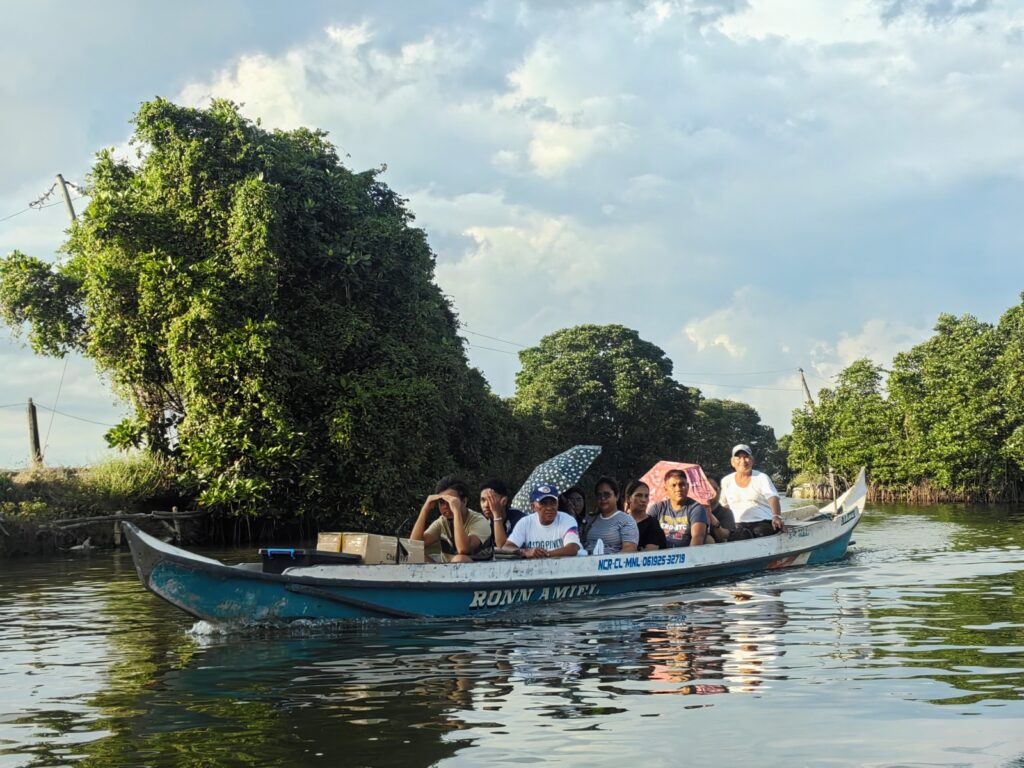
We boarded a lantsa (a motorboat without outriggers) which our boatman said could carry more than 30 people. Our group of 15 sat comfortably, one or two in a row. I had the sense that the boat was designed for this purpose: to ferry residents between barangays now living in island communities off the coast of Bulacan mainland.
As we passed through a narrow channel flanked by mangroves, I imagined its potential as an ecotourism site. Our boatman, Nicole, told us the area is home to several bird species that stop by during migration season.
Despite this, very few visit Pamarawan as tourists. Aside from social workers and government staff assigned to various projects, most passengers, he said, were residents, their relatives, or others with personal reasons to make the trip
After half an hour, we arrived at Pamarawan Island, home to more than 3,300 residents, and walked across the community to the other side of town. A local resident pointed out evidence of a long- running road- elevation project. “Look at the original level of the road,” he said, gesturing toward a classroom door now nearly half-buried by layers of concrete.
Another resident explained that seawater reaches the streets during high tide, a daily occurrence. “Ankle-deep when it rains lightly, knee-deep when it rains hard, and waist-deep and up during a typhoon,” she told us in Tagalog.
In this coastal town, where rain falls nearly year-round, even in summer, flooding has become an ordinary fact of life. With livelihood centered on fishing and small- scale salt-making, Pamarawan appears to hold real potential for community-based ecotourism.
The Sunken Sitios
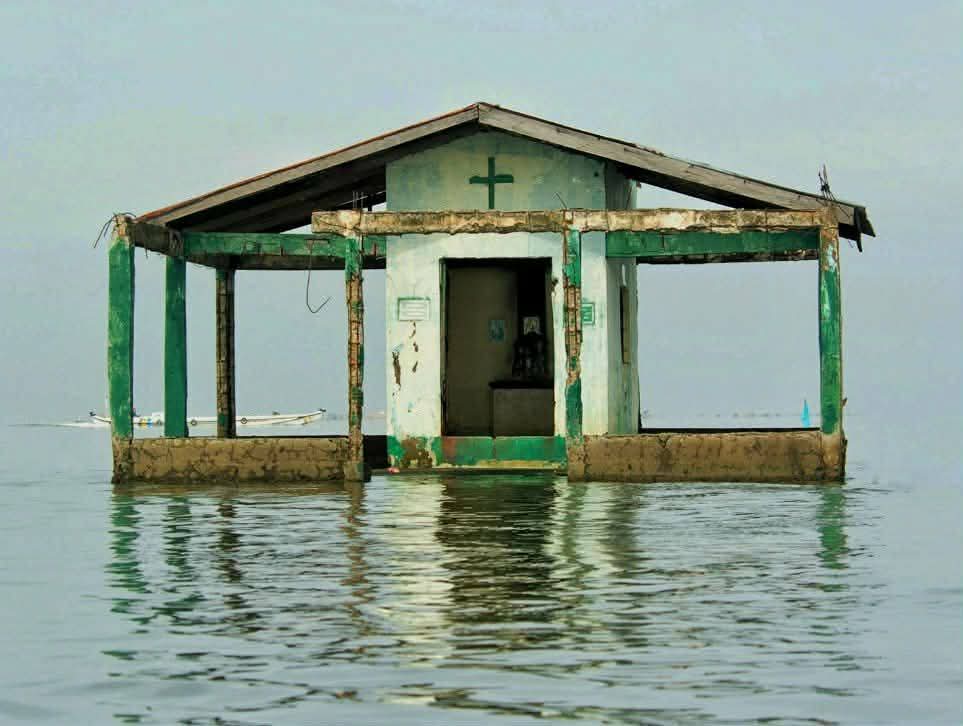
While the people of Pamarawan contend with constant tidal flooding, former residents of Sitio Pariahan and Sitio Torres in Barangay Taliptip, Bulakan, Bulacan, have faced an even harsher fate: resettlement. Many of these communities have been submerged by rising waters, the result of climate change compounded by inadequate flood control measures.
After decades of gradual land sinking, the area met its final turning point in 2011, in the aftermath of Typhoon Mina. Today, the eerie remains of the abandoned Santo Niño Church in Sitio Torres and the Santa Cruz Chapel in Sitio Pariahan stand as solemn reminders of what the sea has claimed.
Our motorboat journey continued to another island called Binuangan. Along the way, we passed the area designated for the planned new Manila International Airport, where tracks and massive tractors moved busily across the site.
We spotted a hilltop that appeared snowy, only to learn from a local that it was actually the Navotas Landfill. Along the community’s shore, heaps of trash are carried in by the tides. Among them is a collection of church bells from sunken churches, including those of Santo Niño and Santa Cruz, at the Nuestra Señora de Salambao Mission Parish in Pamarawan. There were also bells from two others. The names of four additional churches whose bells were never salvaged were also painted.
Climate Change, Corruption, and Land Reclamation: The Usual Suspects
One thing our Bulacan Coastal Tour taught me is that you can’t really reclaim land from the sea. While Manila’s coastline has extended along Roxas Boulevard, the opposite is happening along Bulacan’s coast. Much of the water we cruised through on a motorboat was still farmland just a few years ago, according to Google Maps’ most recent update.
While these areas used to flood easily, today, however, large portions are completely submerged, accelerated by the ongoing reclamation project for thenew airport—not to mention a corrupt government agency supposedly tasked with solving flood problems.
Of course, no environmental study funded by big corporations would ever tell us this. The eye test and the lived experiences of local communities, however, tell the real story.